
A vendor's public X banner photo reverse-image-matches a completed streetscape in another city. How should the researcher treat that banner?
Select an answer to reveal the explanation.
Short Explanation
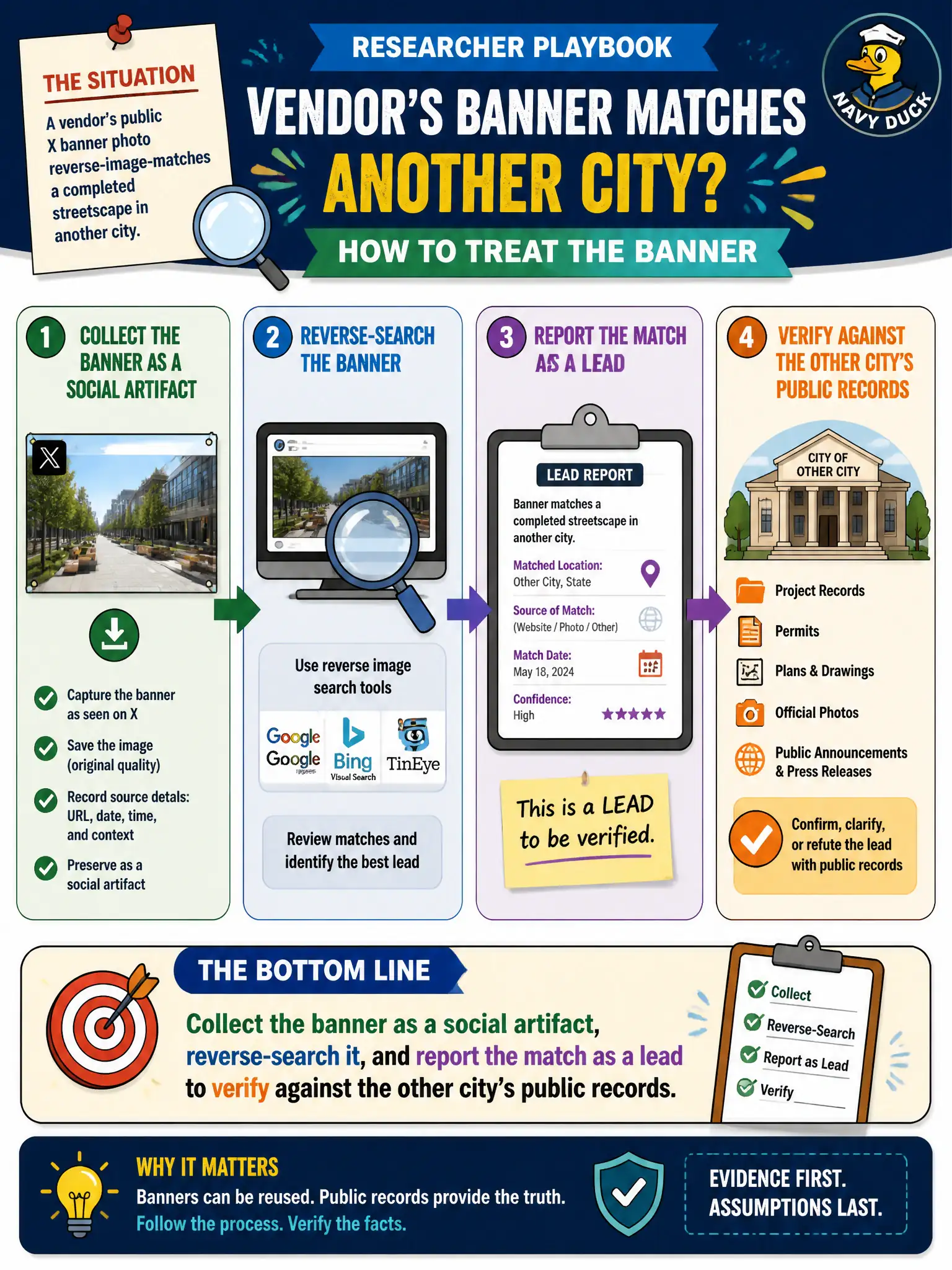
Banners are just giant business cards on the profile. Save the picture, reverse-search it, and then check the other city's public project files. A match is a lead, not a courtroom verdict.
Full Explanation
A vendor’s public X banner that reverse-image-matches a completed streetscape in another city should be collected as a social artifact, reverse-searched, and reported as a lead to verify against the other city’s public project records. In municipal contractor due diligence, banners are marketing surfaces that can reuse stock or out-of-town imagery; the match is investigative signal, not a courtroom verdict by itself. Ignoring profile and banner images as merely decorative fails because visual assets are standard social OSINT and often carry reuse or location clues. Accusing the vendor of fraud solely on the reverse-image hit fails by over-claiming: image reuse can be stock licensing, error, or marketing laziness without proving fraudulent intent. Asking vendor staff to upload original camera files from personal devices fails because that steps into compelled private collection outside open-source methods and may be unnecessary if public records already resolve the lead. Exam caveat: reverse-image matches require corroboration against municipal project lists, photos, and contracts. Operational check: save banner URL and image hash/capture; run reverse search; open the other city’s public project pages or GIS; record whether the streetscape is documented there before any fraud allegation language enters the procurement file.