
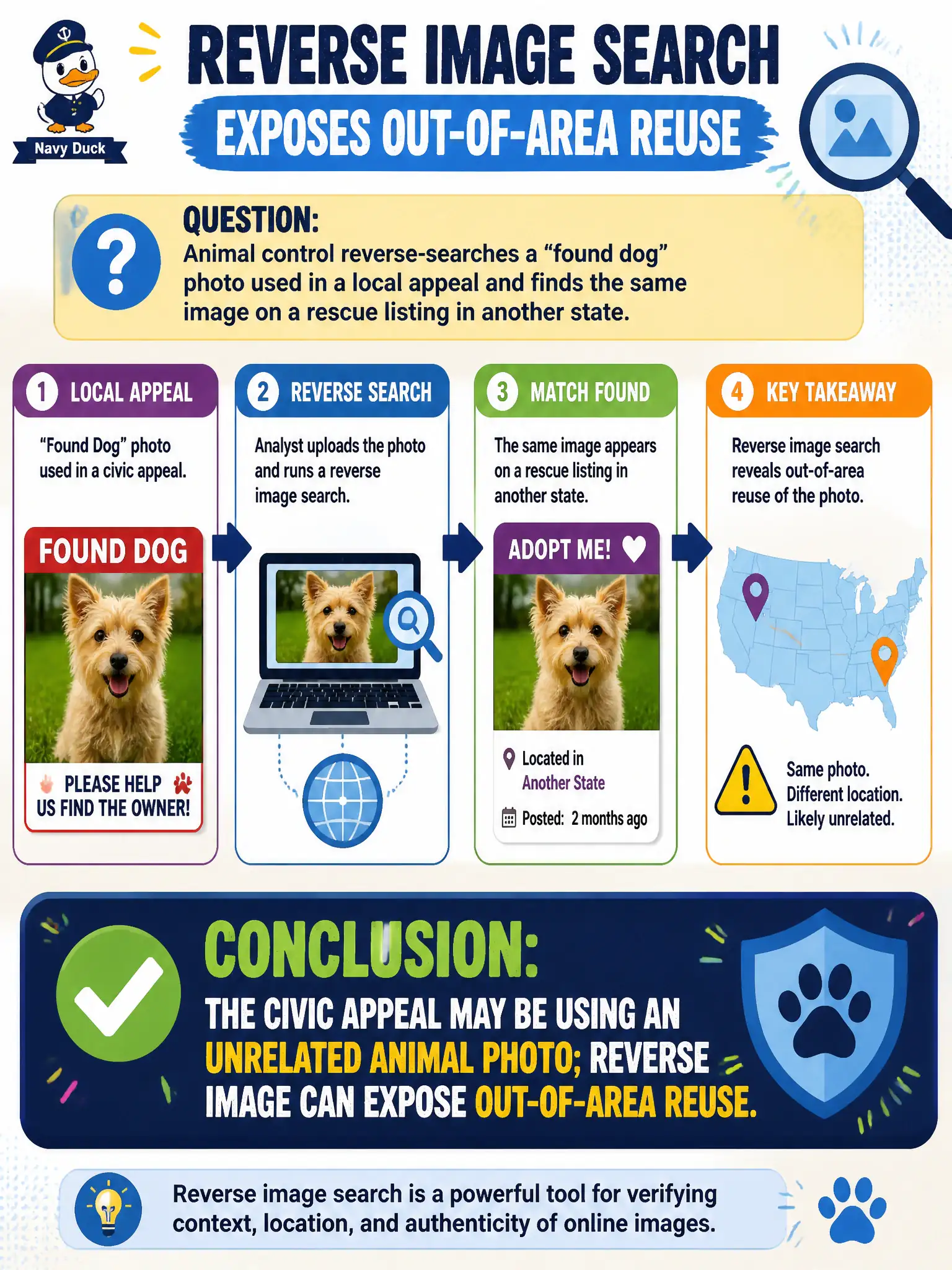
Animal control reverse-searches a “found dog” photo used in a local appeal and finds the same image on a rescue listing in another state. What should the analyst conclude?
Select an answer to reveal the explanation.
Short Explanation
Stock-photo pets show up in scams the way one pizza picture shows up on twenty menus. If the same “found dog” lives on a rescue page two states away, the local appeal may not be showing this city’s animal. Reverse image is how that reuse gets caught.
Full Explanation
Reverse-image search is a primary tool for testing whether a civic appeal photo is original to the claimed animal and locale. When animal control finds the same “found dog” image on an out-of-state rescue listing, the professional conclusion is that the local appeal may be reusing an unrelated animal photo—an integrity and public-trust issue—not that the dog teleported overnight. The out-of-area match challenges provenance and should pause recovery decisions that depend on that picture until staff verify with independent identifiers such as microchips, distinctive markings under new photos, or shelter intake records. Dispatching a recovery team from the reverse-image hit alone mistakes image reuse for physical transport. Claiming reverse image cannot work on animals because coats change is incorrect; coat similarity can add noise, but exact-file and near-duplicate matches remain informative. Treating the hit as proof of a shelter database breach invents a cyber narrative the image match does not establish. Exam caveat: PORP frames reverse image as exposing misattributed civic imagery, not as identifying offenders or proving IT compromise. Operational check: archive both the local appeal URL and the out-of-state listing with timestamps, notify supervisors of possible stock-photo reuse, request fresh authenticated photos, and withhold public certainty about the animal’s identity until corroborated.