
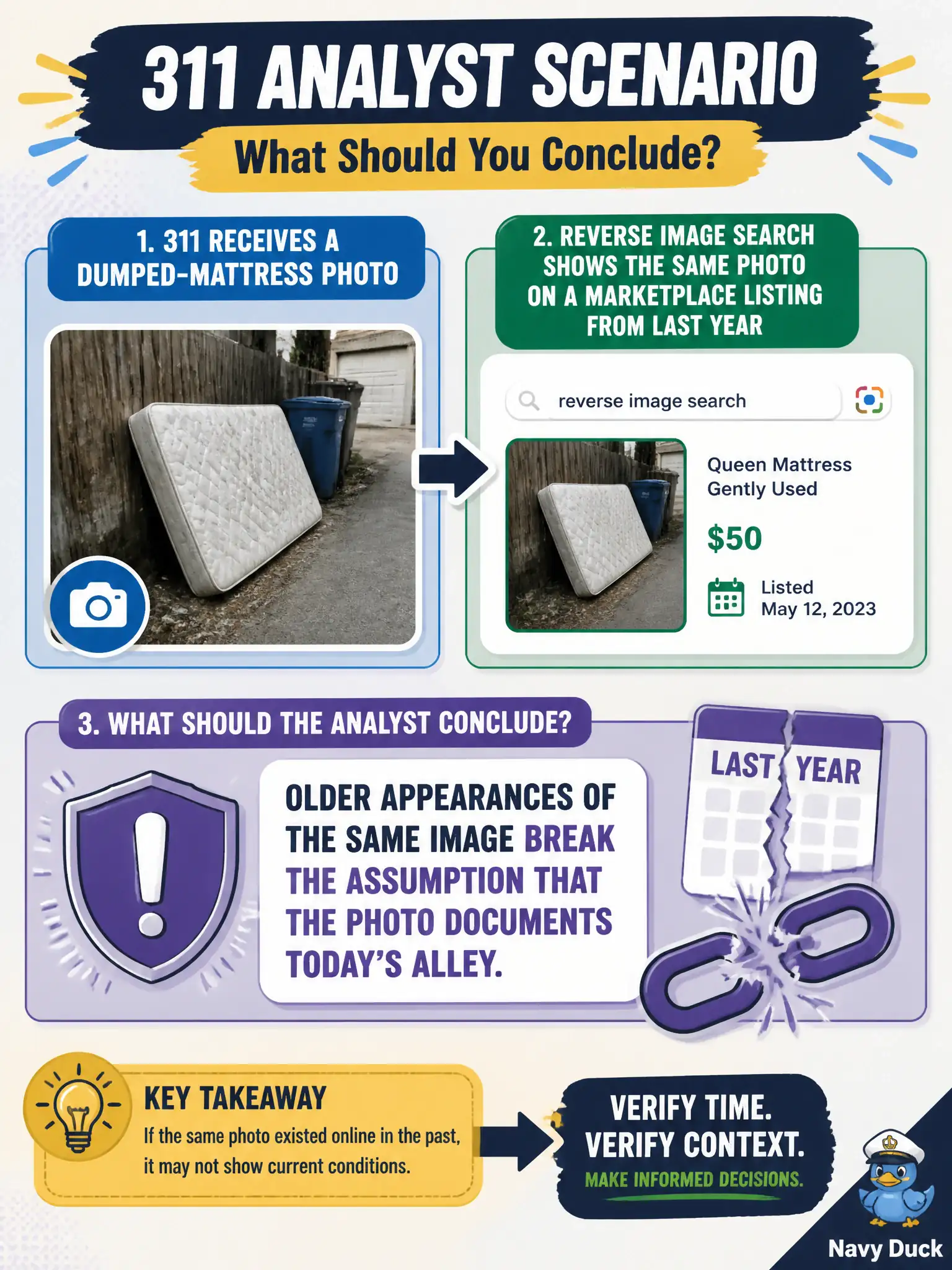
311 receives a dumped-mattress photo. Reverse image search shows the same photo on a marketplace listing from last year. What should the analyst conclude?
Select an answer to reveal the explanation.
Short Explanation
Last year's marketplace listing using the same mattress picture is a recycled prop, not this morning's alley. Reverse image broke the 'happening now' story. It still does not name the dumper.
Full Explanation
Older appearances of the same dumped-mattress photo break the assumption that the image documents today's alley. Reverse image search showing last year's marketplace listing means the file may be recycled. Believing the mattress is in today's alley merely because 311 received a photo ignores reuse. Claiming marketplace listings cannot be used as OSINT context is wrong—they are public artifacts that inform provenance. Asserting reverse image proves who dumped the mattress overclaims identity from a reused picture. Exam caveat: a recycled image can still be paired with a real current dump, so treat chronology as broken until independent corroboration exists. Operational check: record the earliest public appearance found, compare it to the 311 submission time, and require additional evidence before citing the photo as proof of today's condition. Keep the civic purpose, method limits, and exhibit labels aligned so reviewers can see what was public-source work versus other authorities. Document residual uncertainty explicitly rather than implying completeness. Prefer reversible public methods and preserve exhibits that a second analyst can reopen without guessing. When sources conflict, record both locators and state the confidence level in plain language.