
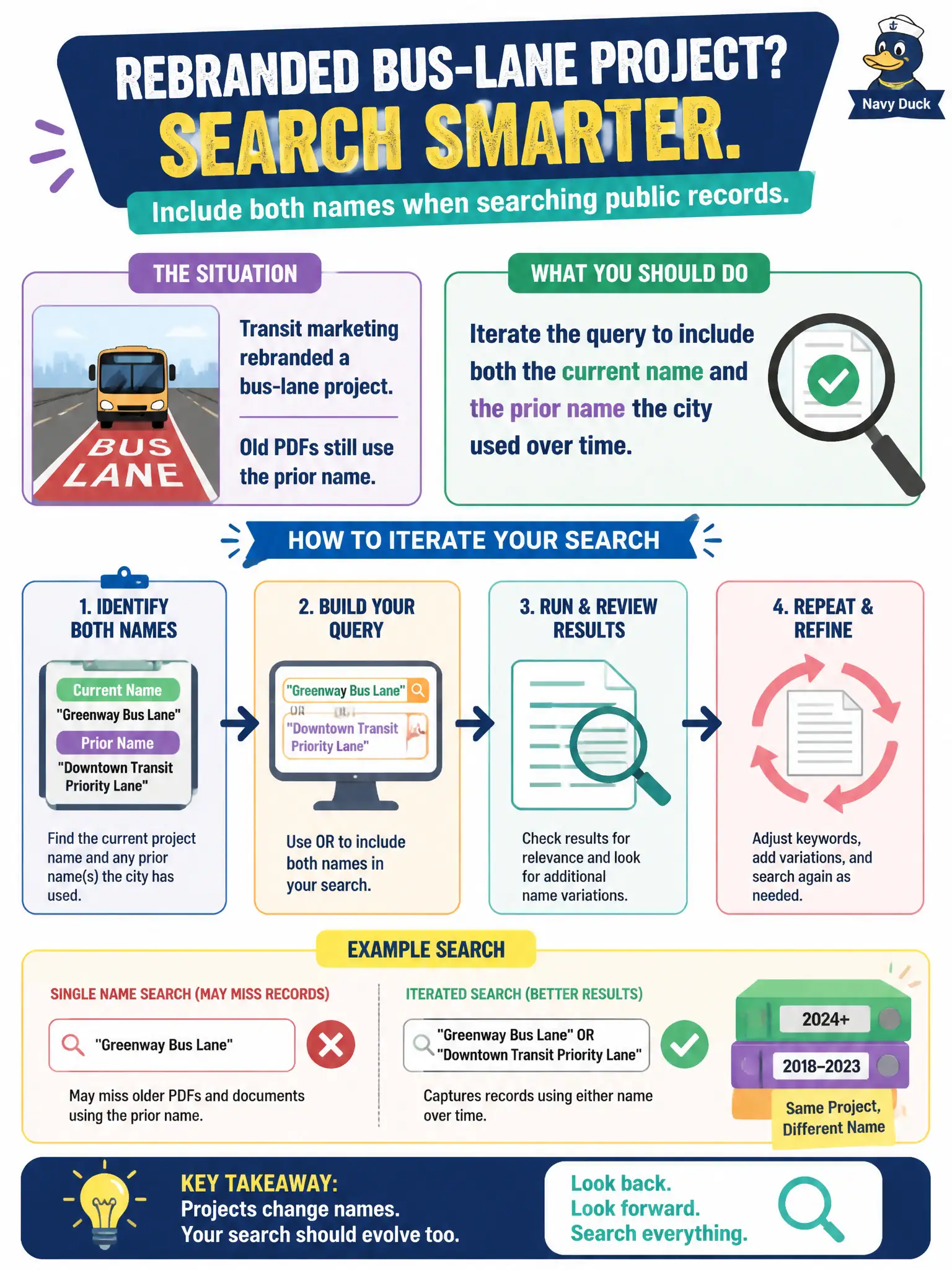
Transit marketing rebranded a bus-lane project, but old PDFs still use the prior name. What should the analyst do when searching for public records?
Select an answer to reveal the explanation.
Short Explanation
Cities rename projects the way sports teams rename stadiums—the old signs are still on the old maps. If you only search the shiny new brand, you miss the PDFs that never got the memo. Run both names; operators help, but iteration is the real move.
Full Explanation
When transit marketing rebrands a bus-lane project, analysts searching public records should iterate queries to include both the current name and the prior name the city used over time. Old PDFs often retain retired titles, so searching only the new brand because marketing declared the old name retired misses archives. Asking IT to purge every PDF that still shows the old name before searching is destructive and unnecessary for research. Treating the rebrand as proof that no old documents exist confuses messaging with records retention. Exam caveat: keep a short alias list in the notebook for the project so later analysts repeat both names. Operational check: run parallel queries for legacy and current names (with site/filetype constraints as needed) and merge unique locators into one evidence list. Keep the civic purpose, method limits, and exhibit labels aligned so reviewers can see what was public-source work versus other authorities. Document residual uncertainty explicitly rather than implying completeness. Prefer reversible public methods and preserve exhibits that a second analyst can reopen without guessing. When sources conflict, record both locators and state the confidence level in plain language.