
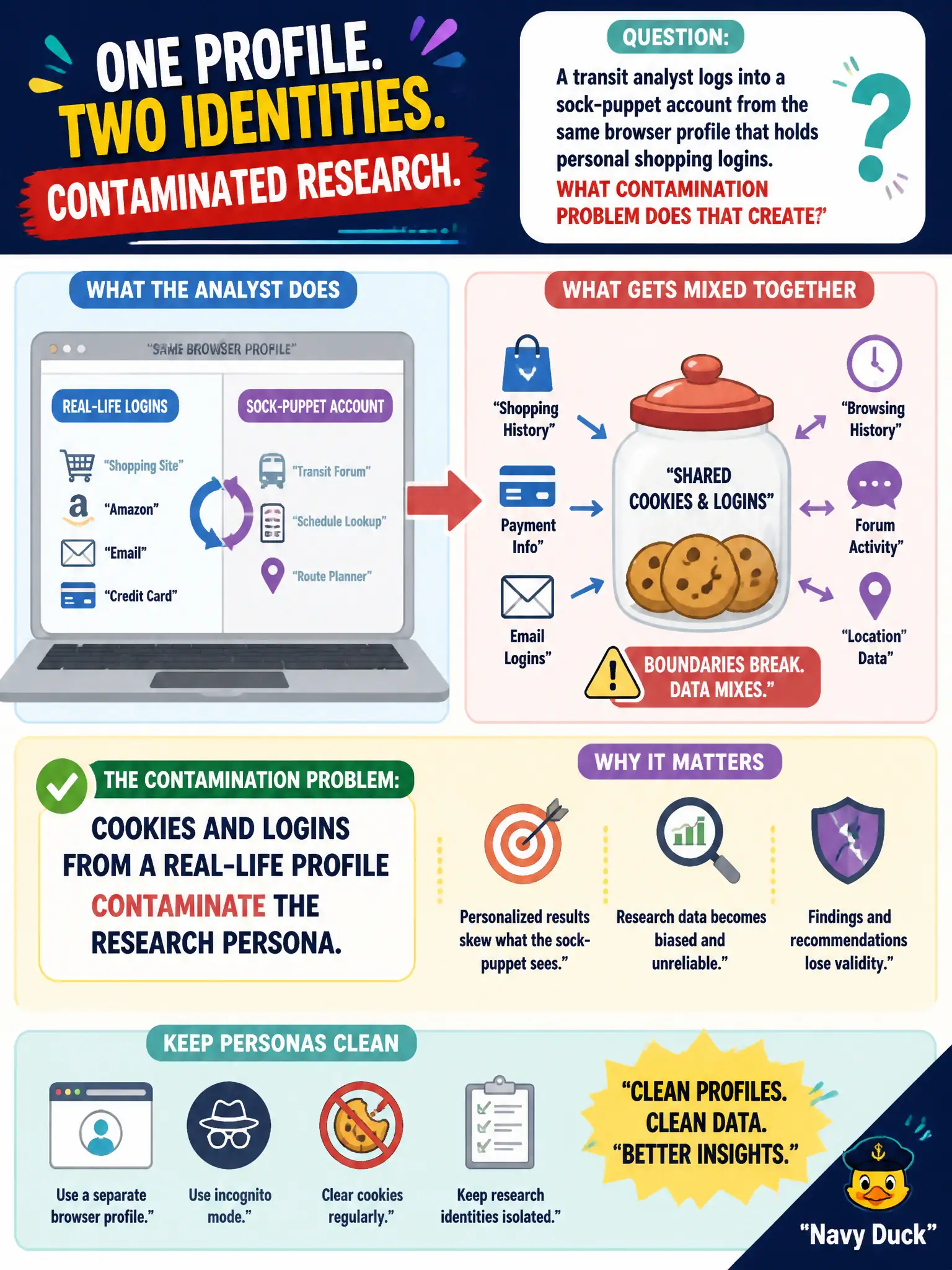
A transit analyst logs into a sock-puppet account from the same browser profile that holds personal shopping logins. What contamination problem does that create?
Select an answer to reveal the explanation.
Short Explanation
Logging the sock puppet into the same profile as personal shopping is like wearing a home-address jacket on the research shift. Cookies, autofill, and recommendation trails stitch the fake account to the real person. Isolate the persona in its own browser world.
Full Explanation
Cookies and logins from a real-life browser profile contaminate a research persona when a transit analyst opens the sock puppet in the same profile that holds personal shopping logins. Session tokens, autofill, and tracking graphs can bind the persona to the analyst's true identity. Claiming shopping cookies improve the persona's credibility and that mixing profiles is recommended inverts OPSEC. Assuming transit SSO will strip personal cookies automatically when a sock puppet is opened is unsupported wishful thinking. Saying contamination only matters if shopping history is printed into the report ignores silent technical linkage that never appears in prose. Exam caveat: dedicated browser profiles or VMs are the baseline control even when the persona credentials themselves are unique. Operational check: launch the sock puppet only from a clean research profile with no personal shopping, mail, or social sessions, and verify the personal profile is not simultaneously loaded in that browser user data directory. Keep the civic purpose, method limits, and exhibit labels aligned so reviewers can see what was public-source work versus other authorities. Document residual uncertainty explicitly rather than implying completeness.