
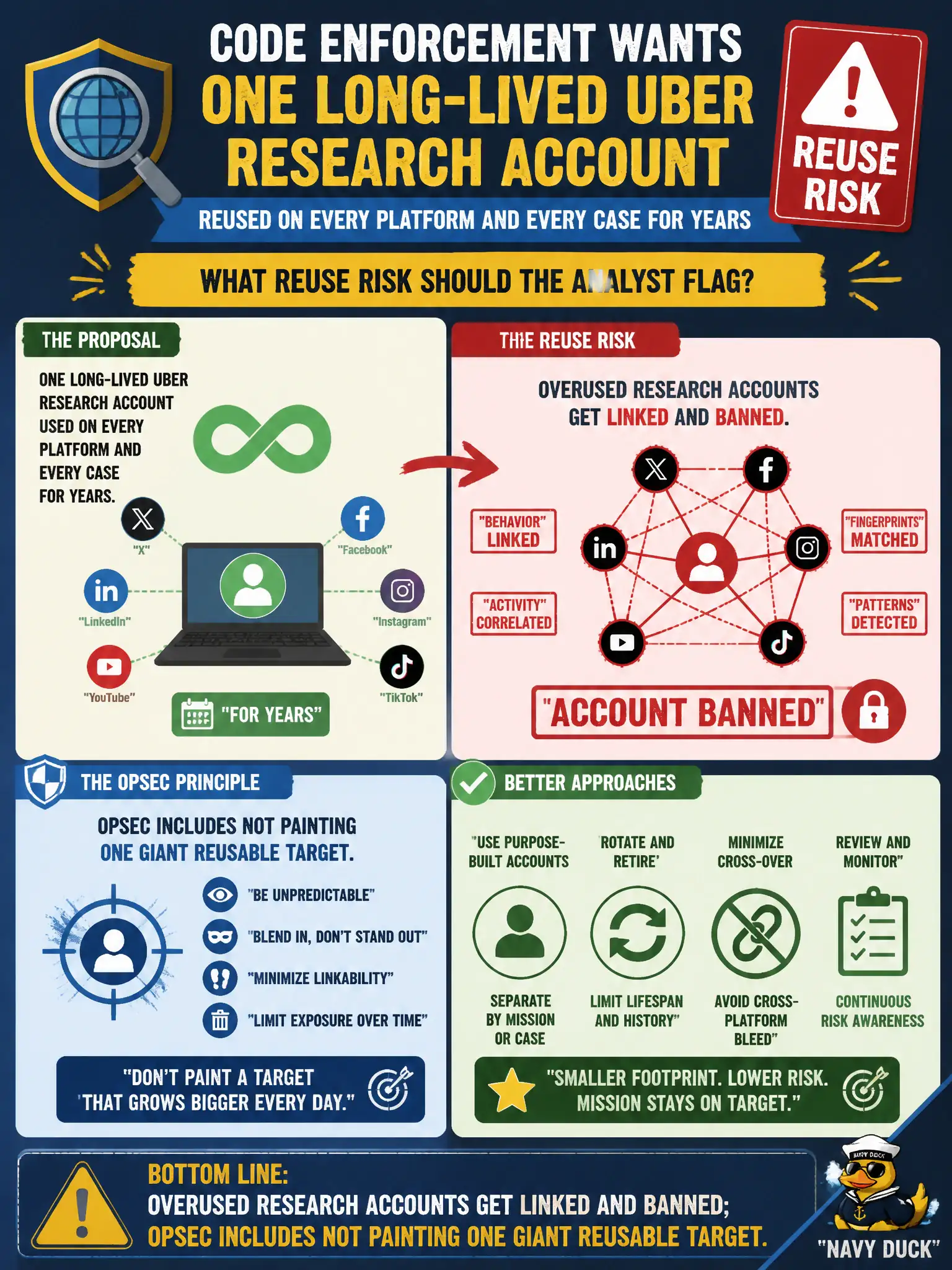
Code enforcement wants one long-lived uber research account reused on every platform and every case for years. What reuse risk should the analyst flag?
Select an answer to reveal the explanation.
Short Explanation
One uber-account for every case is like using the same undercover van with the same dent for ten years. People start recognizing the van, and platforms start clustering the behavior. Personas can be aged, but they should not become one giant reusable billboard.
Full Explanation
Overused research accounts get linked across platforms and cases, then banned or attributed; OPSEC includes not painting one giant reusable target for years of code-enforcement work. A single long-lived uber account reused on every platform and every case creates correlation opportunities for subjects and platforms alike. Claiming a single aged account is always safer because aging hides the agency ignores cross-case linkage and ban cascades. Believing platforms reward one account that friends every subject across unrelated cases invents a benefit that usually looks like surveillance behavior. Treating reuse as required so the city can produce the persona's full history as one exhibit prioritizes a messy exhibit over operational survival. Exam caveat: limited reuse within a controlled persona lifecycle can be acceptable if risks are managed; unbounded forever-reuse is the failure mode. Operational check: maintain a persona inventory with case association limits and retirement triggers, and refuse to attach one account to every new unrelated investigation. Keep the civic purpose, method limits, and exhibit labels aligned so reviewers can see what was public-source work versus other authorities.