
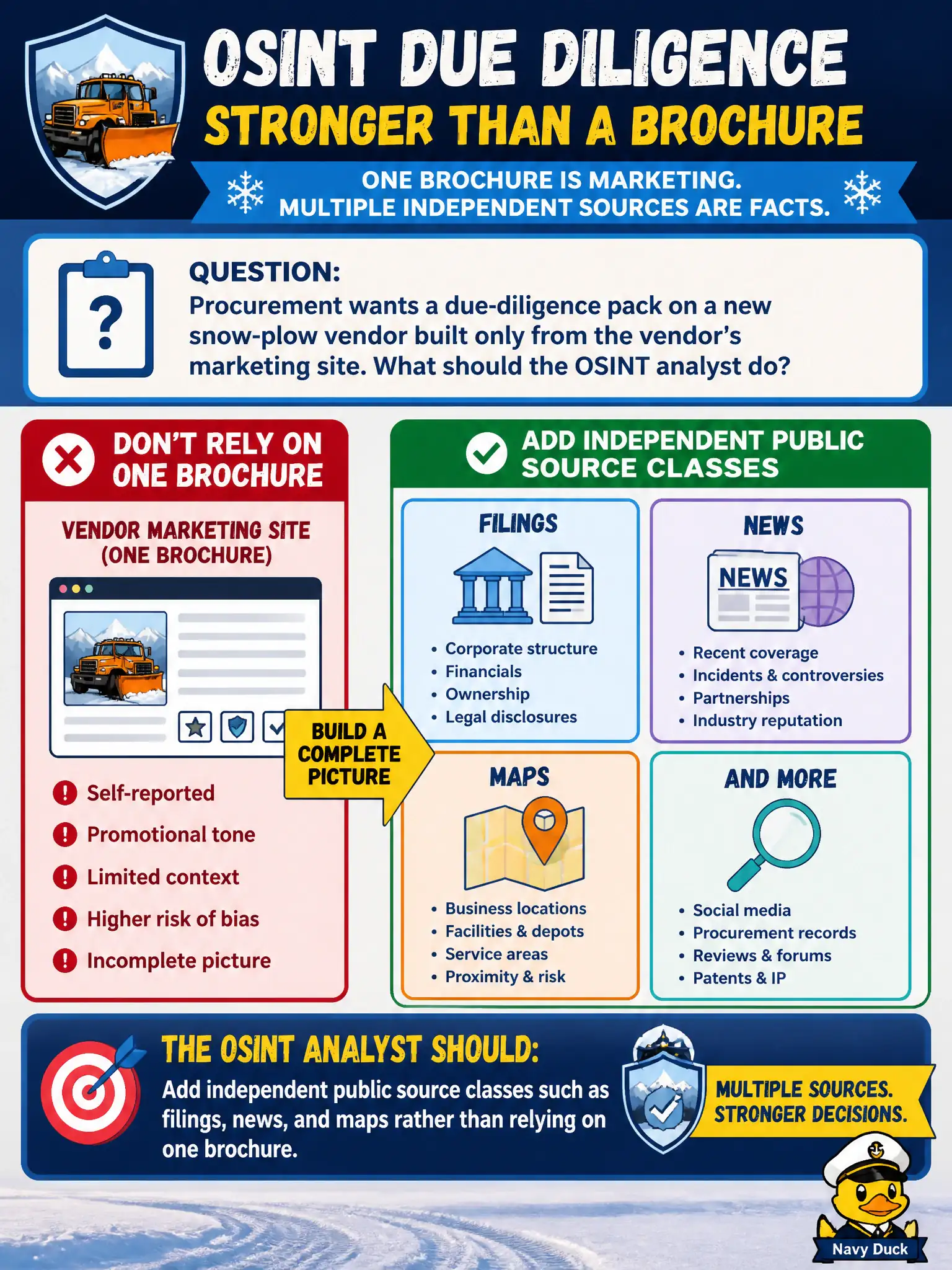
Procurement wants a due-diligence pack on a new snow-plow vendor built only from the vendor's marketing site. What should the OSINT analyst do?
Select an answer to reveal the explanation.
Short Explanation
A restaurant's menu is not a health inspection. The vendor's marketing site is one voice, and it is selling something. Real due diligence pulls independent public records, news, and maps so the city is not just reading the brochure back to itself.
Full Explanation
Civic vendor due diligence requires multiple independent public source classes, not a single marketing brochure. A snow-plow vendor's own website is a useful but self-serving artifact; filings, news, maps, licensing boards, and other open repositories provide cross-checks that marketing copy will not volunteer. Accepting the official page as sufficient leaves the city exposed to unverified claims about capacity, history, or performance. Rewriting the brochure in the city's voice creates derivative text, not independent research, and can launder vendor assertions into apparent municipal findings. Ignoring public filings and news merely to keep the pack short and on-message trades rigor for messaging convenience and weakens procurement defensibility. Exam caveat: when time is limited, prioritize the highest-value independent classes for the decision at hand rather than expanding endlessly, but do not collapse the review to one brochure. Operational check: require at least two non-vendor public source types behind any material due-diligence claim (for example, a filing plus a news or registry check) and cite each locator in the pack. Keep the civic purpose, method limits, and exhibit labels aligned so reviewers can see what was public-source work versus other authorities.