
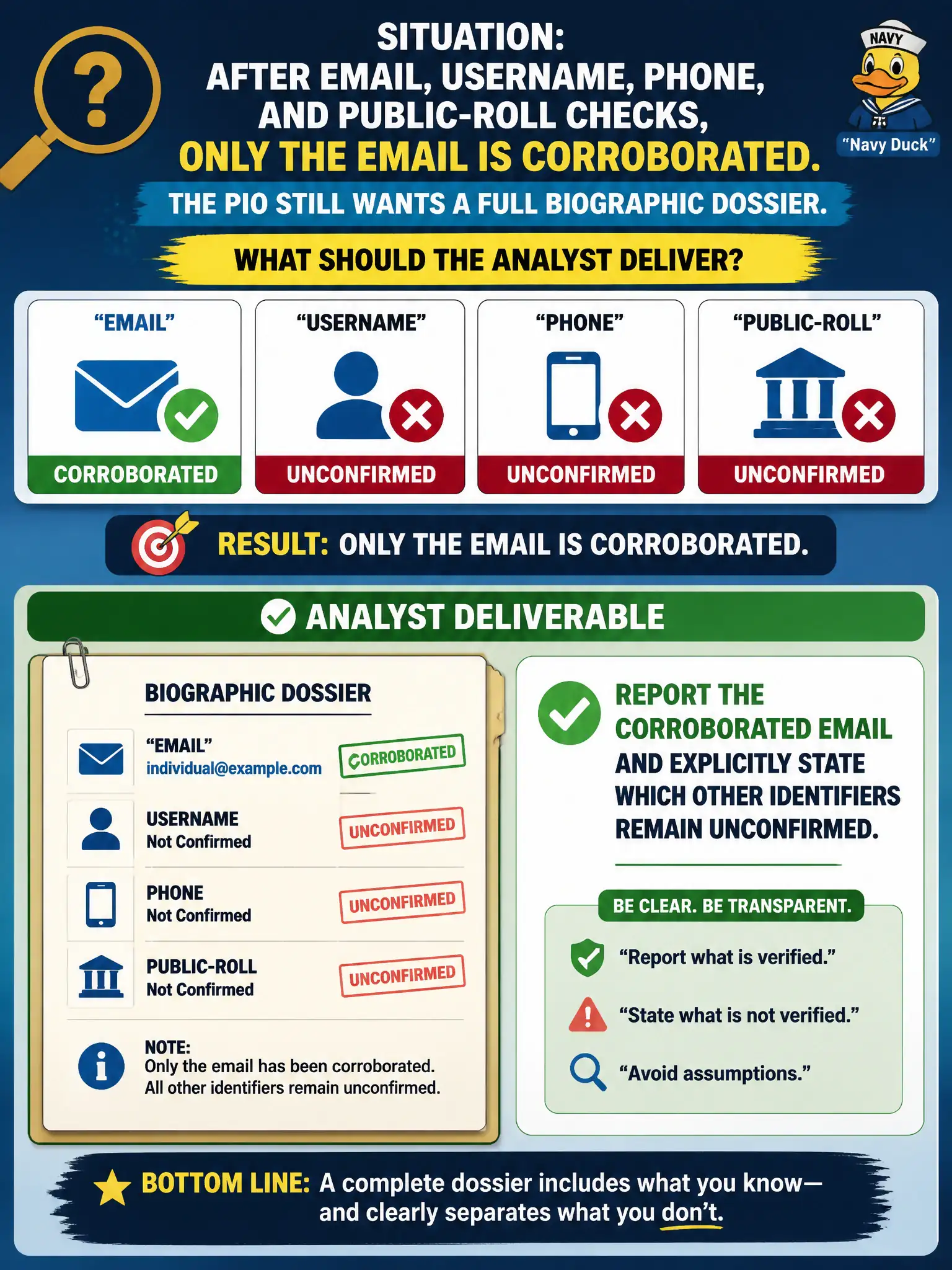
After email, username, phone, and public-roll checks, only the email is corroborated. The PIO still wants a full biographic dossier. What should the analyst deliver?
Select an answer to reveal the explanation.
Short Explanation
A thin identity is still an identity if you label the holes. Hand over the corroborated email and say out loud that username, phone, and roll checks did not land. Inventing a novel or stuffing in cousins makes the report look full and be wrong.
Full Explanation
After email, username, phone, and public-roll checks, if only the email is corroborated, the analyst should report that corroborated email and explicitly state which other identifiers remain unconfirmed—not invent usernames and a home address to please the PIO, withhold the email as “worthless,” or pad with relatives from a people-search. Thin but honest identity products beat fabricated dossiers in civic communications. Inventing usernames and a home address so the packet looks complete injects fiction into PIO materials that may be published or briefed upward. Withholding the email because a thin identity is “worthless” discards the one corroborated finding stakeholders can actually use. Padding the dossier with relatives from a people-search for bulk expands scope into uninvolved family without civic need. Exam caveat: PORP scores transparent partial identity reporting over completeness theater in public-information work. Operational check: list each identifier class with corroborated or unconfirmed status, deliver the email finding with sources and dates, refuse fictional padding and relative sprawl, and offer next public collection steps if the PIO still needs more—without fabricating fields.