
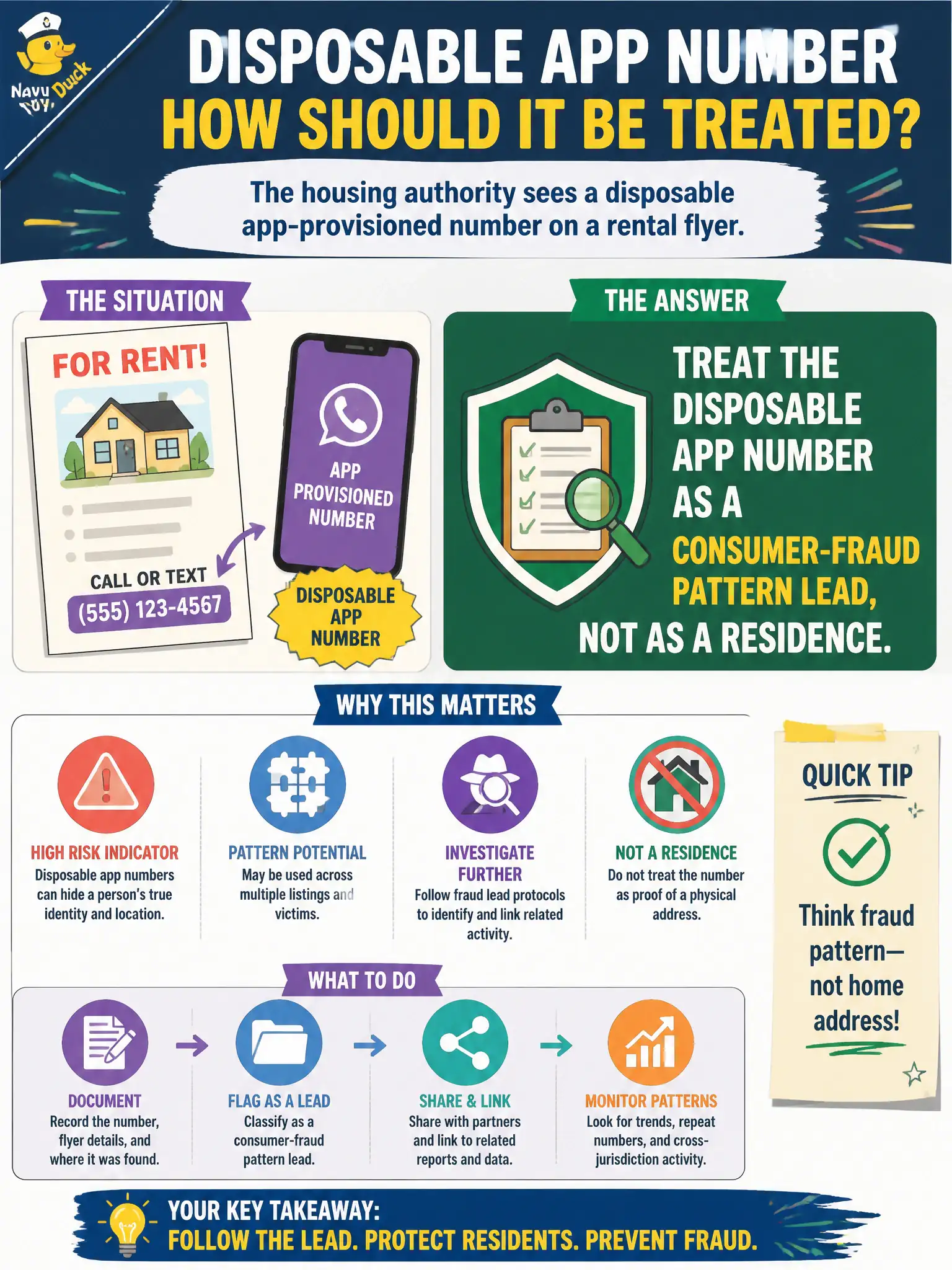
The housing authority sees a disposable app-provisioned number on a rental flyer. How should that number be treated?
Select an answer to reveal the explanation.
Short Explanation
A text-now-class number is a paper wristband, not a house key. It can be a fraud-pattern flag on a rental flyer, but it does not tell you where anyone sleeps. Do not geocode it, bless it, or try to hijack it.
Full Explanation
Disposable app-provisioned numbers on rental flyers should be treated as consumer-fraud pattern leads, not as residences. Text-app and virtual-number services are commonly used in rental scams precisely because they are cheap, disposable, and not tied to a landlord’s sleeping address. Geocoding the number as the landlord’s sleeping address invents a home from a virtual line. Assuming the listing is authentic because app numbers are always carrier-verified overtrusts provisioning theater that does not validate the housing offer. Asking the carrier to move the number onto a city line so the listing can be taken over is unauthorized number interference, not OSINT. Exam caveat: PORP treats disposable app numbers on housing flyers as fraud-pattern indicators without converting them into geocodes or seizure actions. Operational check: classify the number via public lookup as app or VoIP-class if shown, flag the flyer for housing-authority fraud review, search the number and listing text on other public scam reports, and refuse geocoding or carrier-port requests framed as research shortcuts. Housing-authority analysts should pair the disposable-number flag with other flyer tells—cloned photos, impossible rents, pressure tactics—while still not geocoding the virtual line.