
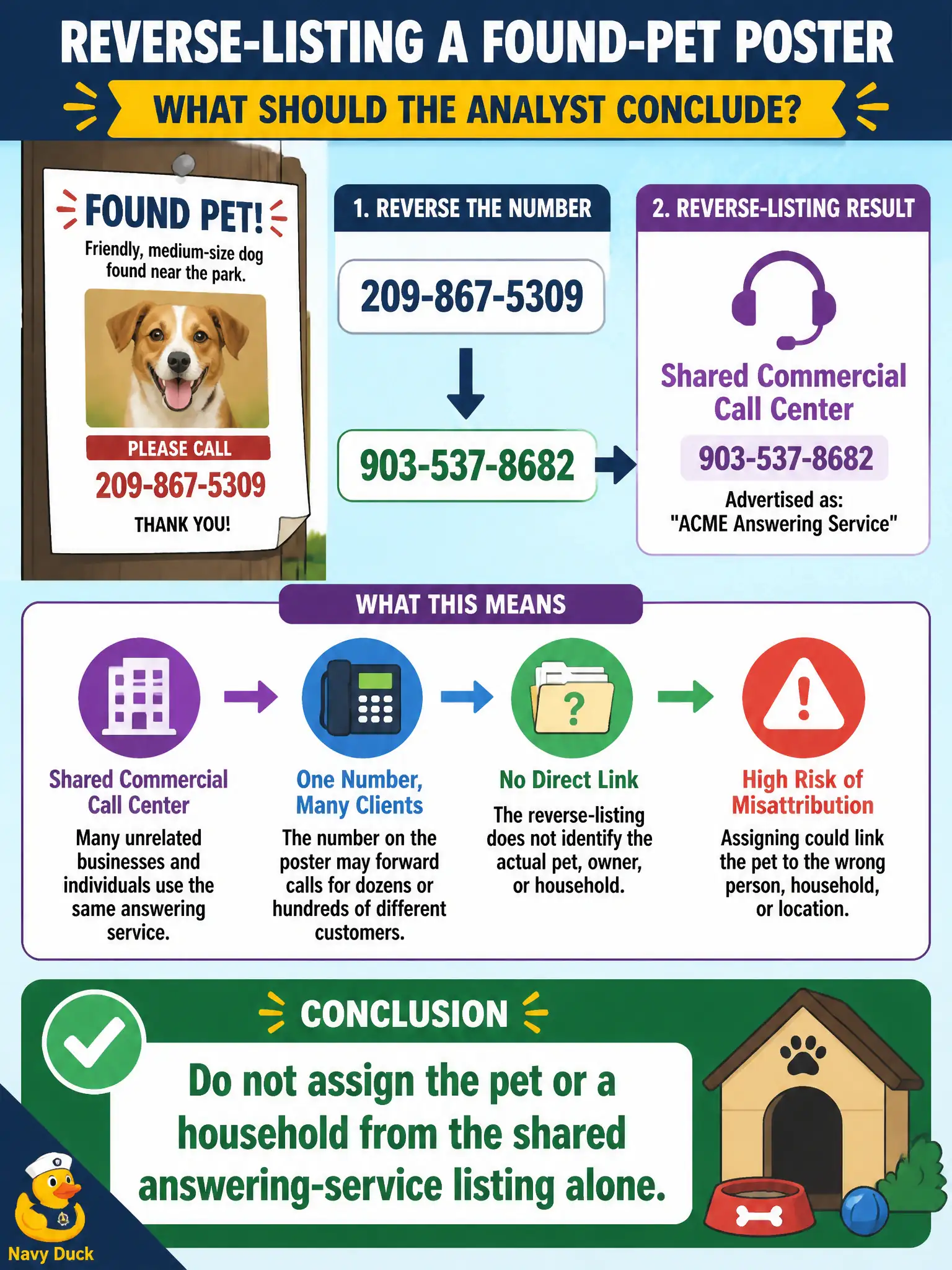
An animal-control found-pet poster lists a number that reverse-lists to a shared commercial call center. What should the analyst conclude?
Select an answer to reveal the explanation.
Short Explanation
A shared call-center number is the front desk for a whole building, not a doorbell on one apartment. Reverse listing got you a commercial answering service, not a household. Keep the number in notes, but do not pin the pet to a specific home.
Full Explanation
When an animal-control found-pet poster lists a number that reverse-lists to a shared commercial call center, the analyst must not assign the pet or a household from that shared answering-service listing alone. Shared PBX and call-center numbers serve many clients and do not prove a residential address or owner identity. Treating the reverse listing as proof the animal lives at the call-center street address misreads commercial reverse data as a home doorbell. Deleting the number from notes because shared listings are “never worth citing” discards a still-useful contact path for outreach to whoever pays for the answering service. Demanding the call center’s private call recordings as the first OSINT step seeks non-public content outside collection scope. Exam caveat: PORP flags shared commercial numbers as weak residence evidence while still allowing them as contact leads in civic animal-control work. Operational check: label the listing as shared or commercial, use it only for outbound contact if appropriate under local practice, seek other public identifiers on the poster such as names or microchip notes, and avoid assigning a home address from the reverse listing in the case file.