
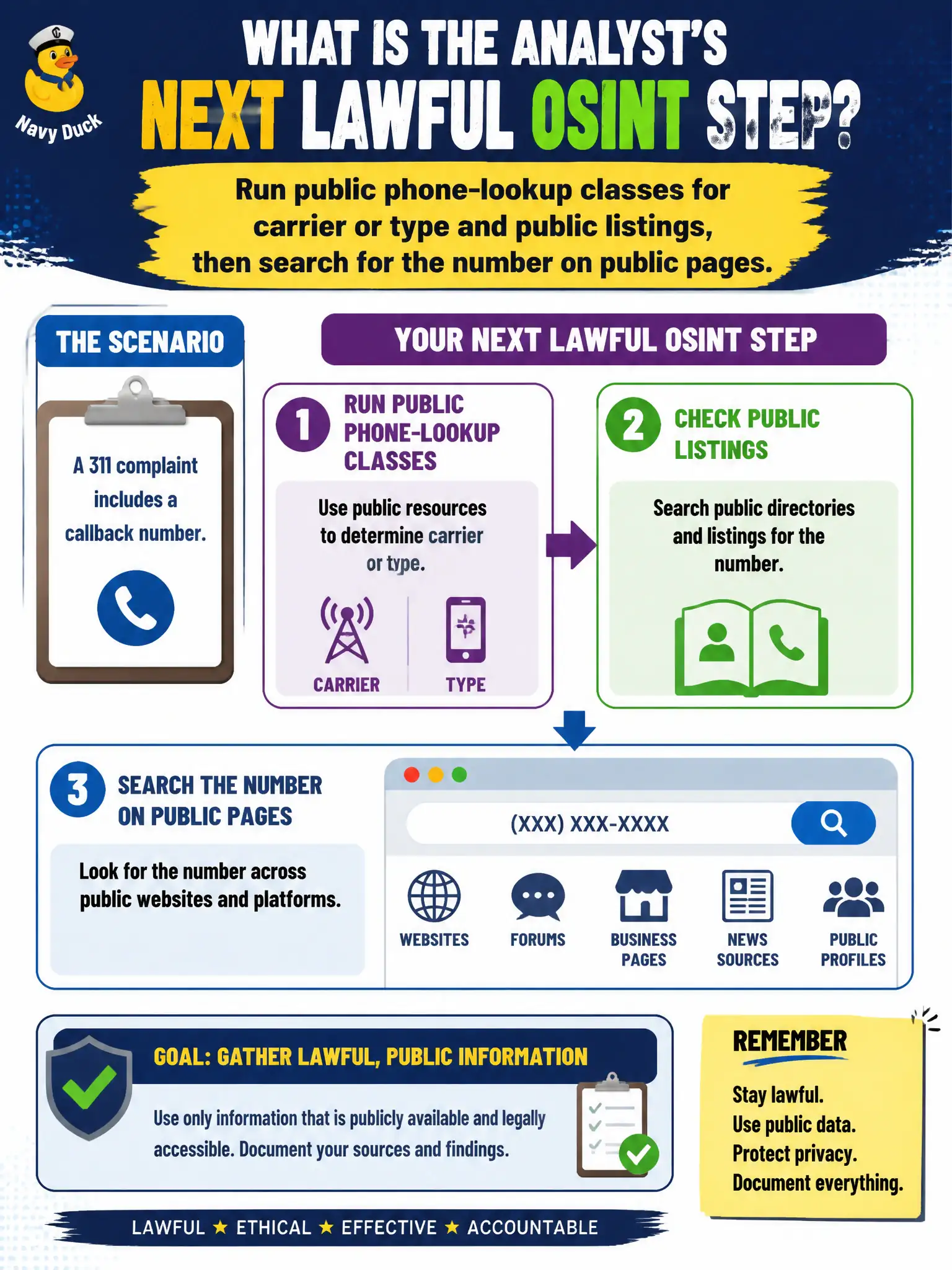
A 311 complaint includes a callback number. What is the analyst’s next lawful OSINT step?
Select an answer to reveal the explanation.
Short Explanation
A callback number is a label on a jar, not a costume to wear. Look up public type, carrier-class, and listings, then see where that number already appears. Spoofing, porting, or hammering the line is fraud theater, not phone OSINT.
Full Explanation
When a 311 complaint includes a callback number, the analyst’s next lawful OSINT step is to run public phone-lookup classes for carrier or line type and public listings, then search for the number as an exact token on public pages. Lawful phone OSINT is passive and documentary: classify, list, and find prior publications. Placing a call that displays a spoofed caller ID to see who answers is deceptive calling outside PORP. Porting the number onto a city SIM so inbound texts can be read is unauthorized number takeover and interception-adjacent conduct. Sending repeated robocalls until someone names themselves is harassment, not research. Exam caveat: PORP phone OSINT is lookup-and-search, not interactive interception, spoofing, or social-engineering calls. Operational check: run public reverse-lookup and OSINT search tools, record carrier or type if published, cite pages that repeat the number with dates, escalate any need for subscriber data through lawful process—not pretext calls—and keep the finding scoped to the authorized 311 civic purpose. A 311 callback is a published contact token for classification and search, not a live microphone into the complainant’s device or household. Document carrier-class results and public page hits, then stop.