
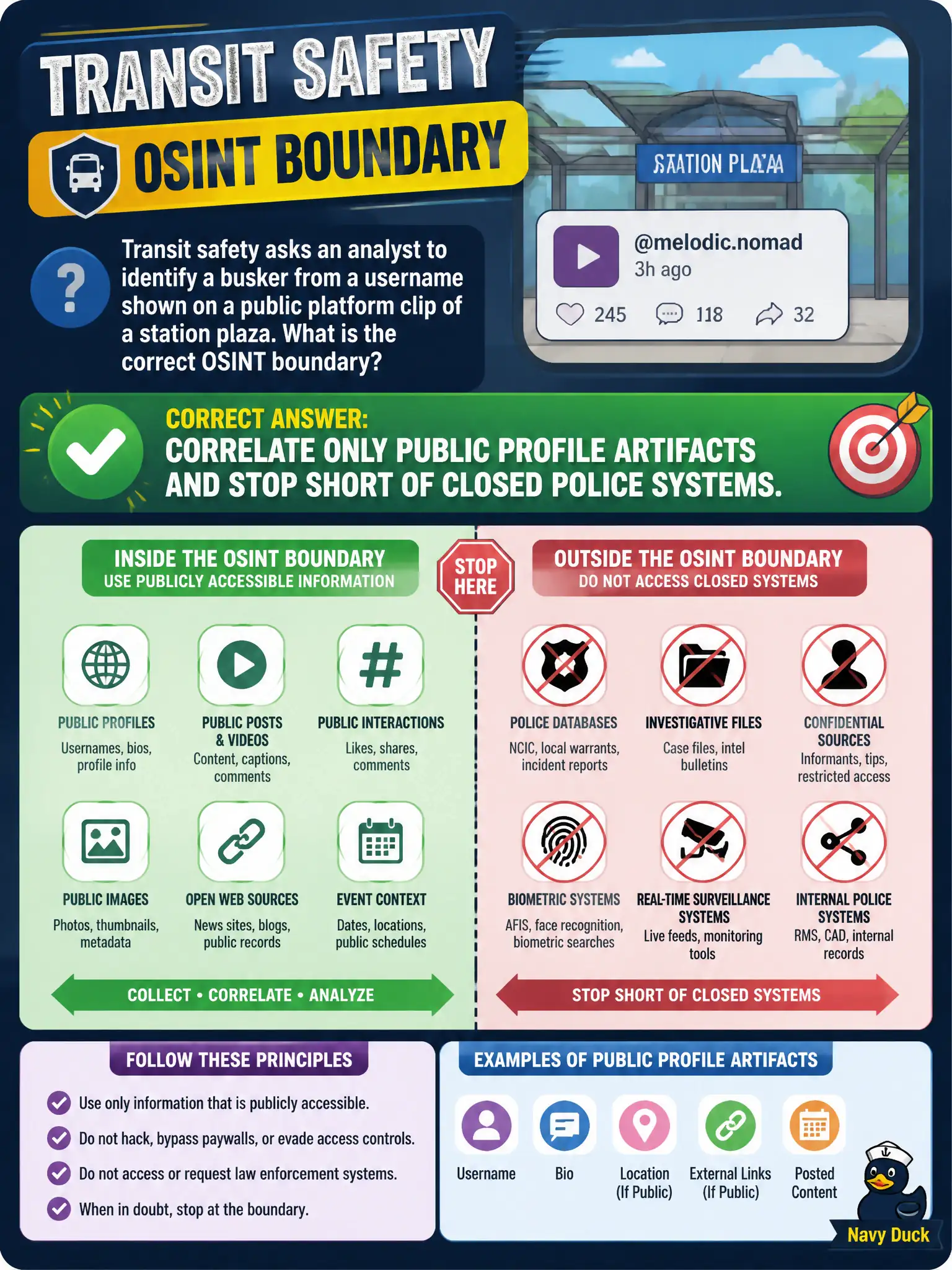
Transit safety asks an analyst to identify a busker from a username shown on a public platform clip of a station plaza. What is the correct OSINT boundary?
Select an answer to reveal the explanation.
Short Explanation
A username on a public clip is a name tag in the plaza, not a key to the police records room. Stay with public profile correlation—display name, public posts, linked sites. Closed criminal databases are a different authority, not OSINT.
Full Explanation
When transit safety asks an analyst to identify a busker from a username shown on a public platform clip of a station plaza, the correct OSINT boundary is to correlate only public profile artifacts and stop short of closed police systems. Public display names, linked sites, and other open posts may support a lead; non-public enforcement databases do not become OSINT because a username appeared on camera. Querying the agency’s non-public arrest database using the handle as a suspect name leaves the open-source lane for restricted criminal-justice systems that require separate authority. Demanding the platform’s government-ID file for the account as the first research step seeks non-public KYC material platforms do not publish. Placing a call while displaying a fake caller ID to confirm who answers is spoofing and social engineering, not passive collection. Exam caveat: PORP keeps plaza-clip username work inside public profile correlation and forbids closed-system or deceptive shortcuts. Operational check: capture the clip URL and visible username, review only public profile fields and linked public pages, document residual uncertainty, and route any need for LE databases or legal process through authorized transit-safety channels—not OSINT improvisation.