
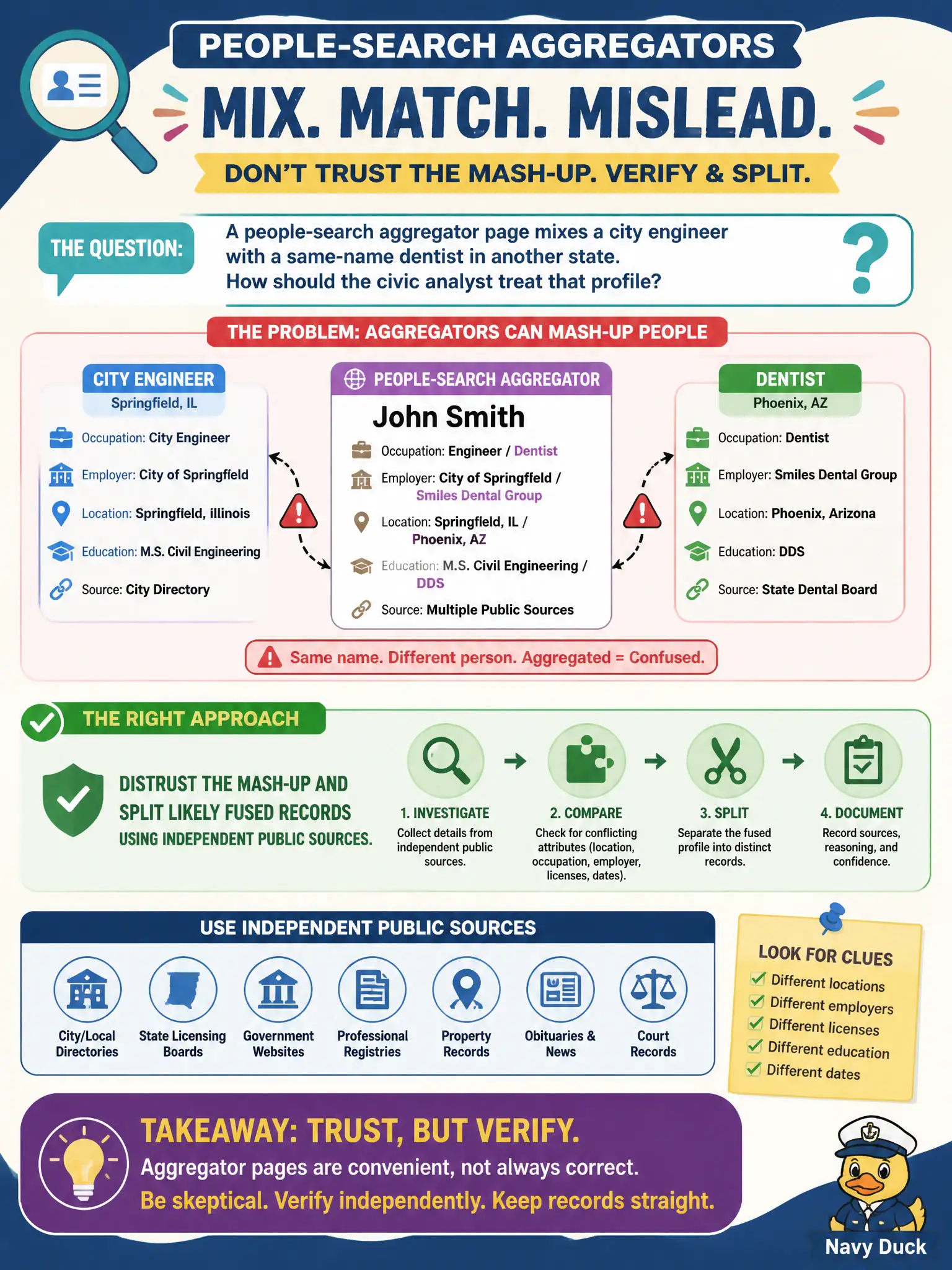
A people-search aggregator page mixes a city engineer with a same-name dentist in another state. How should the civic analyst treat that profile?
Select an answer to reveal the explanation.
Short Explanation
Aggregator pages are garage-sale boxes: two lives can get dumped in one carton. If a city engineer is sharing a profile with an out-of-state dentist, split the pile. Rebuild each person from independent public sources.
Full Explanation
When a people-search aggregator page mixes a city engineer with a same-name dentist in another state, the civic analyst should distrust the mash-up and split likely fused records using independent public sources. Aggregators frequently collapse same-name identities across geography and profession into one profile card. Citing the blended page as a single verified identity for the engineer imports false relatives, phones, and addresses into a civic personnel or vendor-adjacent file. Assuming aggregators never fuse records across professions or states ignores a well-documented failure mode that PORP training flags explicitly. Copying every aggregator field into the report as established fact launders low-quality merge errors into official notes that other departments may reuse. Exam caveat: PORP treats people-search mash-ups as hypotheses to dissect, not as authoritative biographies for municipal subjects. Operational check: list conflicting profession and state fields on the aggregator page, rebuild the engineer from city directories, licenses, and other primary public pages, rebuild or discard the dentist cluster separately, and cite the aggregator URL only as a lead that was decomposed—not as the identity source of record.