
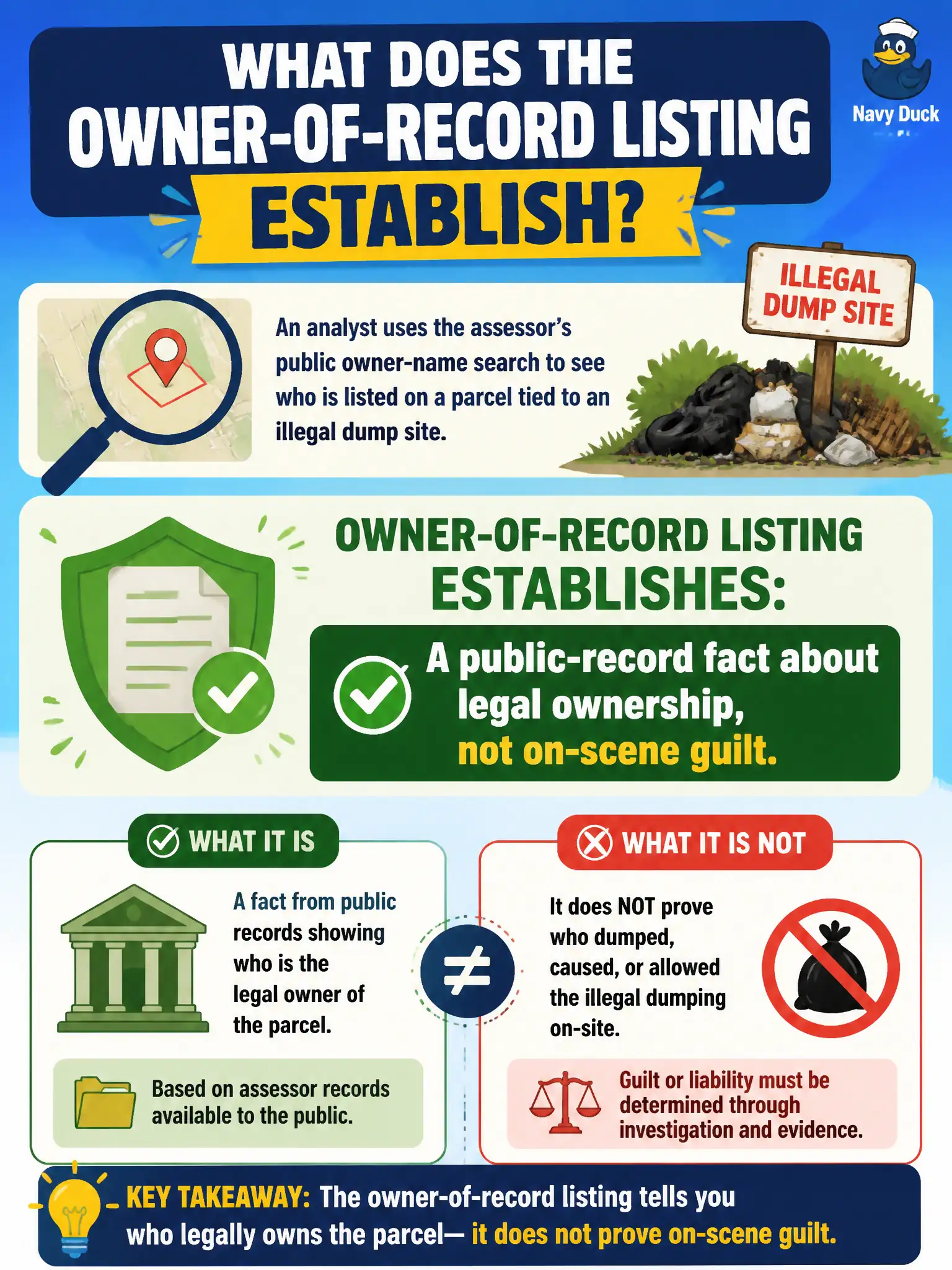
An analyst uses the assessor's public owner-name search to see who is listed on a parcel tied to an illegal dump site. What does the owner-of-record listing establish?
Select an answer to reveal the explanation.
Short Explanation
The assessor roll is a nameplate on the mailbox, not a confession at the dump. It tells you who is listed as owner of record. It does not put the bag in anyone's hands.
Full Explanation
Using the assessor’s public owner-name search for a parcel tied to an illegal dump site establishes a public-record fact about legal ownership, not on-scene guilt. Owner-of-record is a property-law listing that may reflect absentee owners, LLCs, trusts, or historic title unrelated to who placed the waste. Asserting that the listed owner personally dumped the waste converts a title fact into an unproven act attribution that OSINT alone cannot carry. Writing criminal guilt sufficient for an immediate arrest narrative in the OSINT report exceeds both the evidence and the analyst’s role in a parks or public-works matter. Claiming that assessor pages are “hidden ownership” civic OSINT may not cite misunderstands that assessor rolls are classic public sources for parcel research. Exam caveat: PORP separates public ownership facts from culpability conclusions at a dump scene and expects that separation to appear in the written product. Operational check: cite the assessor page, parcel ID, owner-of-record string, and retrieval date; note LLC or absentee possibilities; geolocate and document the dump with imagery and field notes separately; and leave charging language to authorized enforcement processes.