
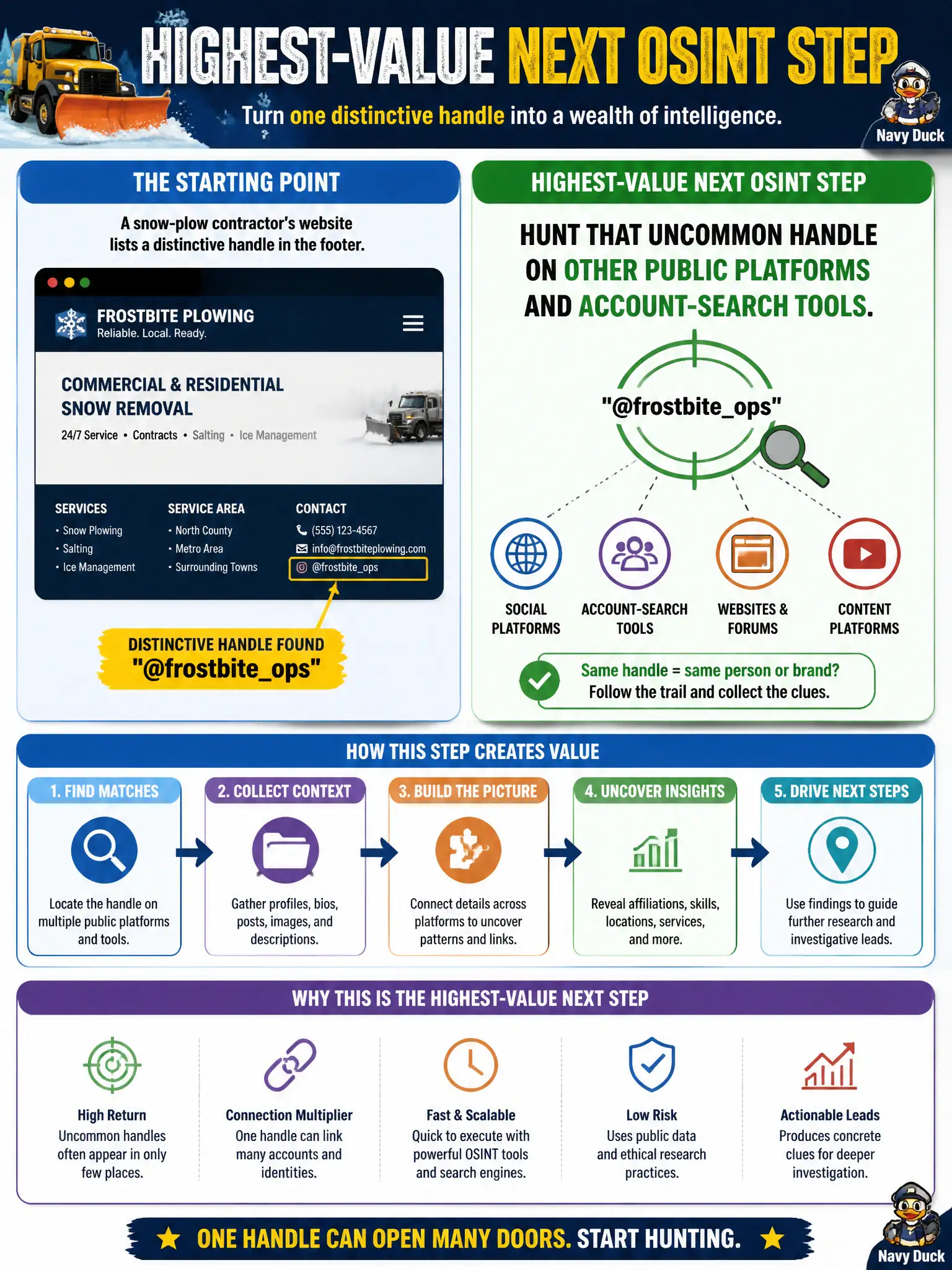
A snow-plow contractor's website lists a distinctive handle in the footer. What is the highest-value next OSINT step?
Select an answer to reveal the explanation.
Short Explanation
A weird handle is a unique luggage tag. If it shows up on the contractor site, it is worth checking other public platforms for the same tag. Do not start guessing passwords just because the tag looks rare.
Full Explanation
When a snow-plow contractor’s website lists a distinctive handle in the footer, the highest-value next OSINT step is to hunt that uncommon handle on other public platforms and account-search tools. Rare strings are high-value username pivots precisely because collision risk is lower than for generic names. Stopping at the website because usernames “never” repeat across platforms abandons a standard cross-platform technique that often links blogs, code hosts, and forums to the same contractor contact. Pulling non-public home-address files that sit outside the OSINT collection set jumps to restricted records without need when a public pivot remains unexplored. Attempting logins on every site using that handle as the username is unauthorized access testing, not open-source research, and can lock accounts or create audit alarms. Exam caveat: PORP elevates distinctive public handles as pivots for passive reuse hunting, not as passwords or excuses for non-public pulls. Operational check: extract the exact footer string, search account-hunter tools and major public platforms, archive matching profiles with dates, corroborate with independent details before merging to the contractor entity, and never use the handle as a credential in login attempts.