
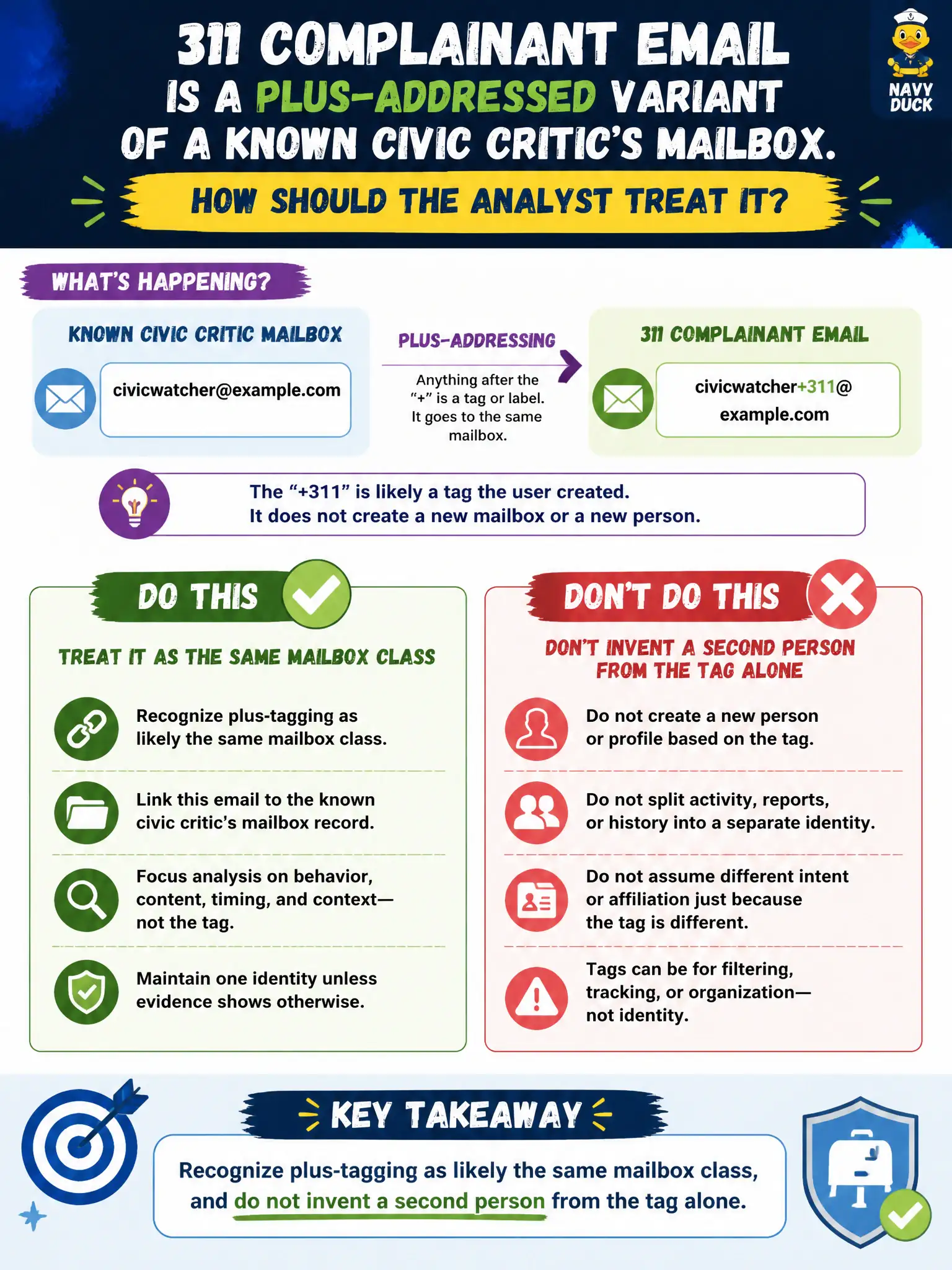
A 311 complainant email is a plus-addressed variant of a known civic critic's mailbox. How should the analyst treat it?
Select an answer to reveal the explanation.
Short Explanation
Plus-tags are like extra apartment labels on the same mailbox. name+permits and name+noise can still be one person sorting mail. Do not mint a second critic just because a plus sign showed up.
Full Explanation
When a 311 complainant email is a plus-addressed variant of a known civic critic’s mailbox, the analyst should recognize plus-tagging as likely the same mailbox class and must not invent a second person from the tag alone. Providers that support local-part plus tags typically deliver name+tag@domain to the same underlying mailbox as name@domain, which is why complainants use tags to sort permits, noise, and other topics. Opening a second identity file because plus-tags “always” mean a new person creates false multiplicity and pollutes case files used by 311 and related civic offices. Ignoring plus-addressing as a mail-server myth with no OSINT meaning discards a well-known mailbox-alias pattern that analysts are expected to normalize. Treating the plus-tag as proof of a compromised city account invents compromise from a complainant-side addressing feature unrelated to municipal mailbox security. Exam caveat: PORP expects analysts to normalize plus-address variants as same-mailbox hypotheses pending contrary evidence from independent pivots. Operational check: record both raw strings, note provider plus-tag behavior if known, link them as same-mailbox-class leads rather than as two people, seek independent corroboration before any merge into one civic-critic identity, and avoid compromise language unsupported by the address form.