
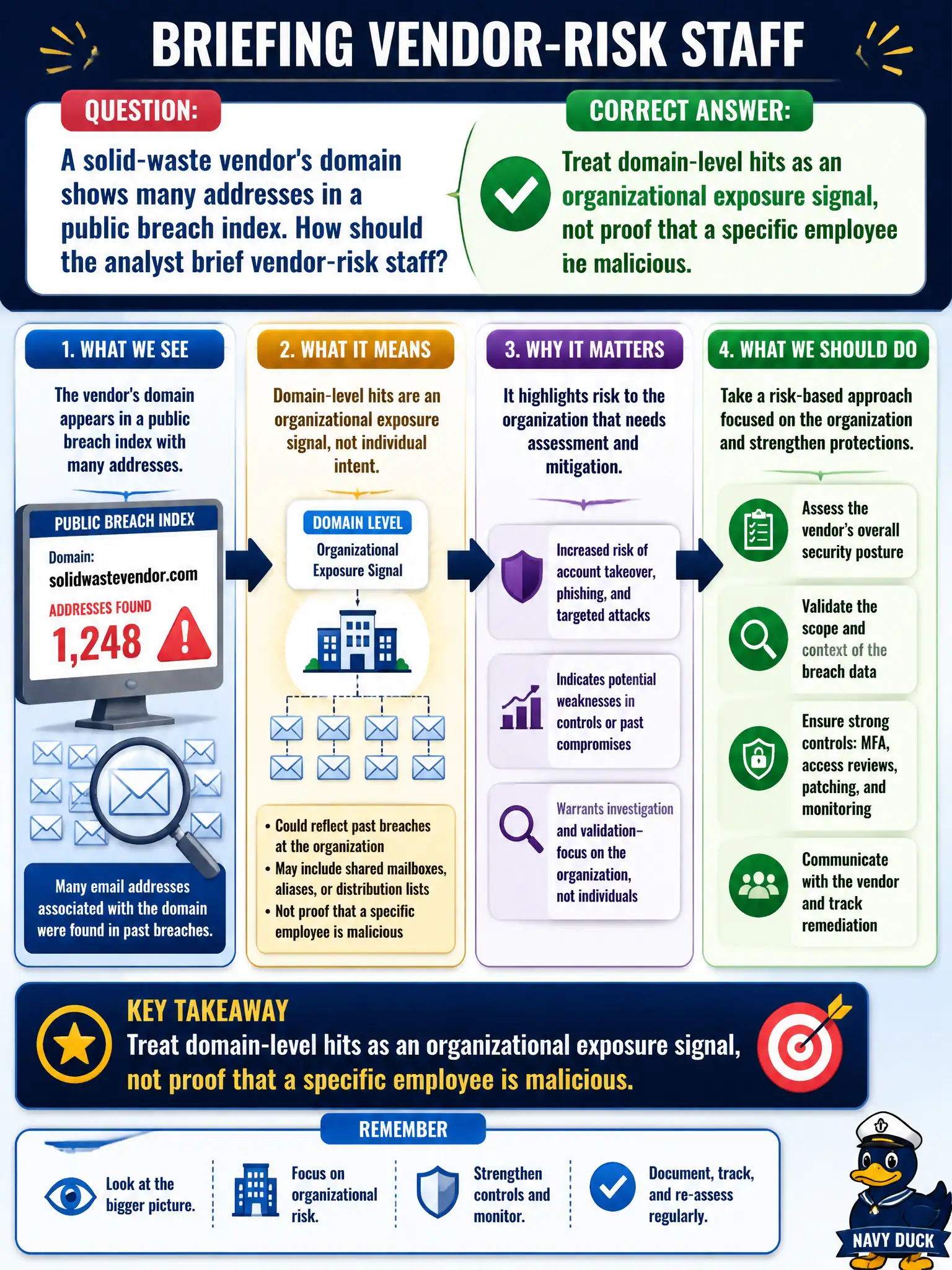
A solid-waste vendor's domain shows many addresses in a public breach index. How should the analyst brief vendor-risk staff?
Select an answer to reveal the explanation.
Short Explanation
A domain lighting up in a breach index is like seeing a company logo on a lost-and-found board. It says the organization had exposure, not that a named driver is the villain. Brief the risk, skip the guilt trip.
Full Explanation
When a solid-waste vendor’s domain shows many addresses in a public breach index, the analyst should brief vendor-risk staff that domain-level hits are an organizational exposure signal, not proof that a specific employee is malicious. Aggregate domain presence in dumps often reflects widespread credential reuse or third-party breaches touching that namespace rather than insider wrongdoing by named drivers. Naming every driver as malicious because addresses on that domain appeared in dumps converts an org-level signal into unfounded individual accusations that can poison contracting relationships. Terminating the vendor immediately based solely on the index hit skips due process and proportional risk handling expected in municipal vendor management. Using leaked secrets from those addresses to log into the landfill scale-house system is unauthorized access dressed as vendor-risk work. Exam caveat: PORP teaches domain-breach briefing as exposure intelligence, not as employee guilt findings or live credential use against operational systems. Operational check: summarize hit volume and dump currency at the domain level, avoid naming individual malice without separate evidence, recommend vendor-risk follow-up and password-hygiene questions through contracting channels, and refuse any request to replay leaked secrets against city or vendor systems.