
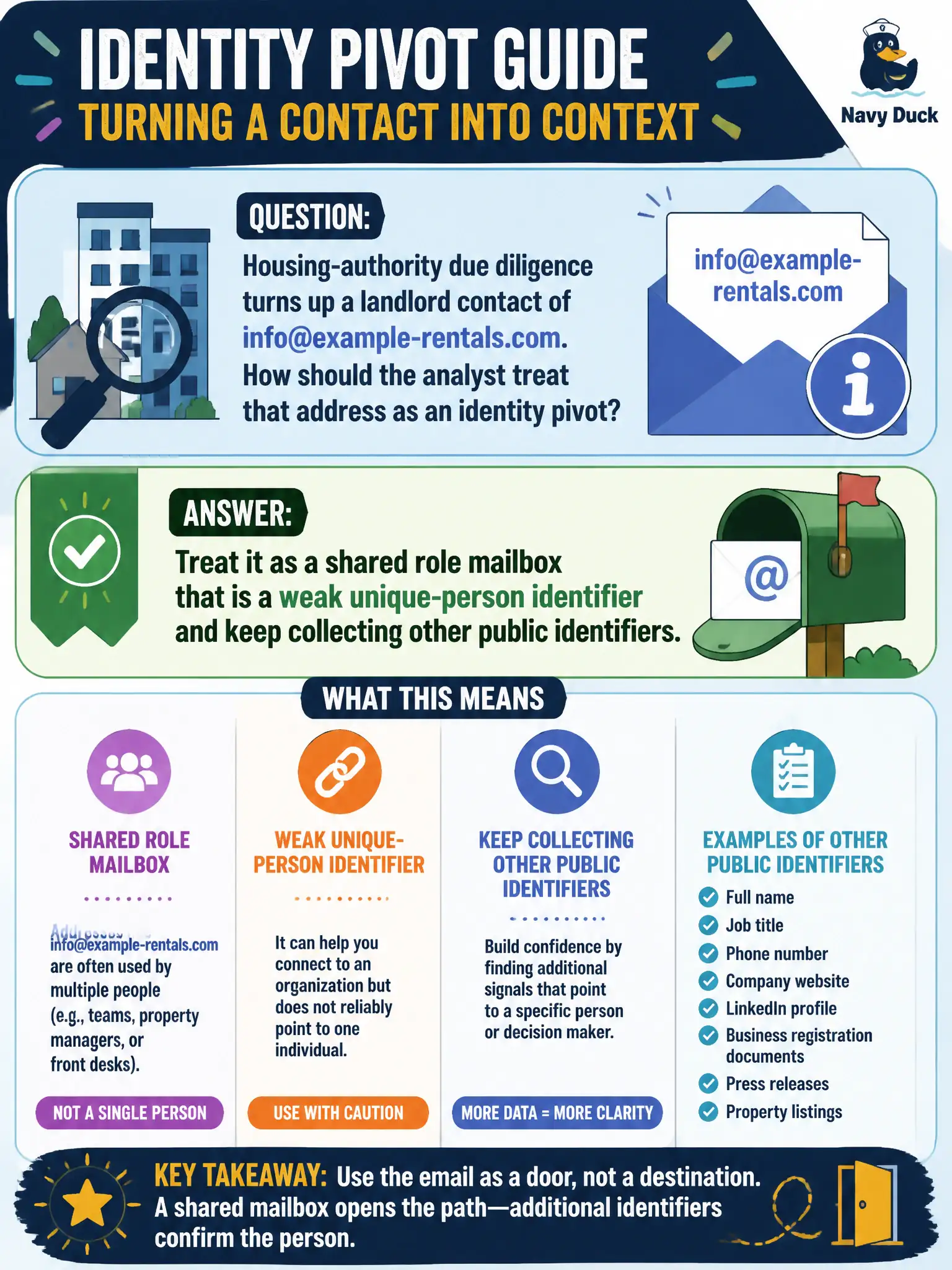
Housing-authority due diligence turns up a landlord contact of [email protected]. How should the analyst treat that address as an identity pivot?
Select an answer to reveal the explanation.
Short Explanation
Think of info@ like the front desk, not a driver's license. Lots of people can stand behind that counter. Keep it as a company contact, then hunt names, phones, and unique handles if you need a person.
Full Explanation
Role mailboxes such as [email protected] are shared organizational contacts and weak unique-person identifiers. Housing-authority due diligence should treat info@ as a company or listing contact, continue collecting other public identifiers—names on deeds, business licenses, distinctive personal emails, phone listings—and avoid collapsing the landlord’s personal identity into the shared inbox. Treating info@ as a unique legal name stops people search prematurely and misstates what the address represents in identity resolution. Assuming only one human reads the mailbox and attributing every related public post to that person over-merges identities across staff rotations and time. Forcing a housing-portal password reset against info@ to “prove ownership” is unauthorized access testing, not OSINT, and can disrupt legitimate tenants. Exam caveat: PORP distinguishes shared role addresses from person-unique identifiers in people and vendor OSINT for civic housing cases. Operational check: label the address as role/shared in notes, pursue person-level pivots from public filings, require corroboration before naming an individual landlord, and never attempt portal password resets as a research step.