
An application owner can see every repository and every cloud asset in the tenant but cannot create an application security policy. What is missing?
Select an answer to reveal the explanation.
Short Explanation
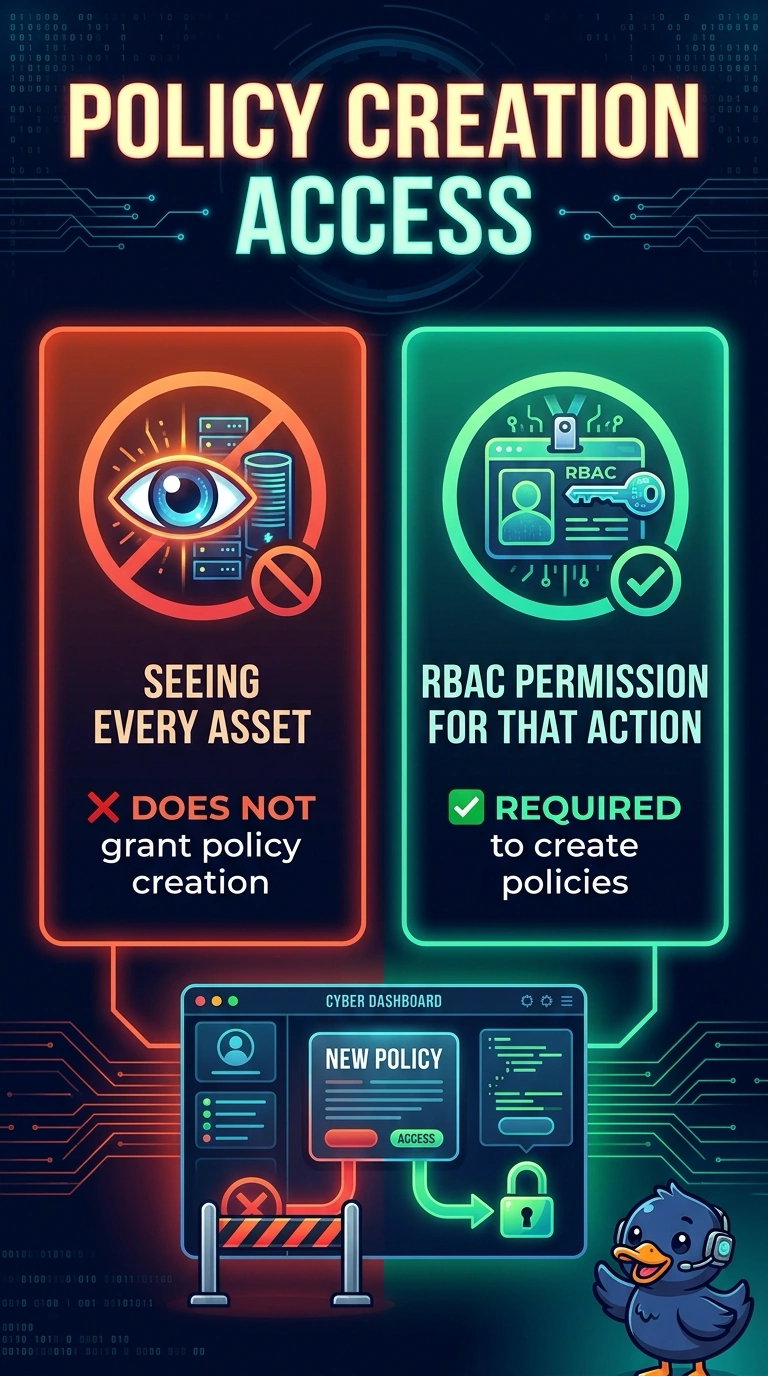
Being allowed to see every aisle is not the same as being allowed to rewrite the store manual. You can view the assets, and the role still lacks permission to create the policy. The trap is narrowing scope, or minting an API key on that same role, and expecting the action to appear.
Full Explanation
RBAC decides which actions a role may take. SBAC decides which assets, cases, and issues a person may see. This owner can see every repository and cloud asset, so scope is not hiding the estate, and the missing piece is the RBAC permission to create an application security policy. Narrowing asset scope would hide assets. It does not grant an action, and full visibility is not what blocks authoring. A static group cannot be an access scope, and attaching one does not add a policy-creation permission to the role. An API key carries a role. A second key on the same role has the same actions. If the role cannot create the policy, the key cannot either, and rotating or duplicating the key does not add the permission. Exam caveat: the owner might still run the CLI or the IDE against policy someone else published, because those tools consume policy and do not author it. Operational check: compare this role with a role that can create policies, add only the missing authoring permission, and confirm a new policy saves without changing the owner's asset scope.