
A standard outpost in a dedicated account at an energy company stays Pending. Operators can still open the Cortex tenant. What has not succeeded?
Select an answer to reveal the explanation.
Short Explanation
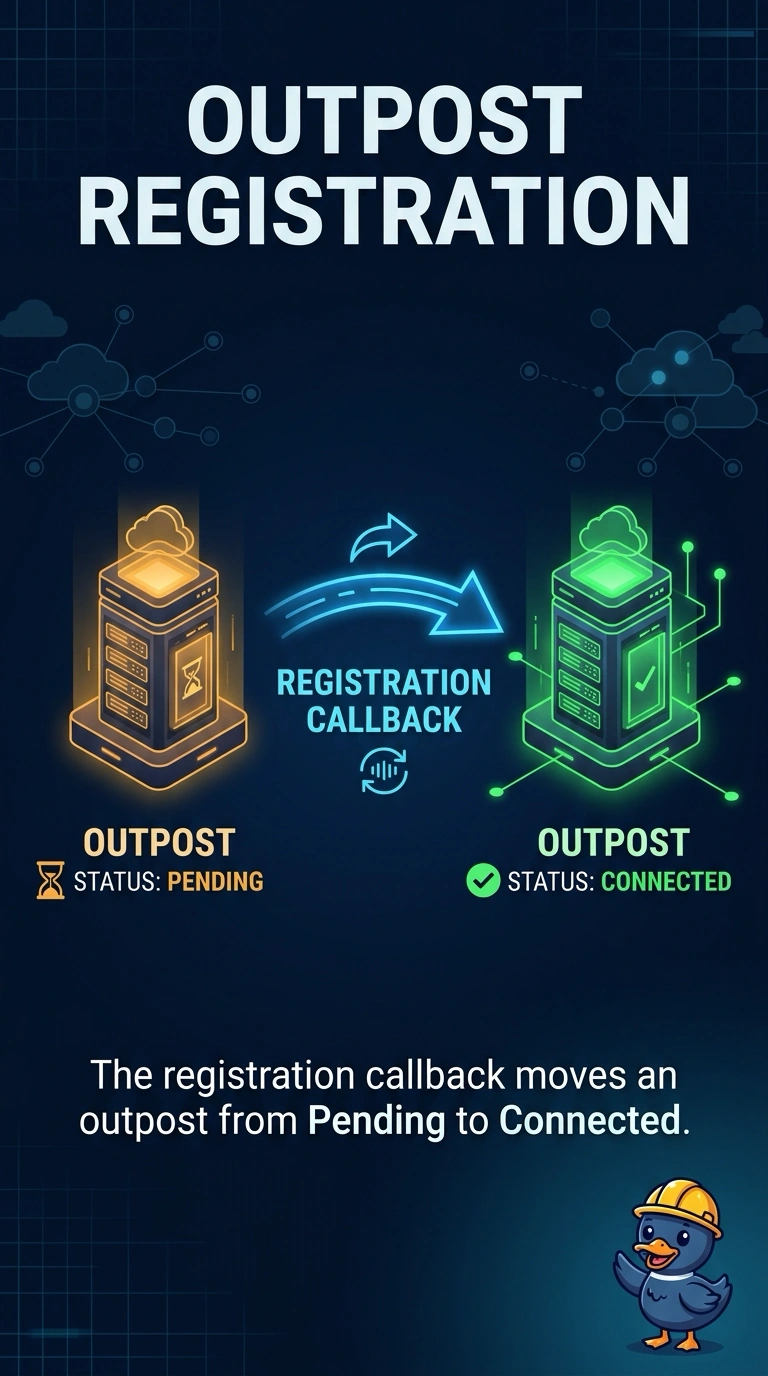
You can open the Cortex tenant and still have an outpost remain Pending if its registration callback has not succeeded. Registration is what moves it to Connected; time sync, scanner profiles, and security-group edits on application workloads do not complete that step.
Full Explanation
A standard outpost moves from Pending to Connected after the registration callback succeeds. Pending means that callback has not succeeded, often because the template apply did not finish or egress for the callback is blocked. Opening the Cortex tenant only proves the operator’s browser path; it does not prove the outpost registered. Time sync over UDP 123 toward time.google.com and pool.ntp.org matters when tokens fail because of clock skew, but it is not the registration callback. The application systems are in a different account, while the outpost lives in its own dedicated account. A prevention profile applies to endpoints in an endpoint group. Outpost scanner virtual machines are ephemeral scanners, not where you standardize the agent, and a missing profile does not leave the outpost Pending. A security-group edit on application workloads is outside the outpost account, which should hold no other workloads, and changing those groups does not complete registration. Exam caveat: after the outpost is Connected, scans can still stop if scanner virtual machines cannot pull the image; that is a later fault, not the Pending state. Practical check: confirm the template apply finished and the callback can leave the dedicated account, then watch the outpost move to Connected.