
A city uses Apigee as its API front door. Cortex shows no Apigee endpoints. The tenant lacks the Data Collection add-on, and no shared flow calls Cortex. What completes the integration?
Select an answer to reveal the explanation.
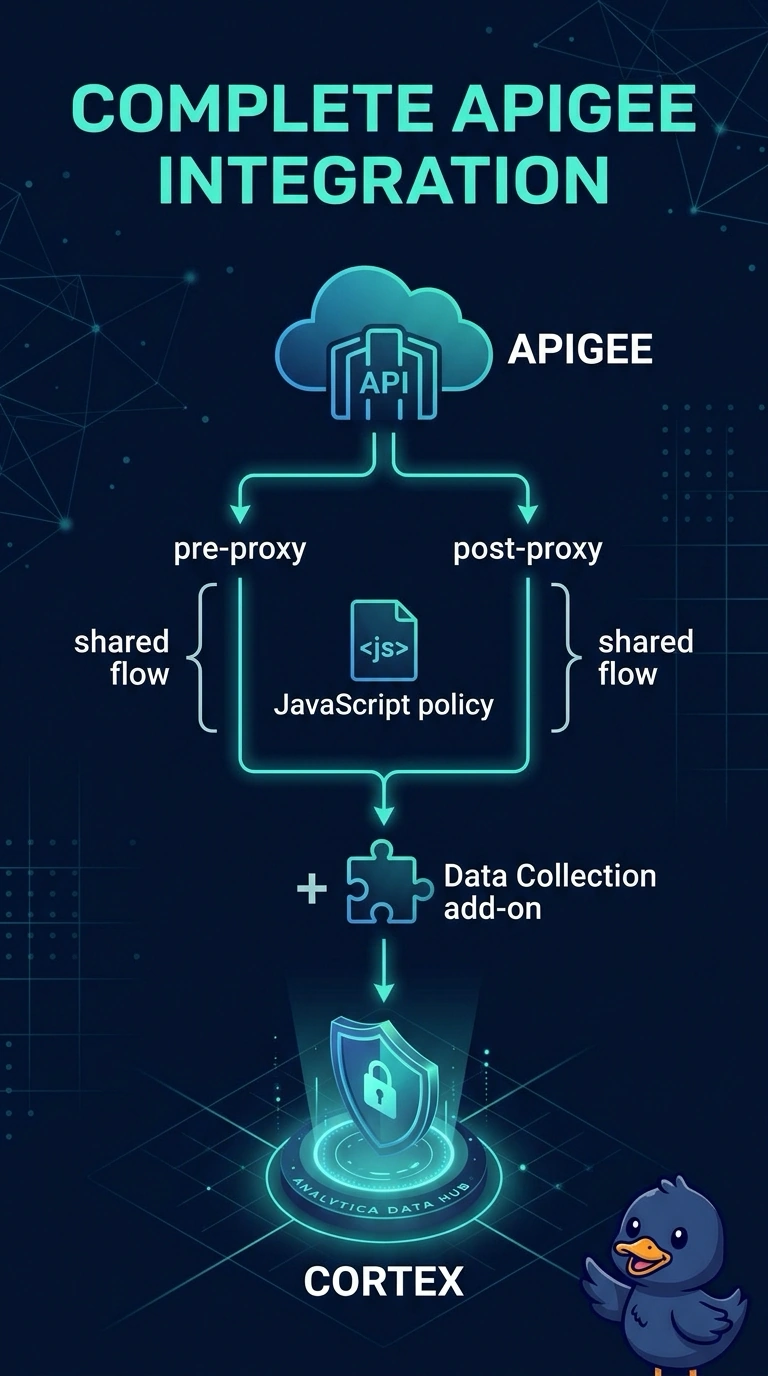
Short Explanation
Think of Apigee as a lobby that only reports visitors if you hang the counter on both doors. You need a JavaScript policy in a shared flow on the pre-proxy and post-proxy hooks, and you need the Data Collection add-on. A syslog dump of firewall logs never becomes that lobby counter.
Full Explanation
Apigee ingestion uses a JavaScript policy in a shared flow on the pre-proxy and post-proxy hooks and needs the Data Collection add-on. The city has neither the add-on nor a shared flow that calls Cortex, so those two pieces are what complete the gateway integration and let Cortex learn Apigee endpoints. Firewall logs sent to a generic syslog receiver are not the Apigee ingest path. They do not apply the shared-flow policy and do not stand in for the Data Collection add-on. An XDR agent on an Apigee node is host runtime coverage. It does not read API operations from the pre-proxy and post-proxy hooks, and leaving those hooks unused skips the documented integration. A personal access token onboards a git host. An OpenAPI file can be imported for specification comparison after endpoints exist, but the token does not connect Apigee, and a specification alone does not learn gateway traffic. Exam caveat: injection on the API is a detection, separate from a posture finding on exposure or the specification. Operational check: confirm the add-on is present, confirm the shared flow runs on both hooks, and confirm learned Apigee endpoints appear after traffic.