
A steel mill wants the XDR agent installed on the Broker VM so the appliance is watched like any other server. What should the team do?
Select an answer to reveal the explanation.
Short Explanation
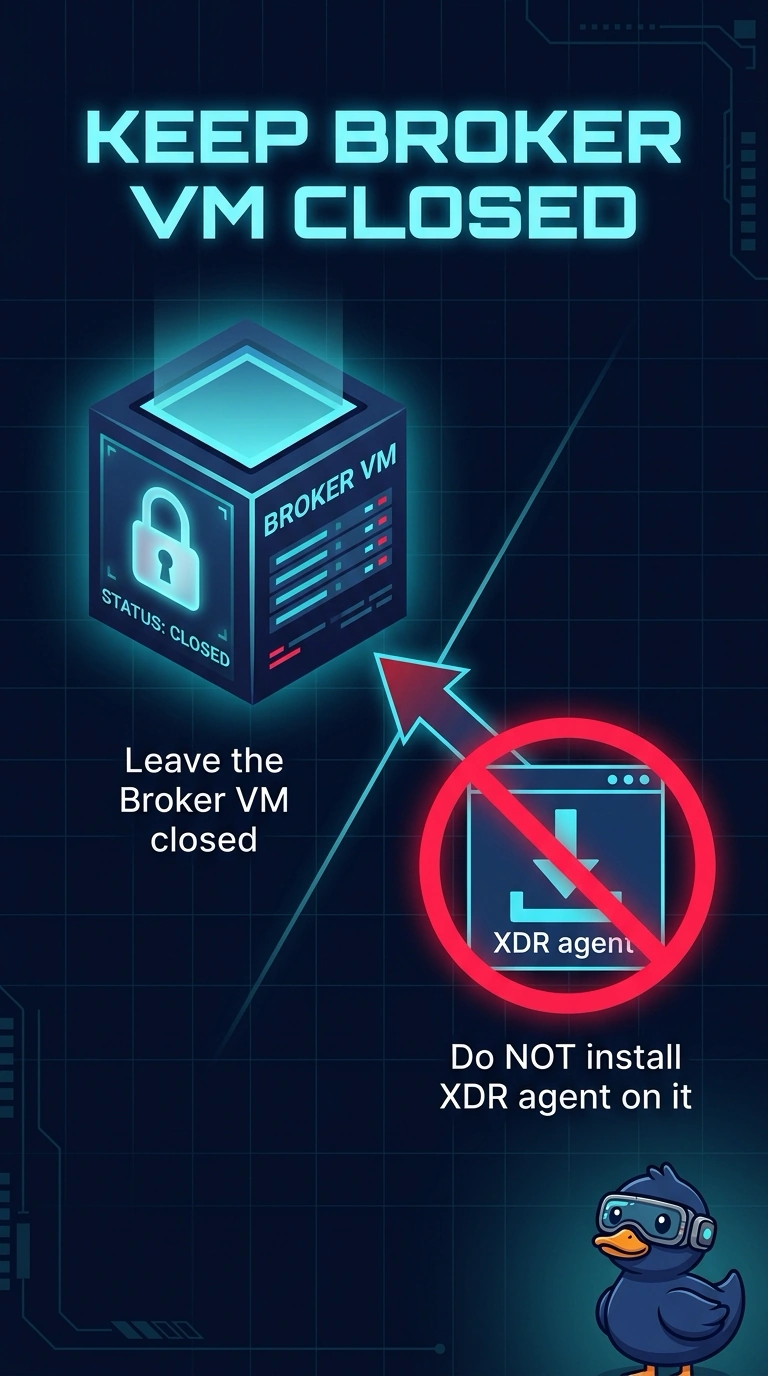
Think of the Broker VM as a sealed relay box, not a spare server in the rack. You leave it closed and you do not install the XDR agent on it. Treating the appliance like a normal host is the trap, because the broker is not an endpoint.
Full Explanation
The Broker VM is a closed, hardened appliance. It bridges the customer network to Cortex for endpoint routing, log collection, and file forwarding, and it updates from Cortex. It is not an endpoint where the XDR agent is standardized, and third-party agents are not installed on it. The steel mill should leave the appliance closed and monitor the endpoints that actually need the agent. Installing the XDR agent and treating the broker as a normal server breaks that closed design and confuses a bridge with a workload. Installing a third-party agent is the same mistake from the other direction: the broker is not a host for extra agents. Replacing the broker with an outpost scanner VM and putting the agent there mixes two components. Scanner VMs boot to scan and are not the customer's servers, and the broker is still required if the mill needs the bridge. Exam caveat: agents that use the broker as a path still have to be installed on the endpoints. The broker only carries their traffic. Operational check: confirm no agent package is present on the Broker VM, confirm endpoints behind it heartbeat, and confirm the broker itself is updating from Cortex.