
A Kubernetes connector rule uses package panw.compliance and a deny block. Misconfigured resources never show up as workload findings. What should the rule use instead of deny?
Select an answer to reveal the explanation.
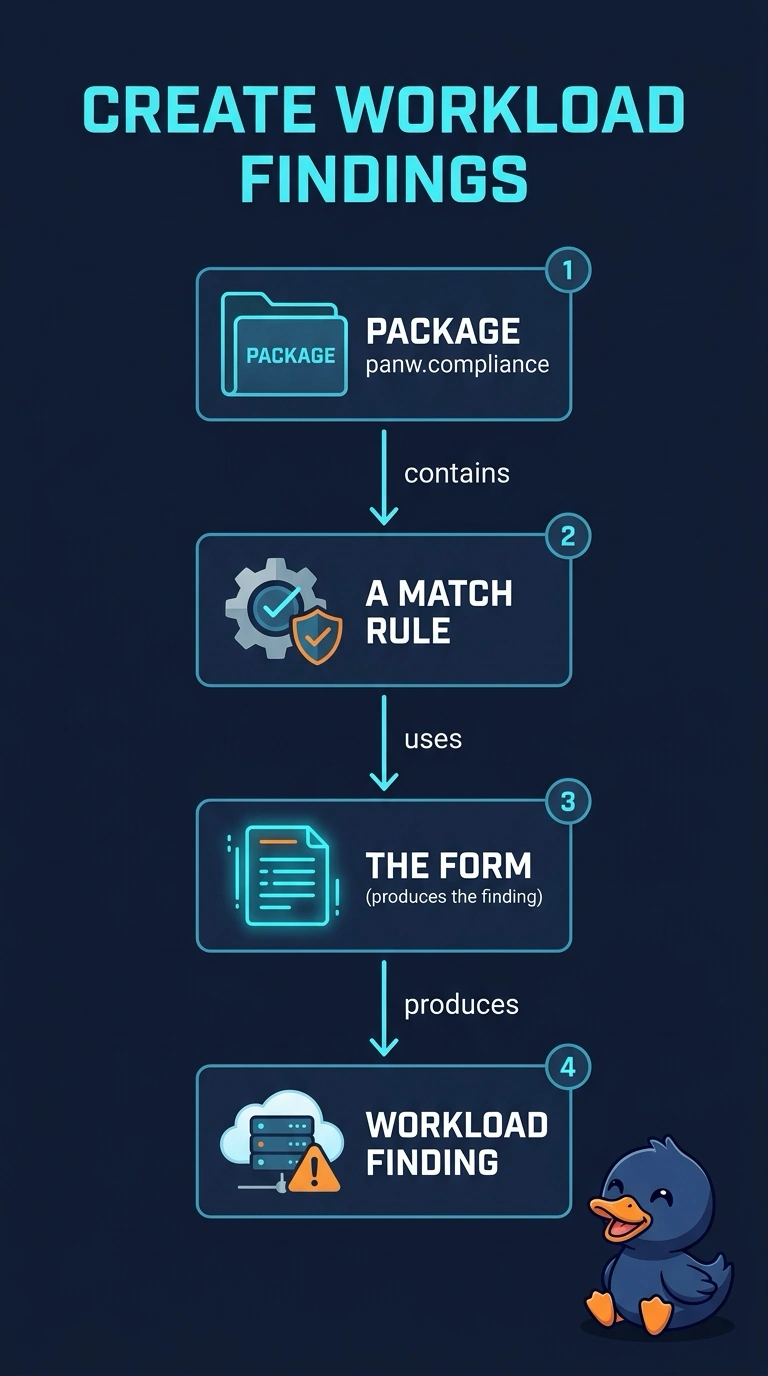
Short Explanation
The form says match, and a deny stamp does not get read. You kept the right package and used the wrong rule, so the findings stay missing until the rule uses match. The trap is rewriting the rule as Python, calling deny an admission webhook, or deploying a second connector that leaves the deny text in place.
Full Explanation
Custom Kubernetes connector rules use package panw.compliance and a match rule, not deny. A deny block does not produce the workload finding the product expects, so misconfigured resources stay invisible until the rule uses match. Python is the language for an XDR-agent workload rule. The connector does not execute Python on the node, and rewriting deny as Python leaves the connector rule behind. An admission webhook is not how the connector returns an evaluate result. The connector reads kind, metadata, and spec. Admission blocking requires the configured admission controller and an applicable prevention policy; it is distinct from this custom rule evaluation. Connector posture and real-time agent protection are separately selected capabilities. A second connector deployment supplies another resource feed. It does not rewrite deny into match at runtime, and the rule text remains the thing the product evaluates. Exam caveat: after the rule uses match, it still produces nothing until a Cloud Workload policy runs it and the connector is actually deployed on the cluster. Operational check: replace deny with match, keep package panw.compliance, apply the rule on a policy, and confirm a known-bad Deployment opens a workload issue.