
A platform team adds a payments namespace on the production cluster. The Kubernetes Connector can already list that namespace, but the Cloud Workload policy that holds the connector rule is scoped only to the lab cluster. Why are payments findings still missing?
Select an answer to reveal the explanation.
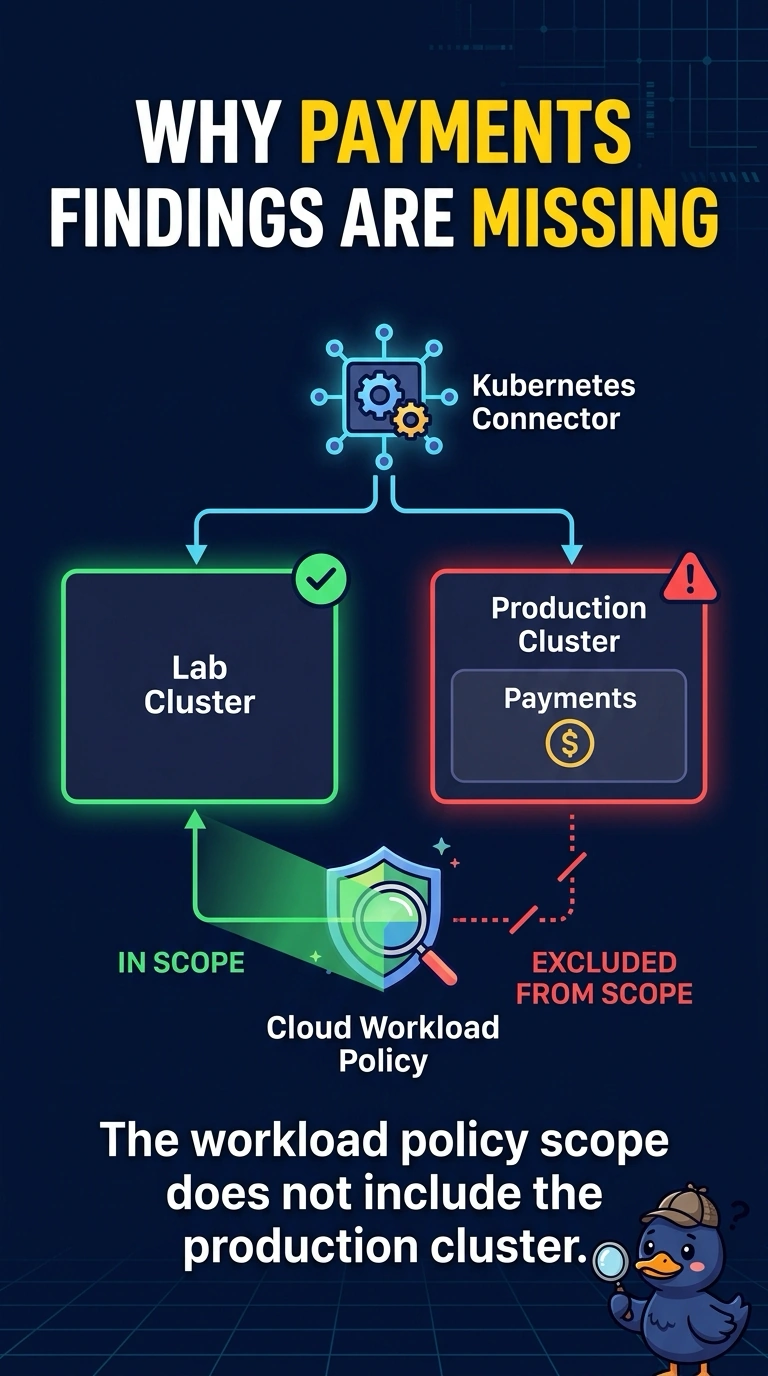
Short Explanation
You already have a connector that can read the payments namespace, but the policy only covers the lab cluster. The scope is what keeps production findings out, not the connector rule’s use of match or the absence of another connector in the namespace.
Full Explanation
A Kubernetes Connector supplies the resource feed for the cluster where it is deployed, and a connector rule evaluates kind, metadata, and spec only when a Cloud Workload policy runs it against a scope that includes those assets. Your connector can already list the payments namespace, so its feed exists. The policy that holds the rule is limited to the lab cluster, leaving production objects outside the scope it evaluates. A match rule is the supported shape for a connector check and can report a Deployment; its use does not explain the missing payments findings. OCR is a global data-classification control that skips text inside images when turned off; it does not determine which cluster a workload policy evaluates. A second connector inside the payments namespace is unnecessary because the cluster connector already lists that namespace. The missing piece is the policy scope, not another installation. Exam caveat: if a connector cannot read a namespace, it produces an empty feed for that namespace, a different fault from a policy scoped to another cluster. Practical check: confirm that the connector lists payments, then verify that the Cloud Workload policy’s asset-group scope includes the production cluster before expecting findings.