
A custom Kubernetes connector rule must be accepted by Cloud Workload policy. Which rule shape matches what the product runs?
Select an answer to reveal the explanation.
Short Explanation
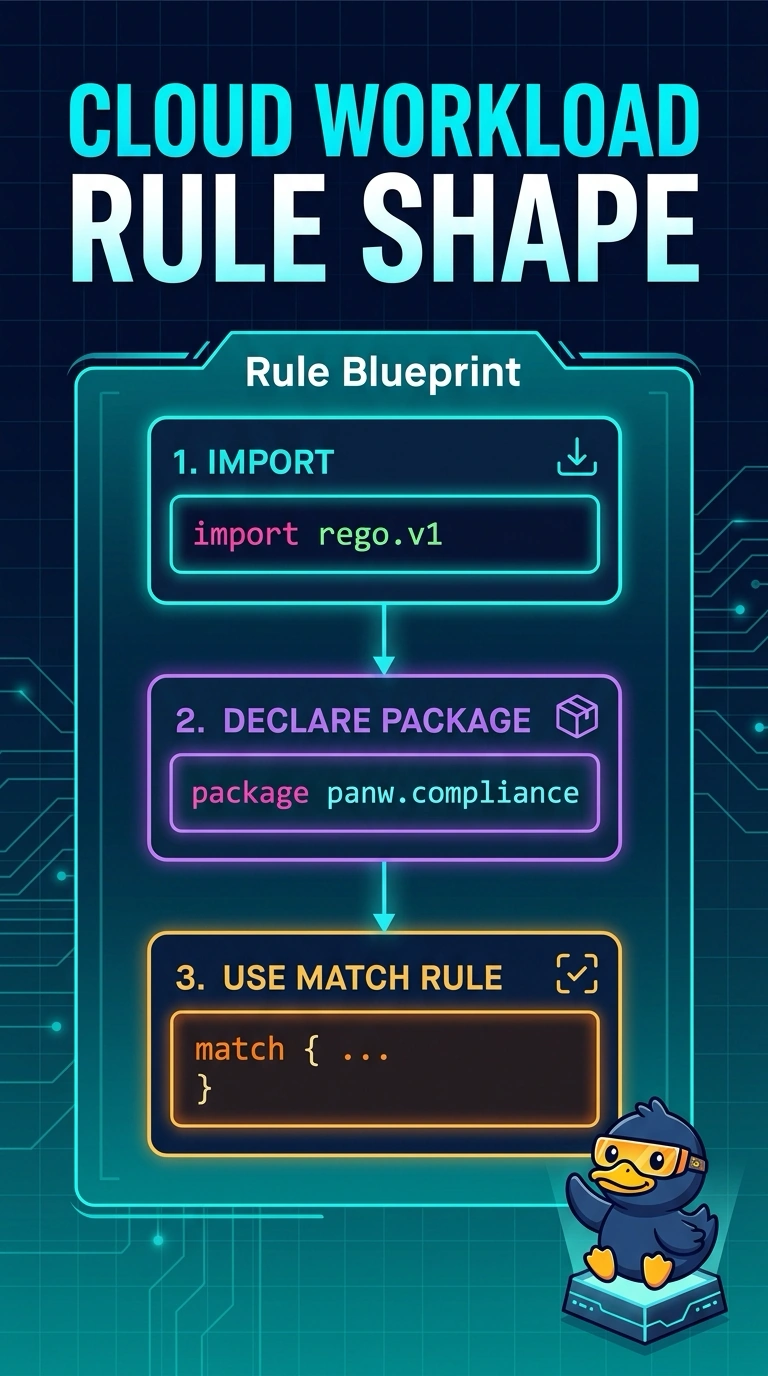
The connector speaks one dialect of Rego, and a deny slip is the wrong form. You want a file that imports rego.v1, declares package panw.compliance, and uses match. The trap is handing the connector a Python script or a deny block and expecting a workload finding.
Full Explanation
Custom Kubernetes connector rules are Rego in package panw.compliance with a match rule, not deny. The supported file imports rego.v1, declares that package, and uses match. Cloud Workload policy is what actually runs the rule. The shape is what the connector can evaluate against kind, metadata, and spec. Python is the language for an XDR-agent workload rule. Naming a Python file after the package does not make the connector run it. A deny block in the right package still does not produce the finding the product expects from match. A file with no package, compiled as agent Python, mixes the two scanners. The connector does not treat deny as match when the admission controller is absent. The posture match rule itself does not block deployment; admission enforcement is separately configured through the Kubernetes Connector and applicable prevention policy. Exam caveat: a correctly shaped rule still produces no issues until the connector is deployed and a Cloud Workload policy includes the rule. Operational check: deploy a match rule in package panw.compliance against a Deployment you know is wrong, confirm an issue opens, and confirm a deny-only copy of the same logic stays silent.