
A vulnerability policy should block a new pod at admission. The cluster runs a connector that evaluates manifests, and it does not run the agent or the admission controller. Why is the pod still admitted?
Select an answer to reveal the explanation.
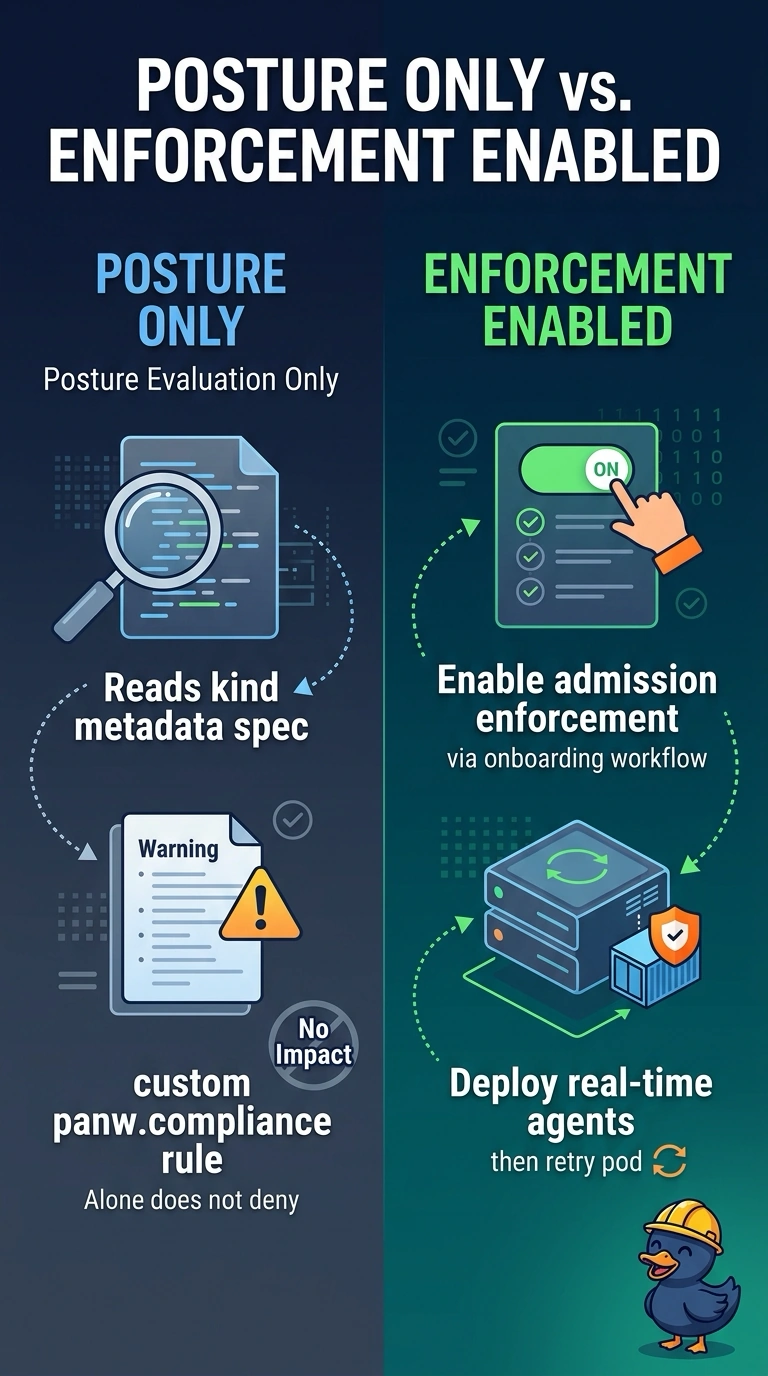
Short Explanation
You are seeing posture evaluation only, not enforcement at the door. This deployment enabled only posture evaluation; connector onboarding can separately enable admission enforcement and deploy real-time agents. A custom panw.compliance match rule alone does not enforce a deny action.
Full Explanation
Prevention on a vulnerability policy can fail a CI build or block a new Kubernetes deployment when admission enforcement is enabled. This deployment enabled only posture evaluation; connector onboarding can separately enable admission enforcement and deploy real-time agents. A custom panw.compliance match rule alone does not enforce a deny action. The connector evaluates kind, metadata, and spec, and that evaluate path reports posture without blocking the deployment, so the pod is still admitted. The idea that a match rule blocks on its own misunderstands posture evaluation, which surfaces findings but needs separate admission enforcement to deny. The idea that prevention is CI-only is wrong because the same vulnerability policy action spans CI failure and admission blocking. The idea equating a deny block with the admission webhook misunderstands the connector rule model, which uses package panw.compliance and a match rule, not deny, and deny does not produce the workload finding the product expects from match. Exam caveat: a connector that is installed still raises no workload issues until a rule sits on a Cloud Workload policy. That gap is about findings, not about admission. Operational check: confirm this cluster shows posture evaluation only, enable admission enforcement through connector onboarding, and retry a pod the vulnerability policy is set to prevent.