
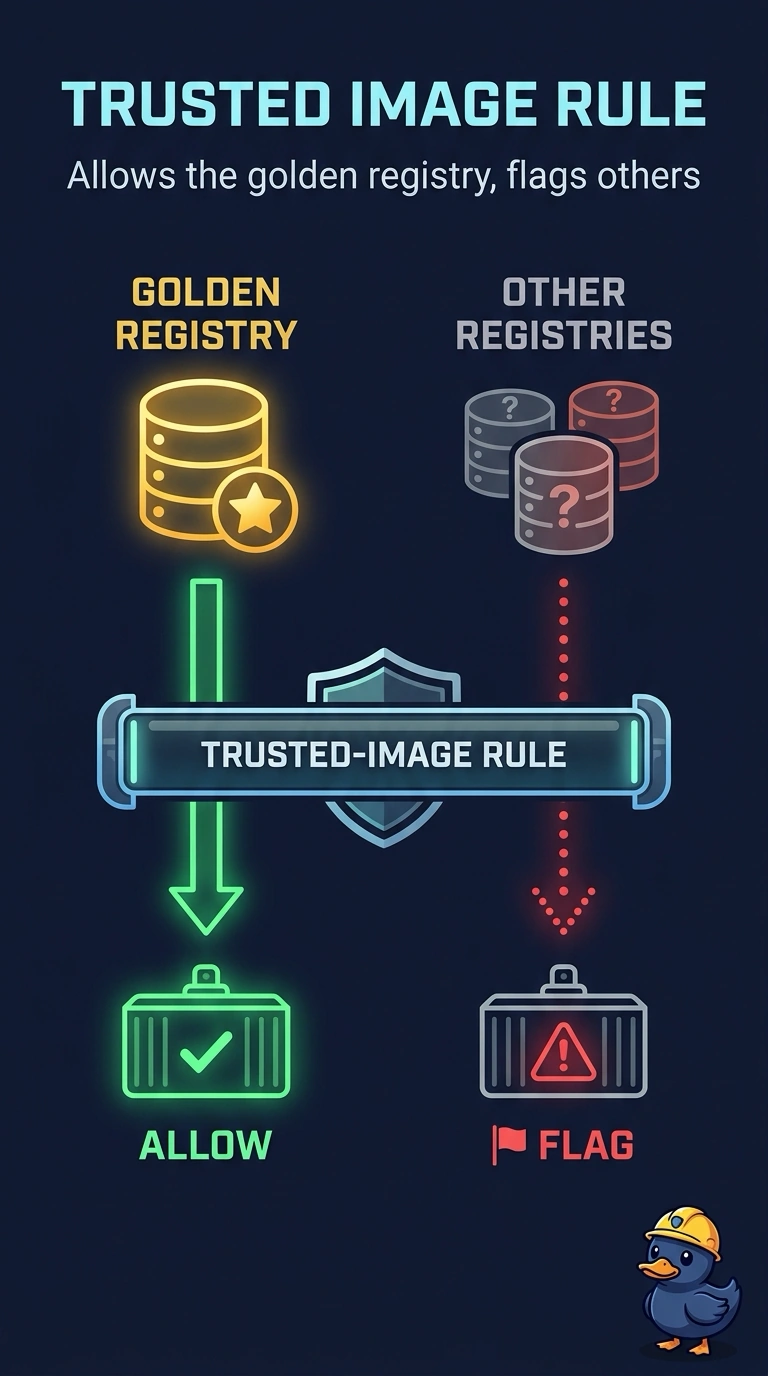
A platform standard says only images from the golden registry may run, and every other image should be flagged. A teammate instead pastes a list of vulnerability exceptions. Which workload outcome matches the standard?
Select an answer to reveal the explanation.
Short Explanation
Think of the golden registry as the one loading dock you trust, not a list of dents you are willing to ignore on every truck. You want other images flagged because of where they came from, which is a trusted-image rule. A list of vulnerability exceptions answers a different question.
Full Explanation
Trusted images are their own workload outcome, separate from misconfiguration, malware, and secrets. A trusted-image rule that allows the golden registry and flags every other image is the control that matches a standard about where an image may come from. A vulnerability exception list suppresses selected vulnerabilities. Vulnerability policies decide issue creation or ignore, and prevention, by first match. Ignoring CVEs does not enforce a registry allow-list, so images from anywhere could still run if their CVE numbers were pasted into that list. A malware rule looks for malware in the image. Treating the golden registry as a hash exception might skip a known-bad hash and does not flag unfamiliar registries. A secrets rule reports key material in a layer. An image can be free of private keys and still come from an unapproved registry, so a clean secrets result is not the standard. Exam caveat: a trusted-image allow does not declare a golden image free of malware or secrets. Those outcomes still run as their own checks. Operational check: run one image from the golden registry and one from a side registry, and confirm only the side registry produces the trusted-image finding.