
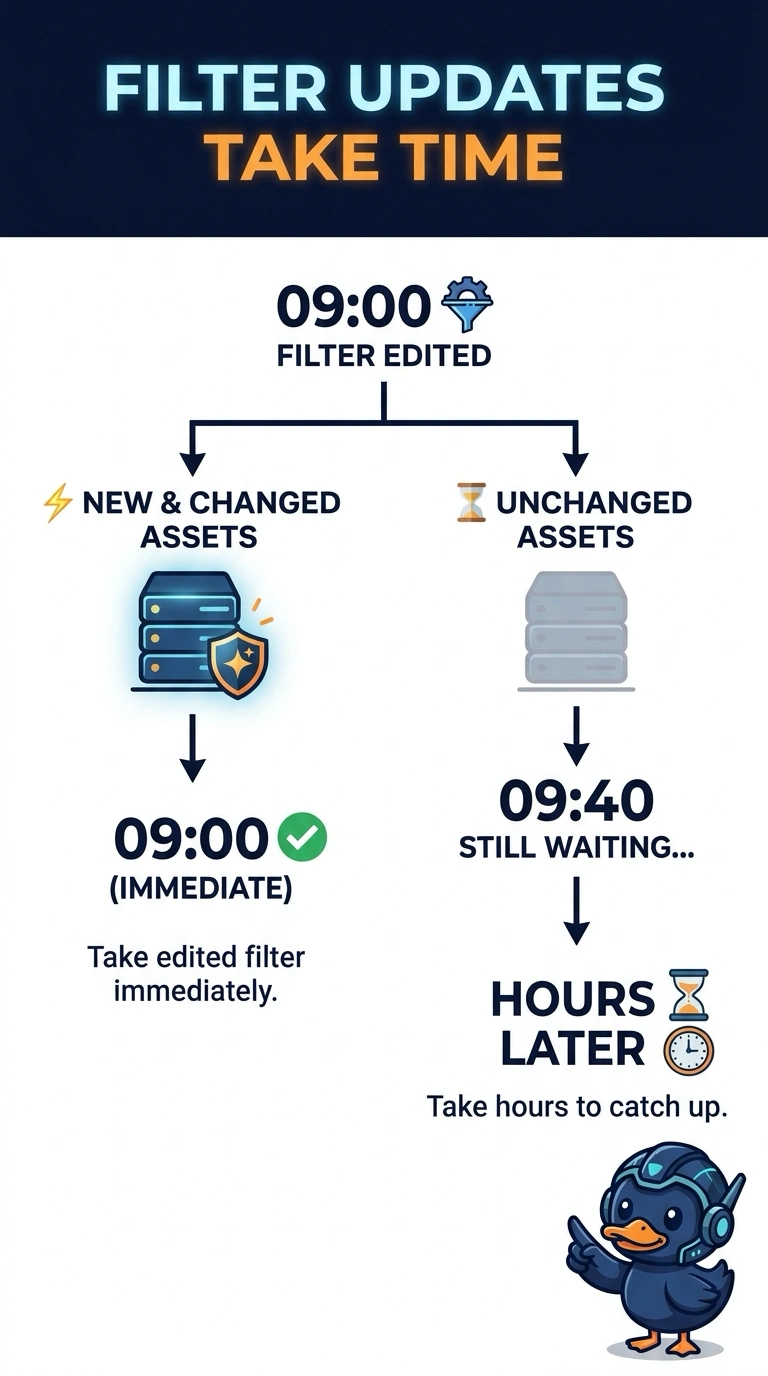
At 09:00 an engineer edits a dynamic asset-group filter. At 09:40, assets that have not otherwise changed still show the old membership, while newly changed assets already match the new filter. Why is there a lag?
Select an answer to reveal the explanation.
Short Explanation
New paint shows up right away on a door you just hung, and the untouched doors wait their turn. You changed the filter, and assets that have not otherwise changed can take hours to show the new membership. The trap is treating a same-hour lag as a rejected edit or a full stop at the group ceiling.
Full Explanation
Dynamic asset groups are filters, and they pick up future matches. Membership updates apply immediately to new or newly changed assets. Assets that have not otherwise changed can take hours to show an edit, so old membership at 09:40 is expected for the untouched set. The edit was not rejected. A supported scope attribute is a reason a group can be used for SBAC, not a reason the filter fails to save. Static groups are a hand-picked list, not a faster version of a dynamic filter, and they are not what this engineer edited. The platform limit is 5000 asset groups. Hitting that ceiling would block another group from being created. It does not freeze membership updates on one group that already exists and is already accepting newly changed assets. Exam caveat: SBAC, automation exclusions, enrichment, policy scope, and the asset_groups dataset are different uses of groups, and a lag in membership is not the same as a scope field the product refuses. Operational check: change one asset so it is newly updated, confirm it matches immediately, and recheck an untouched asset later rather than reverting the filter in the same hour.