
A regional bank still keeps a separate cloud security posture console and a separate workload protection console. What should planning decide first so Cortex Cloud becomes the cloud-native application protection platform of record?
Select an answer to reveal the explanation.
Short Explanation
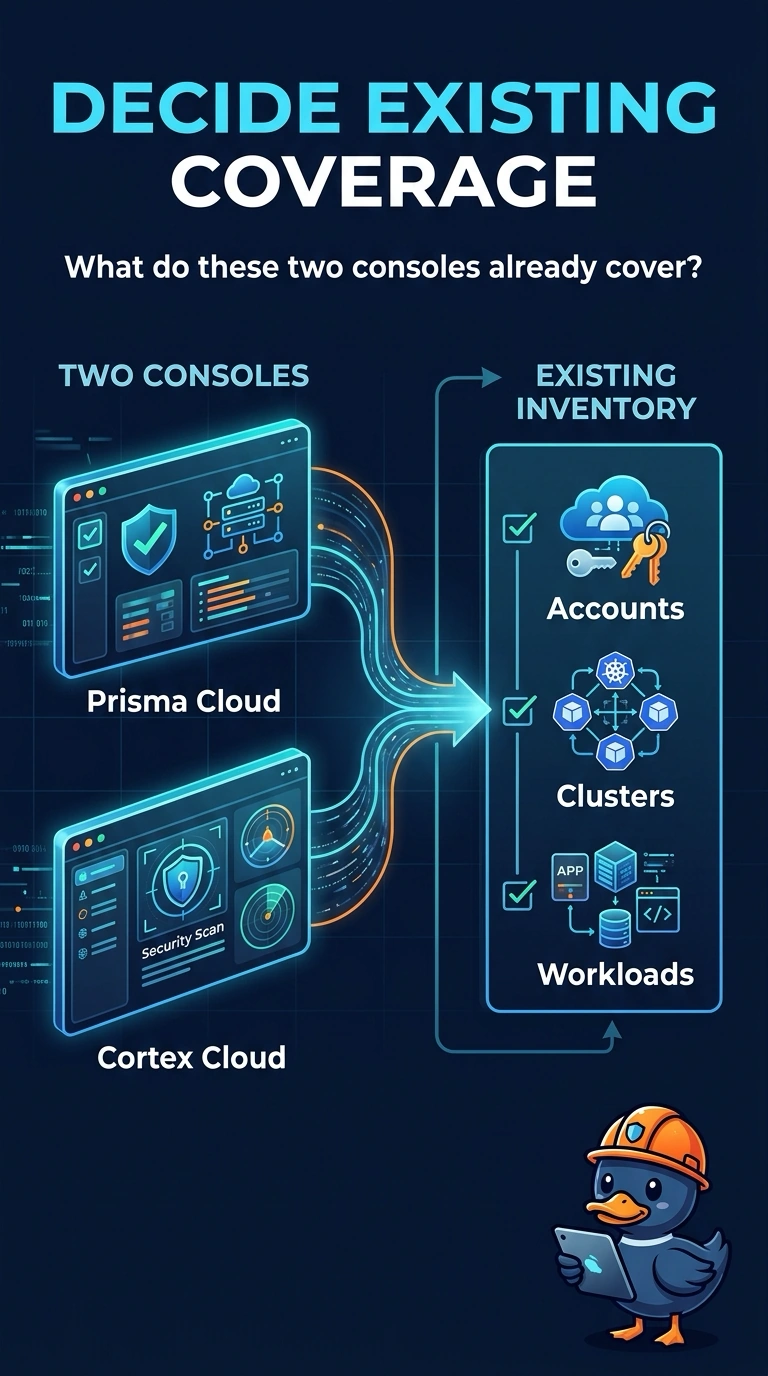
Think of the two consoles as two clipboards tracking the same fleet. You decide which accounts, clusters, and workloads they already cover so Cortex Cloud replaces that overlap instead of becoming a third clipboard. Buying a license before the inventory is the trap.
Full Explanation
A code-to-cloud estate is not a posture-only project, and planning starts by inventorying what the existing posture console and workload console already watch. That inventory is how the bank chooses a design in which Cortex Cloud is the platform of record rather than another overlapping view. Standing up a third console that copies both tools leaves the old products as systems of record and adds a console instead of retiring the overlap. A license quote written before the asset list sizes a purchase without saying which accounts, clusters, registries, or workloads move. An outpost in every account is a scan-mode choice for a residency or customer-owned boundary, and it is not the first planning artifact when the inventories have not been compared. Exam caveat: SaaS data stores and pipelines belong on that same inventory, because a posture-only merge still leaves code and runtime outside the platform. Operational check: list accounts, clusters, registries, serverless functions, and SaaS stores from both consoles, mark the overlap, and confirm the Cortex design names one system of record for each.