
A packaging company is retiring three point tools before Cortex Cloud becomes the platform of record. What is the first planning artifact?
Select an answer to reveal the explanation.
Short Explanation
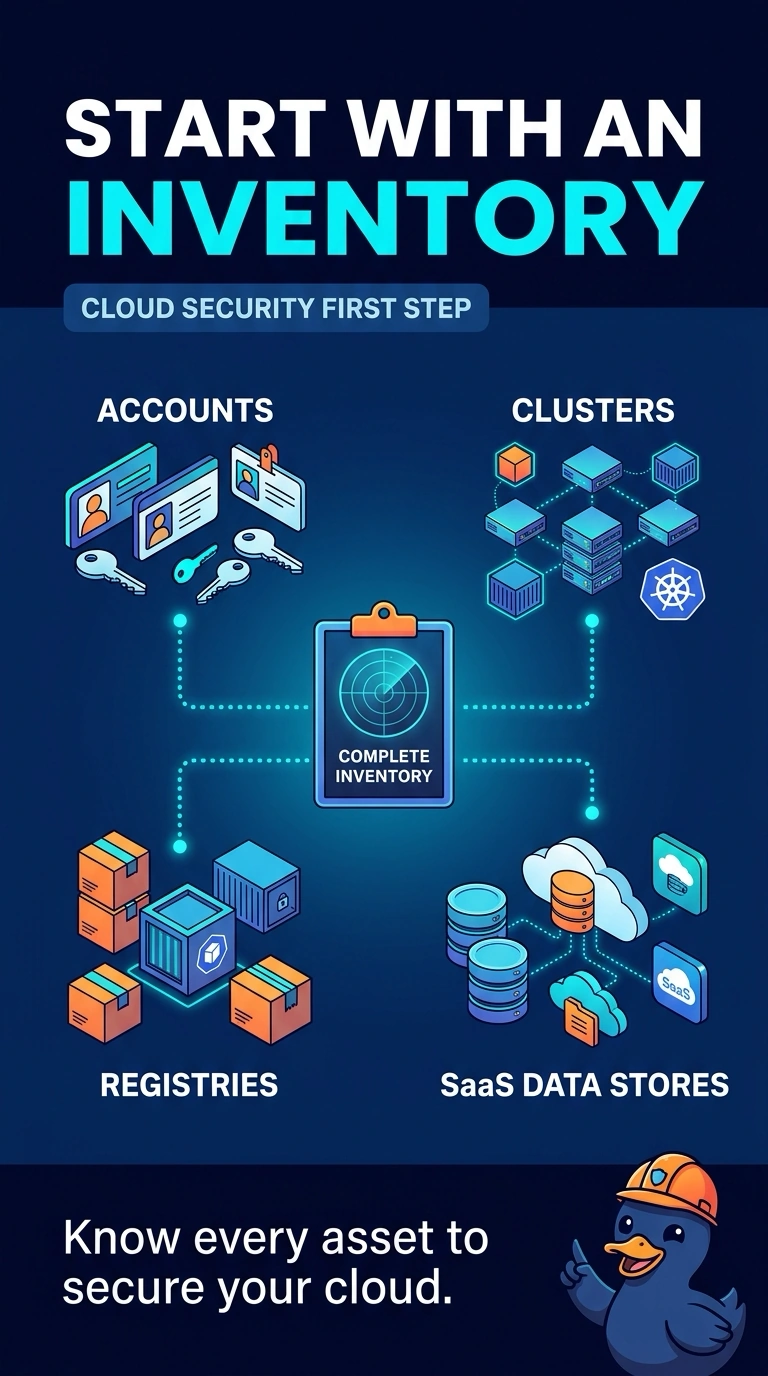
Think of the inventory as the packing list you write before you buy the truck. You list accounts, clusters, registries, and SaaS data stores before a license quote or an outpost sketch. Starting with the price, or with a broker diagram, skips the estate you are actually securing.
Full Explanation
Planning starts by fitting the estate to Cortex Cloud. The first artifact is the inventory of accounts, clusters, registries, serverless functions, SaaS data stores, and the tools already in place. The packaging company cannot choose scan mode, onboarding, or which point tools retire until that list exists. A license quote sized before the list prices an unknown estate. An outpost design that tries to cover SaaS mailboxes mixes two mistakes: an outpost is for a cloud boundary the customer must own, and SaaS data security posture management is a data-source onboarding on cloud scan only. A Broker VM diagram is the bridge for a closed network or an on-premises data source. It does not replace the account, cluster, registry, and SaaS inventory. Exam caveat: a code-to-cloud estate is not a posture-only inventory, so repositories and pipelines belong on the list too. Operational check: produce the inventory, map each existing tool to the assets it covers, and only then draft scan mode and license size.