
Semgrep already runs in a bank's GitHub workflow and writes a SARIF file. The workflow uses SAST SARIF through the Generic 3rd Party AppSec Collector. The team wants those findings prioritized in Cortex with native code findings. What should they configure?
Select an answer to reveal the explanation.
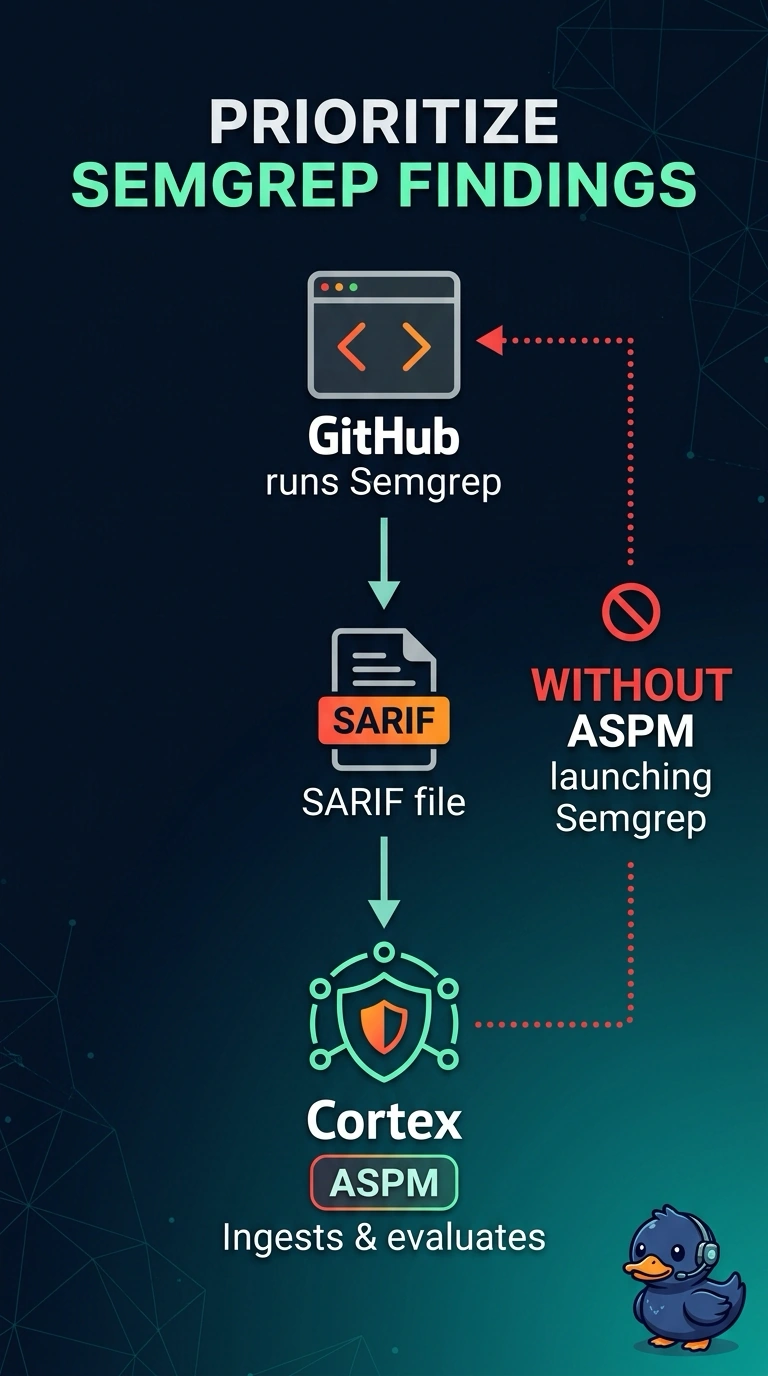
Short Explanation
You’ve already got Semgrep running in CI, so ingestion is the missing step: send its SAST SARIF through the Generic 3rd Party AppSec Collector for ASPM to evaluate and prioritize. ASPM ranks those results; it doesn’t launch Semgrep, so keep the Semgrep job in your workflow.
Full Explanation
Semgrep already runs in the bank’s GitHub workflow and produces SAST SARIF, so ingest that SARIF through the Generic 3rd Party AppSec Collector. ASPM can then evaluate the findings under its policies and prioritize them alongside native code findings; it does not launch Semgrep. A cluster Rego rule evaluates Kubernetes manifest data such as kind, metadata, and spec in package panw.compliance. It does not translate Semgrep checks into manifest tests or provide SARIF ingestion. An XDR agent collects runtime telemetry from its host; it does not replace the SARIF file or serve as the application-security integration. Enabling only native secret scanning and removing the Semgrep job would remove Semgrep’s SAST coverage, and ASPM would not start the scanner for the next pull request. One caveat: generic SARIF ingestion is documented for SAST and does not replace SCA, secret, or IaC scanning. As a practical check, confirm the workflow uploads the SARIF, then locate a Semgrep finding on the same business application as a native finding and compare its urgency.