
A port authority's pipeline uses a shared personal access token from an engineer who is leaving. OAuth consent was granted in that person's browser. Which credential should replace it?
Select an answer to reveal the explanation.
Short Explanation
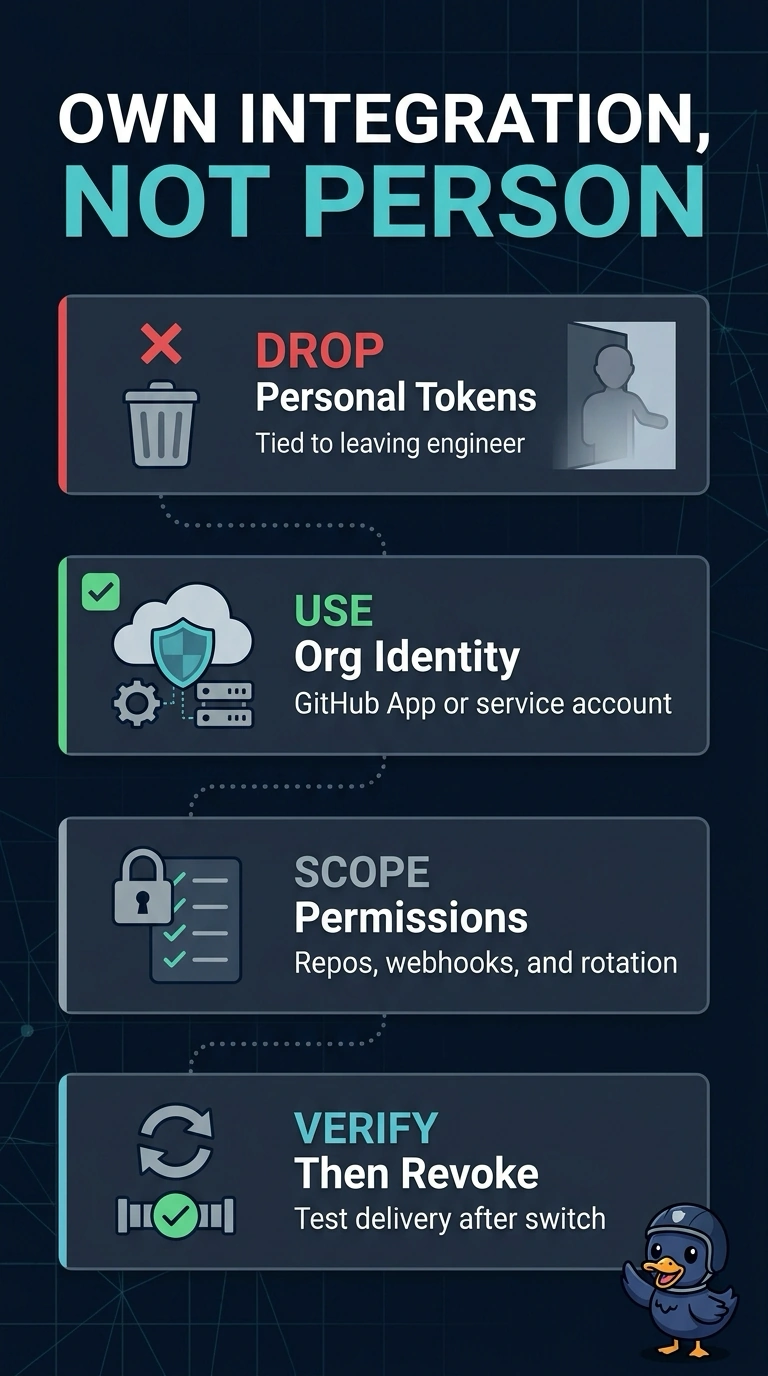
Choose the authentication model documented for the specific development system. GitHub SaaS uses a GitHub App installation token; OAuth grants or personal tokens on other systems can remain tied to a person and are not automatically machine-owned by relabeling them. Migrate and verify the nonpersonal integration before you revoke the departing account credential.
Full Explanation
Choose the authentication model documented for the specific development system. GitHub SaaS uses a GitHub App installation token; OAuth grants or personal tokens on other systems can remain tied to a person and are not automatically machine-owned by relabeling them. A supported organization-owned integration identity, such as the documented GitHub App or approved service account, with scoped permissions and rotation, survives departure of any one engineer and preserves webhook delivery. Migrate and verify the nonpersonal integration before revoking the departing account credential. Copying the same personal token into a shared notebook keeps a long-lived shared secret tied to the departing identity and still breaks on removal, expiration, or revocation while widening exposure. An AWS read-only role is a cloud-account identity for APIs and inventory, not a version-control integration identity, and it does not establish repository authorization or webhook deliveries. A static asset group is a hand-picked inventory list, not a credential, so it provides no authentication, no access scope, and no webhook path. Exam caveat: the new identity still needs the repository and webhook rights the pipeline uses, so scoped permissions must match or deliveries fail. Operational check: install the organization identity, send a test event, then revoke the shared token and confirm delivery.