
Some developers skip the IDE plugin, so the team adds a Git hook that runs cortexcli before each commit. What may that hook do with unified policy?
Select an answer to reveal the explanation.
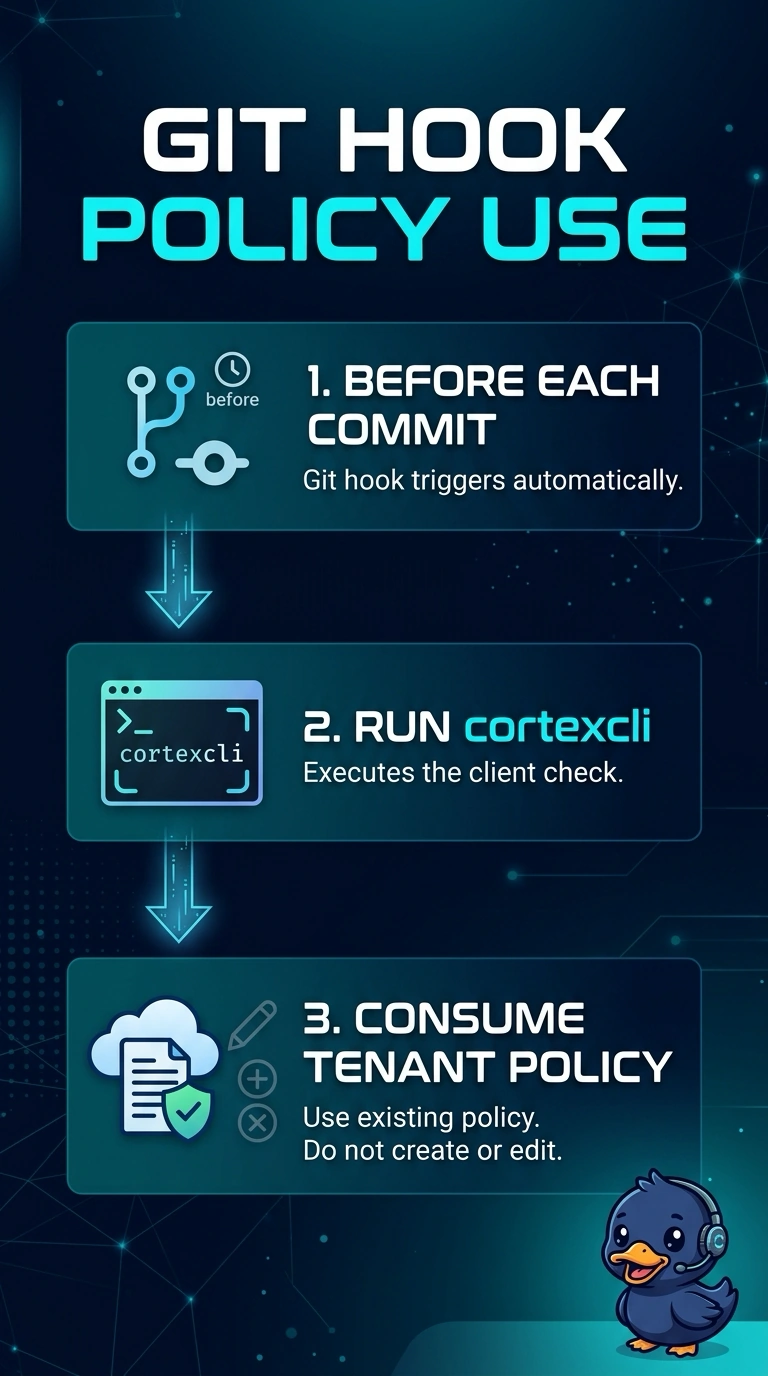
Short Explanation
You can run cortexcli from a Git hook to consume the tenant policy, even when you skip the IDE plugin. The hook is a consumer, not a policy editor: it cannot create or delete policies, replace the authoring paths, or enable cluster admission blocking.
Full Explanation
cortexcli can run from a developer workstation, a Git hook, or CI to consume the tenant policy. A Git hook runs that same CLI before a commit, so it can enforce or report what the existing policy says without creating, editing, or deleting the policy. Creating and deleting unified policies from a developer laptop is policy authoring, not policy consumption. Replacing the console, API, and Terraform as the authoring path would likewise require the hook to act as a policy author; it does not. Turning on admission blocking for vulnerable images in a cluster is a separate cluster-control action that requires the agent and admission controller, not a laptop hook. Exam caveat: a hook gates a commit only if the client treats a non-zero CLI exit status as failure. Practical check: run the hook against a commit that violates the tenant policy, verify the CLI reports or enforces that policy, and confirm the policy itself remains unchanged in the console.