
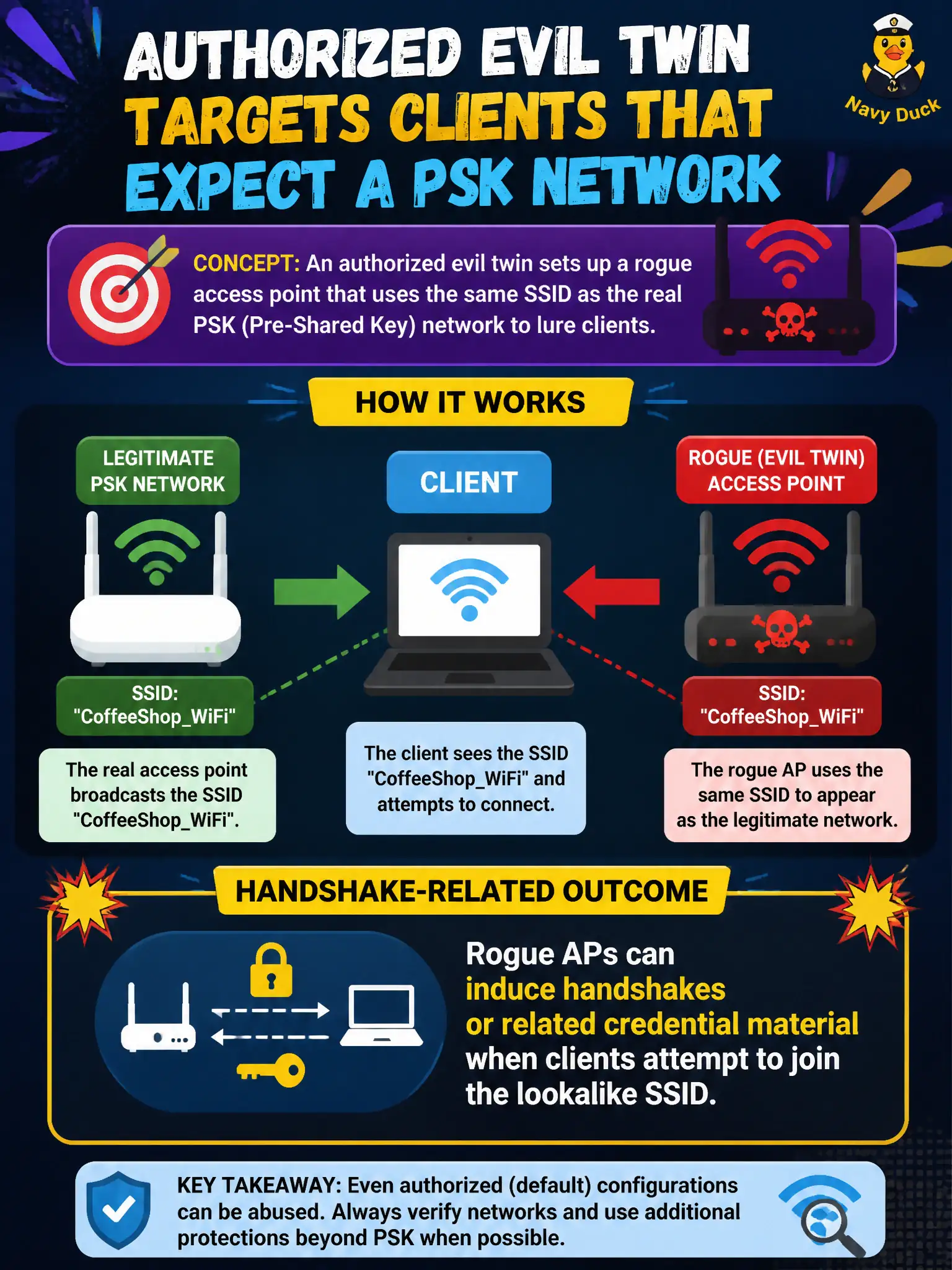
An authorized evil twin targets clients that expect a PSK network. What handshake-related outcome can that rogue class induce?
Select an answer to reveal the explanation.
Short Explanation
Dangle the familiar SSID and eager clients try to shake hands with the wrong AP. That join attempt is where handshake-class material can show up. The twin is a stage prop for association theater—not a WEP time machine.
Full Explanation
An authorized evil twin targeting clients that expect a PSK network can induce association and key-negotiation behavior when those clients attempt to join the lookalike SSID, which may yield handshake or related credential material depending on mode and client response. Evil twins are not limited to open SSIDs; PSK-configured clients will try to authenticate to a familiar name under many preferred-network policies used on civic devices. PSK clients do not automatically send RADIUS MSCHAPv2 inner credentials to every twin—that behavior belongs to Enterprise or EAP surfaces when misconfigured or attacked as such. Evil twins also do not convert captured frames into WEP IVs as their primary outcome class on modern Personal networks. Exam caveat: inducing handshake-related material still requires authorization, careful RF footprint control, and clean teardown in civic environments where bystanders share spectrum. Operational check: in a scoped municipal lab, confirm whether test clients begin four-way negotiation toward the authorized lookalike, capture only what RoE allows, and verify no production clients remain associated after teardown. For municipal and campus engagements, keep the finding language tied to authorized scope, name the building or SSID class affected, and state the residual risk to residents or staff if the rejected option had been chosen. Re-validate after the next change window that the selected control still matches inventory, monitoring, and RoE abort criteria used by the city wireless program.