
Why do authorized rogue-AP labs typically include DHCP service for victim clients?
Select an answer to reveal the explanation.
Short Explanation
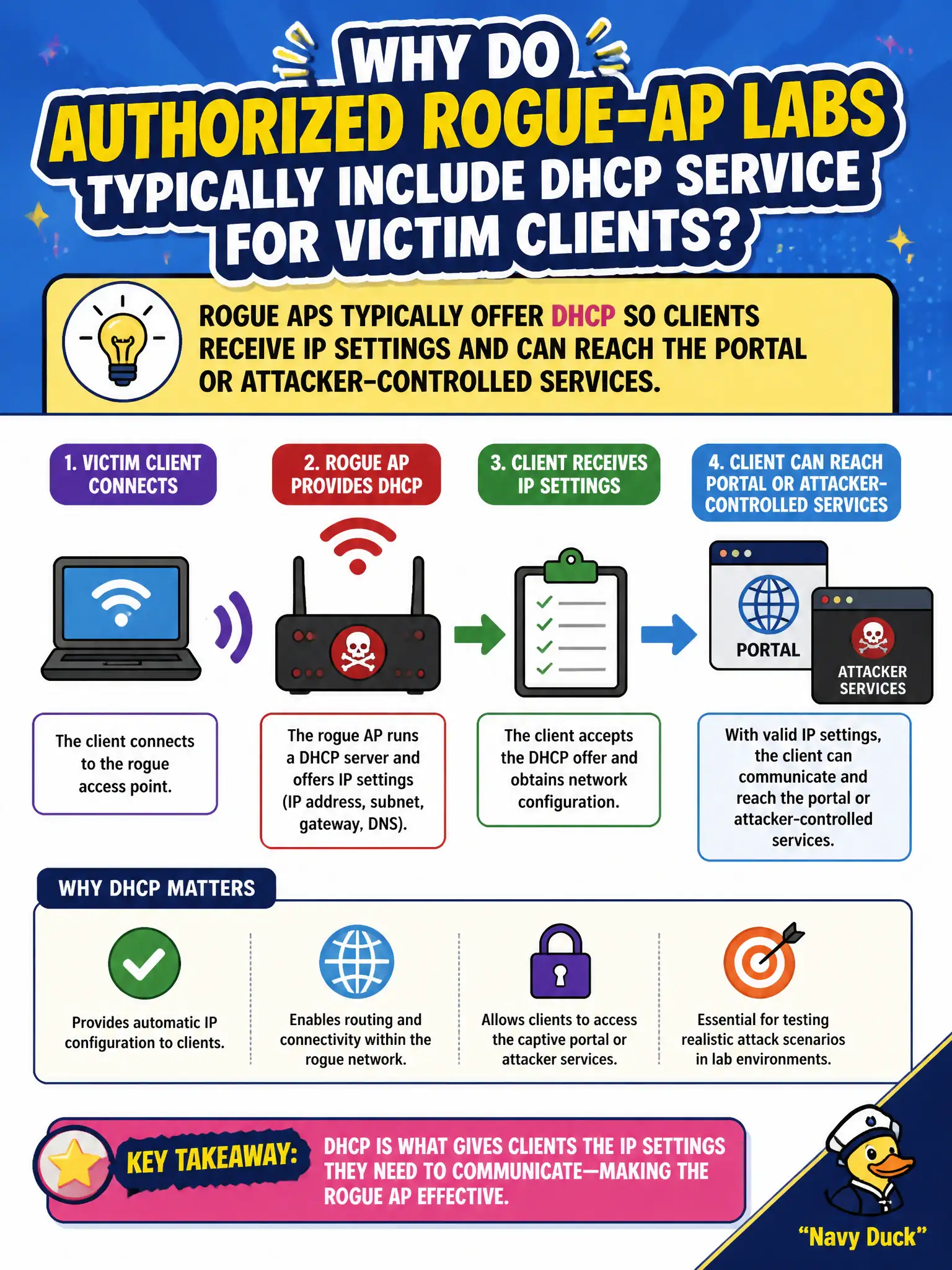
No address, no trip to the fake front desk. DHCP is how the victim laptop gets an IP and a gateway so the portal can answer. It is plumbing, not magic encryption.
Full Explanation
Authorized rogue-AP labs typically include DHCP because captive portals and attacker-controlled services operate at Layer 3 and above: clients need IP addresses, gateways, and usually DNS settings before they can reach a portal or related endpoints. Offering DHCP on the rogue path supplies that plumbing so the assessment technique class functions as designed under municipal rules of engagement. DHCP does not encrypt the WPA2-Personal four-way handshake; key negotiation is independent of address assignment. Lack of DHCP does not force clients into WPS PIN mode, nor does offering DHCP enable WPS by itself. DHCP also does not disable SSID broadcast or hide the rogue from wireless surveys and inventory tools. Exam caveat: treat DHCP as standard infrastructure for open rogue and portal designs, not as a cryptography or stealth control, and keep it inside the same authorized time box as the rogue SSID. Operational check: during a municipal authorized lab, associate a test client, confirm it receives lease parameters pointing at the portal path, verify name resolution behavior matches the lab design, and ensure teardown removes the rogue DHCP service so production clients are not stranded on test addressing.