
A stadium warns event staff about lookalike SSIDs during large events. As remediation when technical controls are incomplete, what does that user-awareness step primarily reduce?
Select an answer to reveal the explanation.
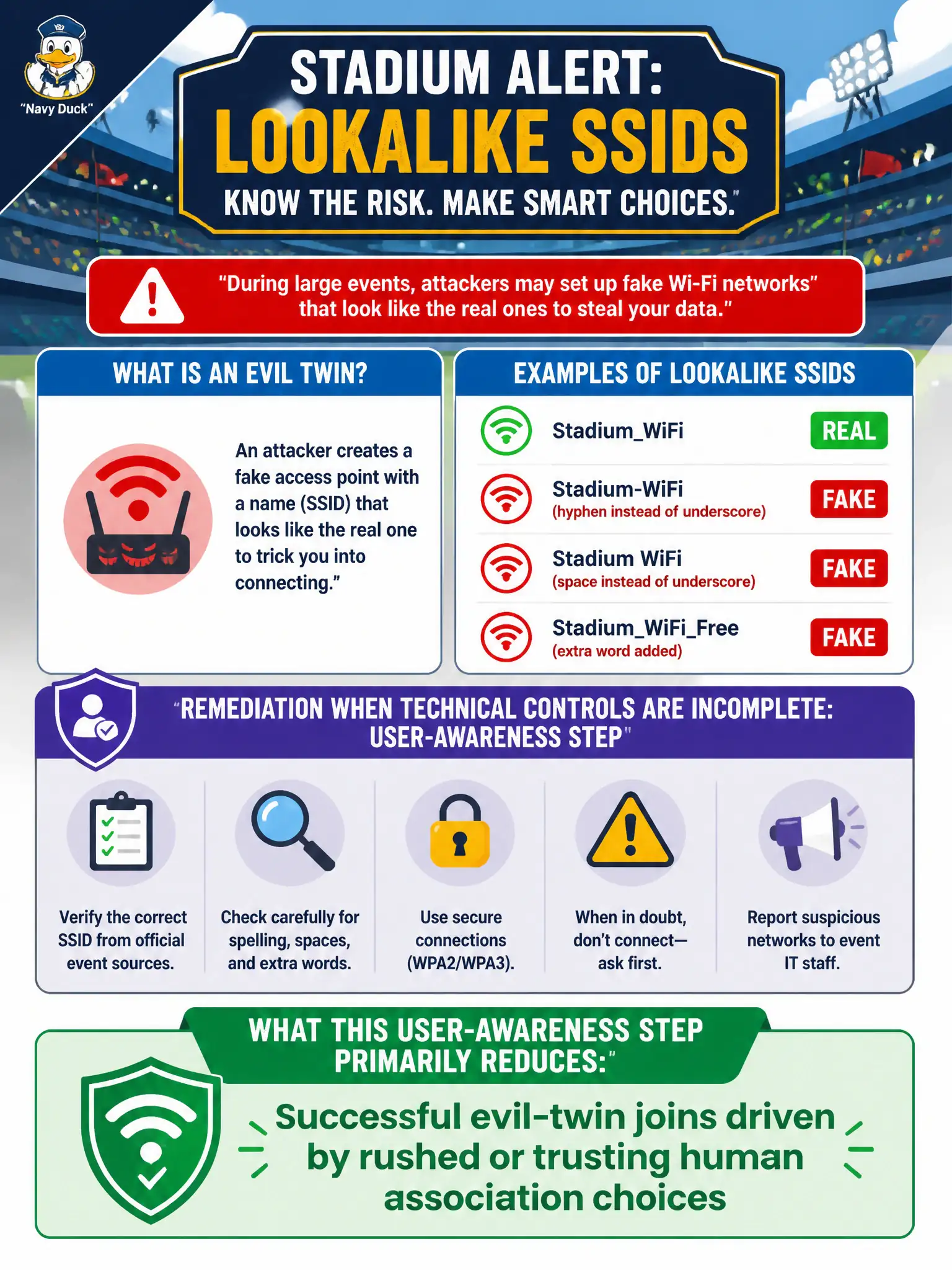
Short Explanation
When the RF circus is loud and controls are thin, teach people not to join 'Stadium_Free_WiFi_2.' Awareness cuts successful evil-twin walk-ups that gadgets alone might miss. It does not rewrite EEPROM regulatory bytes or bless attack automators.
Full Explanation
A stadium warning event staff about lookalike SSIDs during large events is a user-awareness remediation that primarily reduces successful evil-twin joins driven by rushed or trusting human association choices when technical controls are incomplete. Awareness does not rewrite EEPROM regulatory domains or justify banned automators. Civic event security pairs RF monitoring with human guidance.
'The radio regulatory domain code stored in the AP EEPROM' fails because awareness does not primarily reduce the radio regulatory domain code stored in AP EEPROM. 'The need for any encryption on back-of-house point-of-sale VLANs' fails because it does not remove the need for encryption on back-of-house POS VLANs. 'Mandatory use of banned wireless attack automators by vendors' fails because it does not mandate banned wireless attack automators by vendors.
Exam caveat: awareness complements—does not replace—inventory, WIPS, and strong authentication. Operational check: before events, publish official SSID names, warn staff about lookalikes, monitor for twins, and provide a report channel for suspicious portals. Measure whether help-desk reports of weird logins drop after the briefing. In municipal wireless operations, record the rationale in the engagement notes so future assessors know which control or technique class was chosen and which failure modes the rejected options would create for city services.