
Study notes mention a reaver-class tool during WPS modules. Without providing a command recipe, what purpose class should a candidate remember?
Select an answer to reveal the explanation.
Short Explanation
Reaver-class tools are the WPS PIN automation crowd—for authorized labs on vulnerable APs. They are not Wireshark, DNS factories, or firmware erasers. Know the purpose, skip the exploit cookbook.
Full Explanation
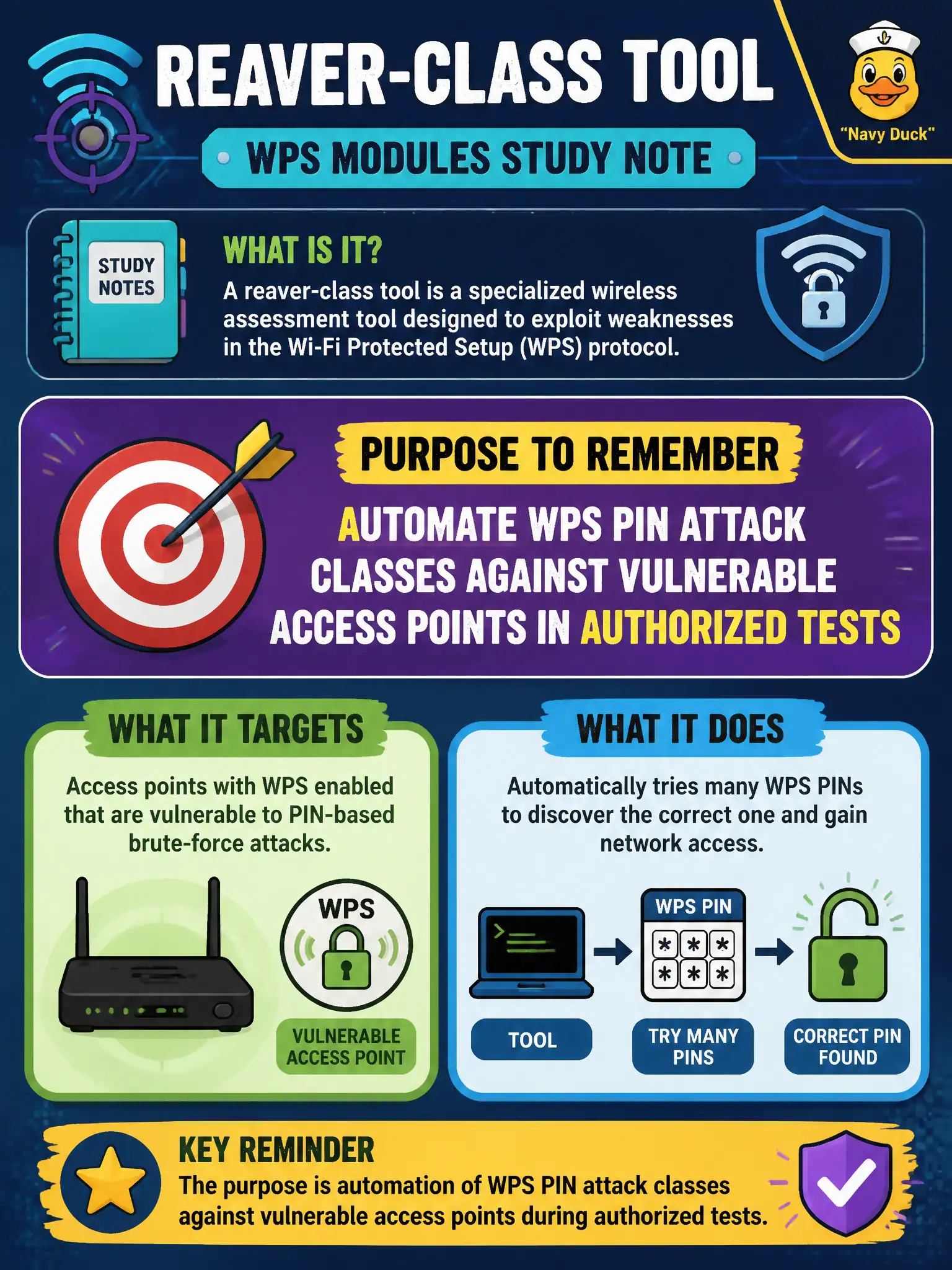
Reaver-class tools automate WPS PIN attack classes against vulnerable access points in authorized tests. Their purpose class is WPS onboarding-feature abuse under RoE—not TLS decryption on SPAN ports, DNS zone authorship, or firmware destruction. Municipal purple teams should name the tool class accurately when scheduling WPS assessments.
'Replace Wireshark for decrypting TLS sessions on wired SPAN ports' fails because Reaver-class tools do not replace Wireshark for decrypting TLS on wired SPAN ports. 'Generate municipal DNS zone files for captive-portal certificate pinning' fails because they do not generate municipal DNS zone files for captive-portal certificate pinning. 'Flash AP firmware to remove 802.11 management frames entirely' fails because they do not flash AP firmware to remove 802.11 management frames entirely.
Exam caveat: exam culture may restrict certain automations—know engagement and exam rules before running wrappers. Operational check: if RoE permits WPS testing, select in-scope vulnerable APs, use allowed tooling, respect lockouts, and record PIN-class results without attacking neighbors. Prefer disable-WPS remediation in the civic report. In municipal wireless operations, record the rationale in the engagement notes so future assessors know which control or technique class was chosen and which failure modes the rejected options would create for city services.