
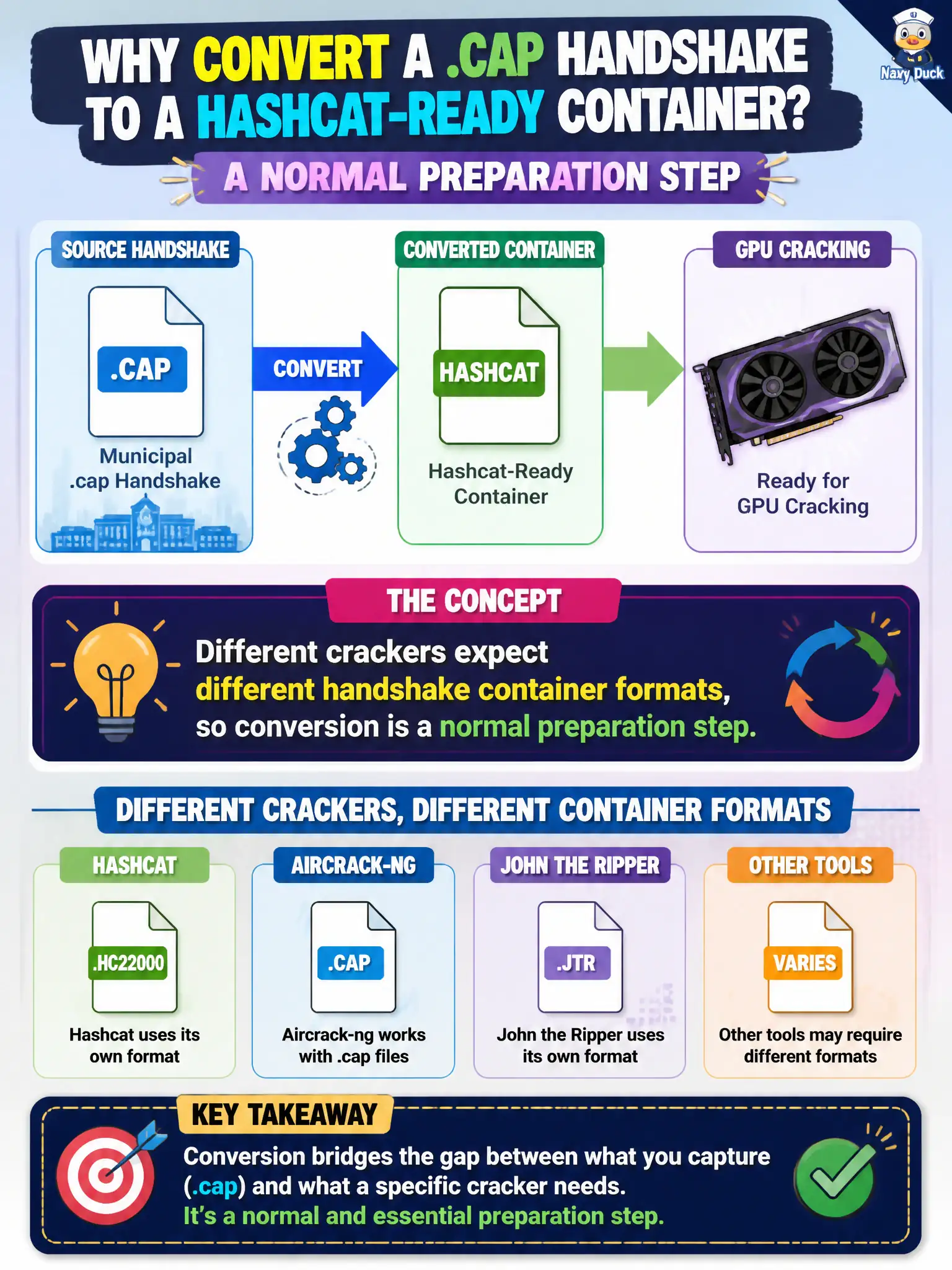
An assessor converts a municipal .cap handshake file into a hashcat-ready container before GPU cracking. What concept does that step illustrate?
Select an answer to reveal the explanation.
Short Explanation
Think of the capture as luggage and each cracker as an airline with its own suitcase size. Converting .cap into the hash format hashcat wants is just repacking—not a new attack. Same handshake, different container.
Full Explanation
Converting a municipal .cap handshake into a hashcat-ready container illustrates a normal preparation concept: different crackers expect different handshake or hash container formats. The cryptographic material still originates from the authorized Personal capture; conversion is packaging for the GPU workflow, not a new attack class. City assessors who standardize export steps reduce failed jobs caused by feeding raw capture layouts into tools that want hc22000-style or similar representations. Conversion does not replace the need for a complete 4-way handshake with raw beacon frames alone; beacons advertise the BSS but do not substitute for handshake or PMKID-class material the cracker validates against. Changing formats does not upgrade WPA2-PSK into WPA3-SAE protection automatically; file packaging cannot alter the AP's negotiated security mode. Format conversion is not required only when monitor mode is forbidden; it is a toolchain interoperability step independent of whether monitor mode was used to obtain the capture under RoE. Exam caveat: a beautifully converted empty or incomplete capture still fails—validate handshake quality before and after export. Operational check: on the civic GPU box, convert a known-good lab .cap, verify the cracker accepts the container, run a short known-passphrase test, then proceed to engagement lists while keeping originals and exports in the evidence chain. Note the conversion tool and format in municipal procedures so any assessor can reproduce the offline stage.