
asleap-class tooling is named in a county wireless assessment inventory for MSCHAPv2 material. What purpose should the item record—without describing exploit steps?
Select an answer to reveal the explanation.
Short Explanation
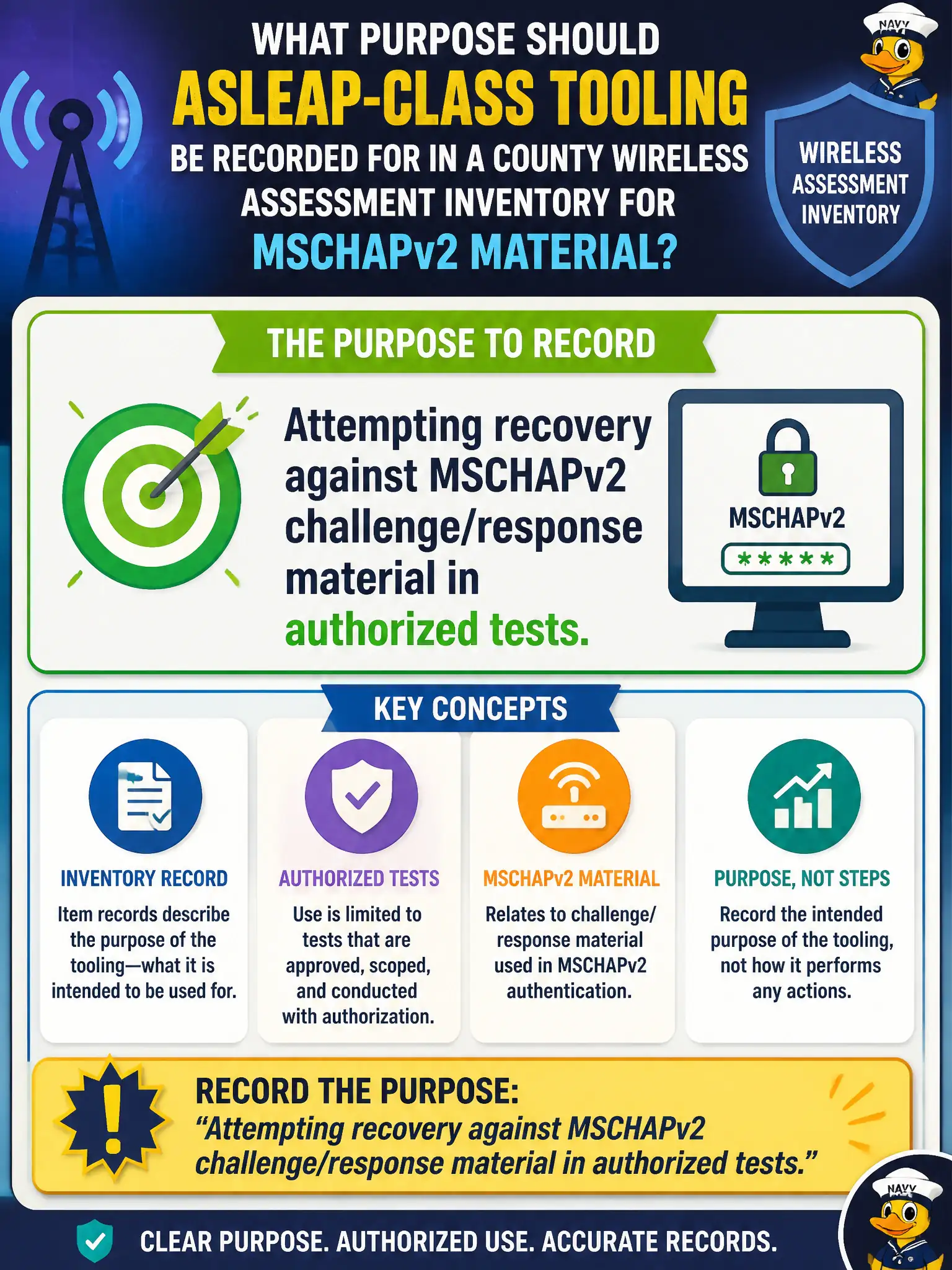
When notes say asleap-class against MSCHAPv2, they mean offline recovery attempts on challenge/response material gathered in an authorized Enterprise test—not SAE commits, portal cert forging, or DFS checks.
Full Explanation
When asleap-class tooling appears in a county wireless assessment inventory for MSCHAPv2 material, the purpose to record—without describing exploit steps—is attempting recovery against MSCHAPv2 challenge and response material in authorized tests. That purpose class sits with PEAP or similar password-based inner methods when material is obtained under RoE. The tool class is not for generating WPA3-SAE commit messages to speed Personal association. It is not for forging captive-portal TLS certificates for open guest splash pages. It is not for measuring DFS radar detection thresholds on outdoor bridge links. Exam caveat: inventory language should stay at technique-class and purpose level, matching OSWP-style judgment items rather than payload recipes. Operational check: list the tool under Enterprise credential-material analysis, cite authorization for any use, and store recovered material as sensitive civic engagement artifacts. For municipal and campus engagements, keep the finding language tied to authorized scope, name the building or SSID class affected, and state the residual risk to residents or staff if the rejected option had been chosen. Re-validate after the next change window that the selected control still matches inventory, monitoring, and RoE abort criteria used by the city wireless program.