
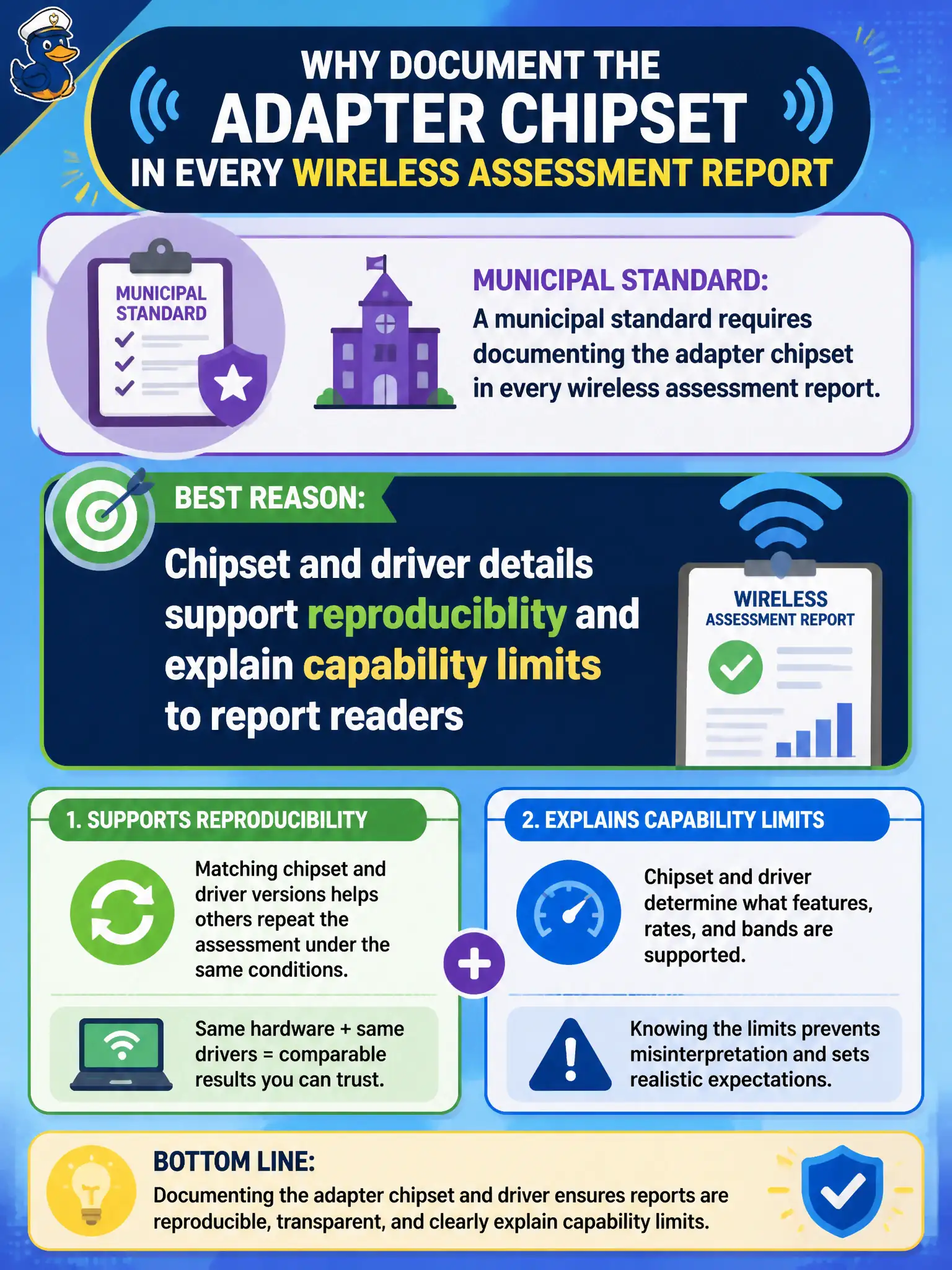
A municipal standard requires documenting the adapter chipset in every wireless assessment report. What is the best reason for that requirement?
Select an answer to reveal the explanation.
Short Explanation
Write down the chipset like you’d note which camera lens shot the evidence photos—someone else needs to know what the gear could and could not do. It makes the work reproducible and honest about limits. Pretty cover pages do not replace that detail.
Full Explanation
Municipal reporting standards that require adapter chipset documentation exist so readers can reproduce conditions and understand capability limits. Chipset and driver details explain why monitor mode worked, why injection was or was not available, and how another assessor could repeat the authorized test. That transparency supports civic accountability and technical peer review far better than vague “USB Wi-Fi” notes. Saying chipset fields only decorate the cover page fails by concept: they are evidentiary technical metadata. Claiming readers can infer chipset from laptop brand alone fails by concept: external USB adapters dominate labs and are independent of laptop brand. Asserting chipset documentation proves the assessor destroyed the adapter afterward fails by concept: reporting identity is unrelated to destruction and would be inappropriate. Exam caveat: record both chipset family and driver/module version—chipset alone may not explain a failure caused by a bad driver build on the engagement image. Operational check: before fieldwork ends, capture lsusb/chipset notes, driver module, firmware if known, and whether monitor/injection succeeded; paste those facts into the wireless assessment report template the city requires.