
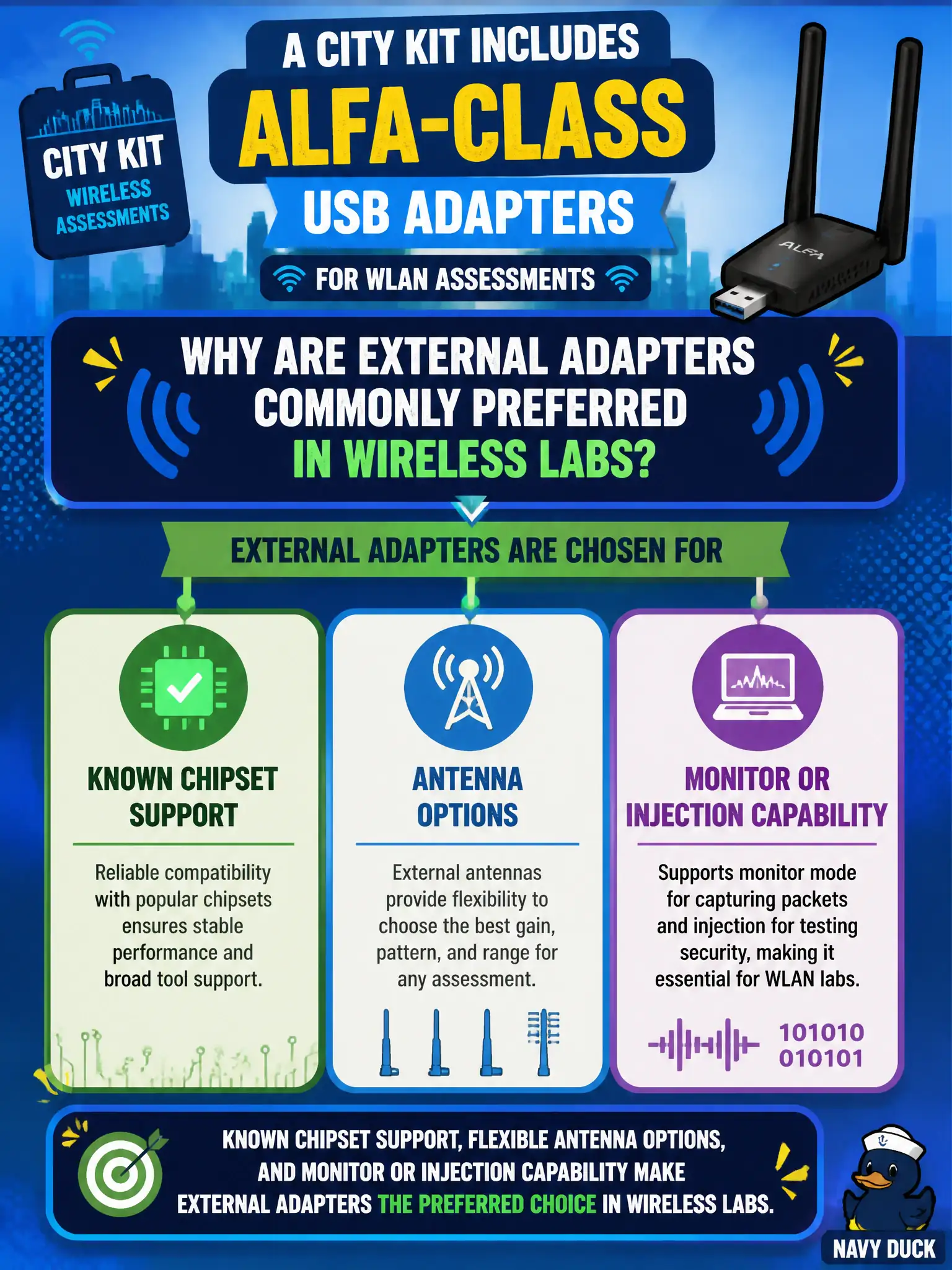
A city kit includes Alfa-class USB adapters for WLAN assessments. Why are external adapters commonly preferred in wireless labs?
Select an answer to reveal the explanation.
Short Explanation
Built-in radios are often the shy office PC speakers—fine for browsing, weak for lab RF work. External adapters get picked for chipsets, antennas, and monitor/injection support you can actually use. The brand sticker is not the whole story, but the external form factor is there for capability.
Full Explanation
External Alfa-class and similar USB adapters are common in municipal wireless labs because they offer known chipset support for monitor mode and injection, external antenna connectors, and easier replacement than soldered laptop radios. Civic kits standardize on adapters that behave predictably under the engagement Linux image rather than gambling on whatever internal NIC the procurement laptop shipped with. Preference for external adapters is therefore about capability and control, not aesthetics. Saying external USB adapters exist only to charge phones and never participate in RF testing fails by concept: their assessment purpose is RF work, not power delivery. Claiming built-in laptop radios always outperform USB adapters for injection regardless of chipset fails by concept: many internal radios lack injection or stable monitor support even if they browse fine. Asserting Alfa branding alone guarantees legal immunity for any wireless test fails by concept: brand names confer no legal authorization—RoE and law still govern every frame transmitted. Exam caveat: a supported external adapter still needs correct drivers, regulatory settings, and authorization; hardware choice does not replace scope control on county networks. Operational check: inventory each kit adapter’s chipset and driver, verify monitor and (if allowed) injection against a lab AP, attach the approved antenna, and label the dongle for municipal assessment use only when those checks pass.