
A city library IT lead asks what a BSSID uniquely identifies compared with an SSID name users see. What should the assessor explain?
Select an answer to reveal the explanation.
Short Explanation
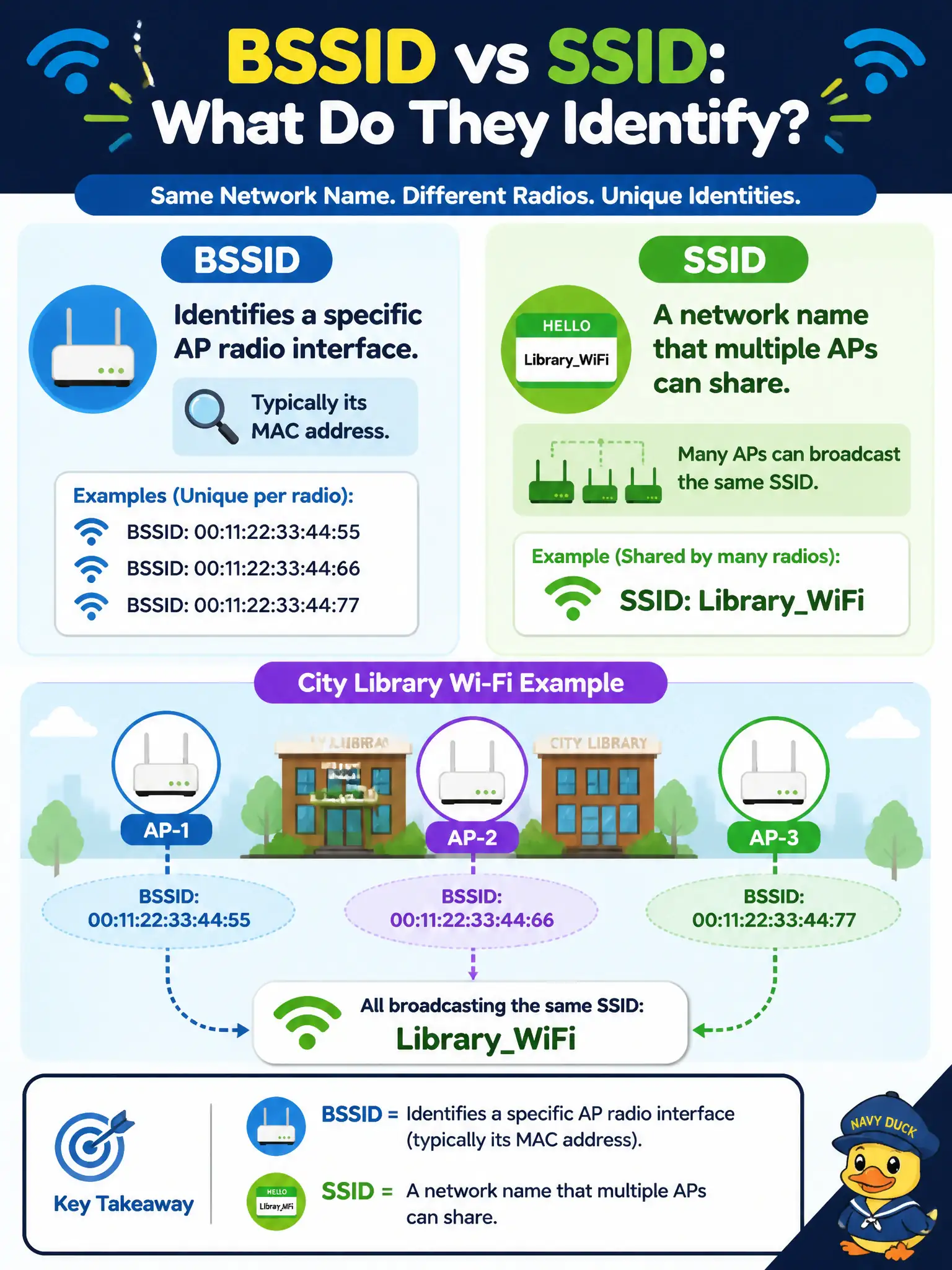
Think of the SSID as the café name on the window and the BSSID as the unique register ID behind the counter. Patrons see one friendly name; survey tools still need the radio’s own address so they know which AP they’re looking at.
Full Explanation
In authorized municipal WLAN work, the BSSID is the identifier for a particular Basic Service Set and is typically the MAC address of an access-point radio interface. The SSID is the human-facing network name that many APs in an Extended Service Set can advertise together so patrons roam under one familiar label. Assessors therefore target and document BSSIDs when scoping captures, noting which radio is in RoE, rather than treating the friendly name as a unique hardware handle. Treating the BSSID as only a lobby slogan confuses Layer-2 radio identity with marketing text that users see on posters or captive-portal branding. Claiming the SSID is a factory serial burned into every radio reverses the roles: SSIDs are configurable names, not unique hardware serials, and they routinely collide across floors and buildings. Calling BSSID and SSID interchangeable Layer-3 gateway labels fails because neither field is an IP subnet gateway identifier; association and bridging decisions sit above those names. Exam caveat: OSWP-style recon literacy expects you to separate ESSID/SSID branding from per-BSS BSSID targeting even when multiple civic APs share one guest name. Operational check: On an authorized survey of the library ESS, list rows that share one SSID but show distinct BSSIDs and channels; confirm the engagement worksheet names the specific BSSID(s) before any capture or injection permitted by RoE.