
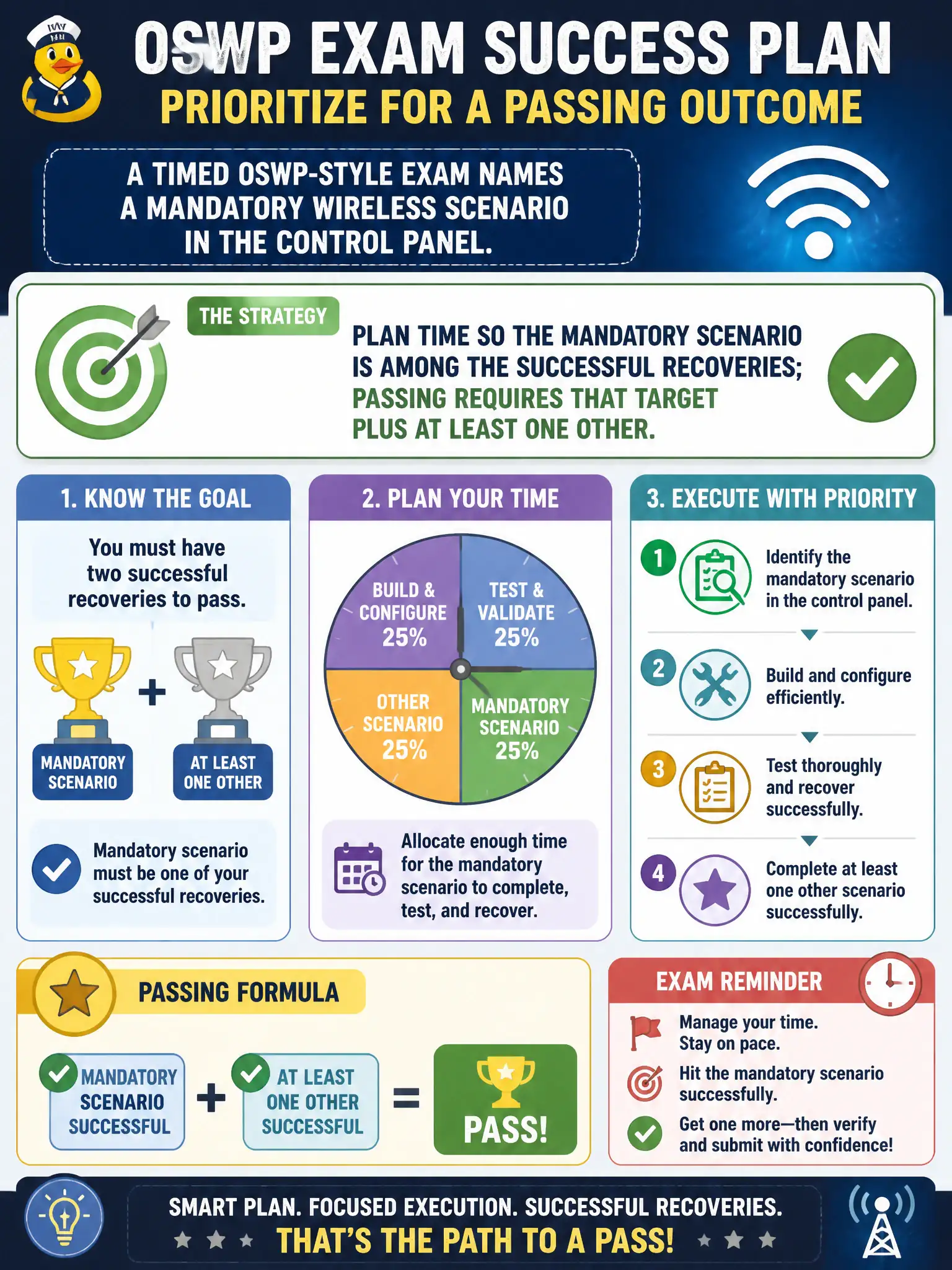
A timed OSWP-style exam names a mandatory wireless scenario in the control panel. How should the candidate prioritize for a passing outcome?
Select an answer to reveal the explanation.
Short Explanation
Mandatory means mandatory—pass math includes that scenario, not just the loudest beacon. Budget time so it is one of your two wins. Pretty reports without that key do not pass.
Full Explanation
When a timed OSWP-style exam names a mandatory wireless scenario in the control panel, candidates should plan time so the mandatory scenario is among the successful recoveries; passing requires that target plus at least one other under the published pass rule themes. Ignoring the mandatory label to chase whichever SSID has the strongest signal risks failing despite other trophies. Spending the entire window on policy essays instead of recovering any keys misses the performance nature of the exam. Treating optional scenarios as the only ones that count inverts the pass rule. Exam caveat: read the exam guide for the exact mandatory-plus-one structure rather than relying on rumor. Operational check: list mandatory first on the time budget, attempt a second viable scenario early enough to switch if stuck, and keep proof submission steps in the same plan for civic-lab analogs used in training. For municipal and campus engagements, keep the finding language tied to authorized scope, name the building or SSID class affected, and state the residual risk to residents or staff if the rejected option had been chosen. Re-validate after the next change window that the selected control still matches inventory, monitoring, and RoE abort criteria used by the city wireless program.