
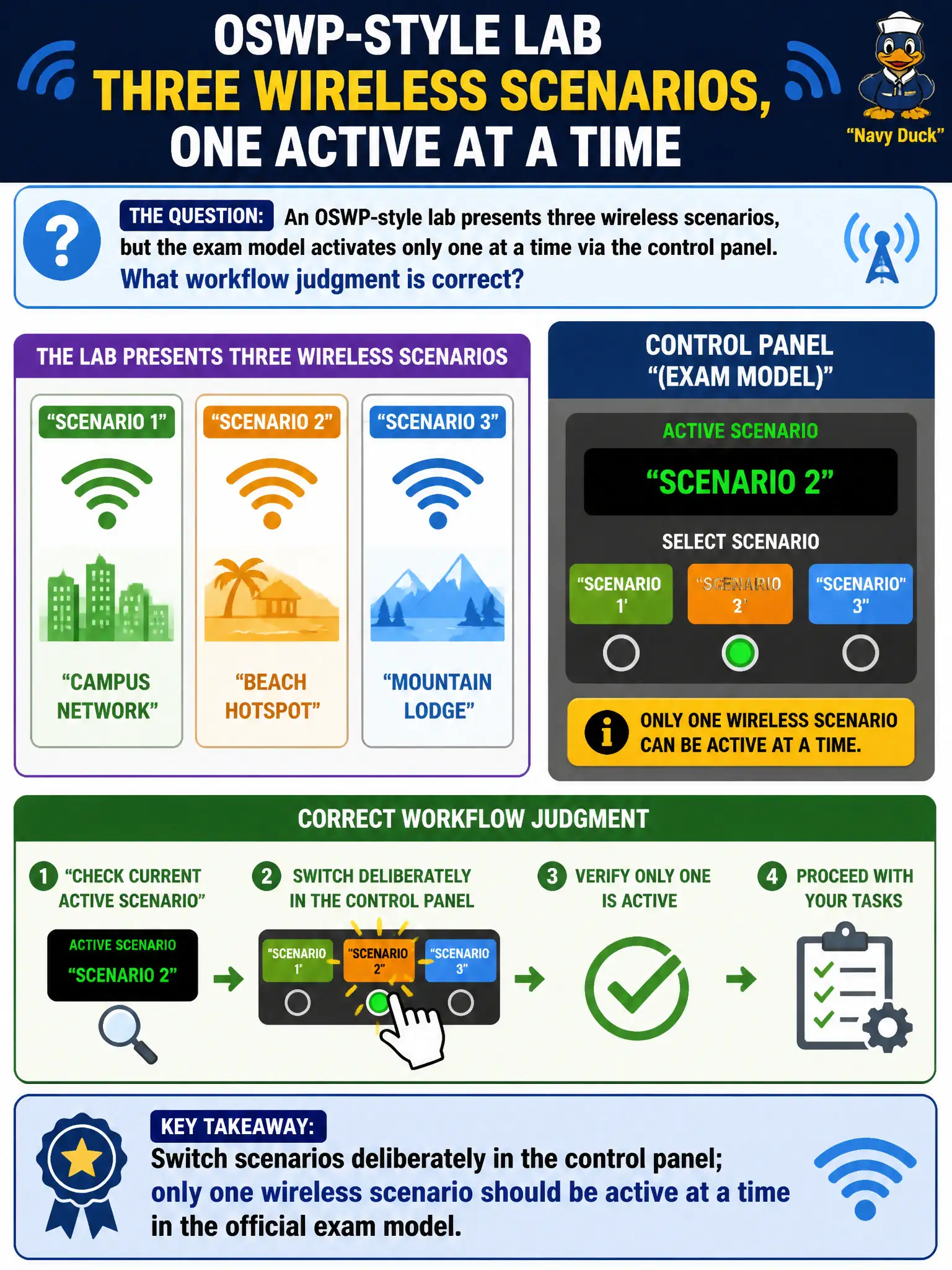
An OSWP-style lab presents three wireless scenarios, but the exam model activates only one at a time via the control panel. What workflow judgment is correct?
Select an answer to reveal the explanation.
Short Explanation
Think of the control panel like a single runway light—you switch which scenario is live; you do not taxi three jets at once. Deliberate switching is the workflow. Parallel free-for-alls and off-VPN neighbors are out.
Full Explanation
In an OSWP-style lab that presents three wireless scenarios but activates only one at a time via the control panel, the correct workflow is to switch scenarios deliberately in the control panel so only one wireless scenario is active at a time in the official exam model. Leaving all three running in parallel to maximize handshake capture violates the intended lab model and can contaminate evidence. Candidates should not refuse to switch scenarios on the false belief that only the first SSID listed is legal. Disabling the control panel to attack neighboring production SSIDs outside the lab VPN is out of scope and unethical. Exam caveat: control-panel discipline is part of exam hygiene and mirrors civic change windows that activate one test condition at a time. Operational check: before capturing, confirm which scenario is active, complete proof for that target, then switch intentionally rather than spraying effort across mixed RF conditions. For municipal and campus engagements, keep the finding language tied to authorized scope, name the building or SSID class affected, and state the residual risk to residents or staff if the rejected option had been chosen. Re-validate after the next change window that the selected control still matches inventory, monitoring, and RoE abort criteria used by the city wireless program.