
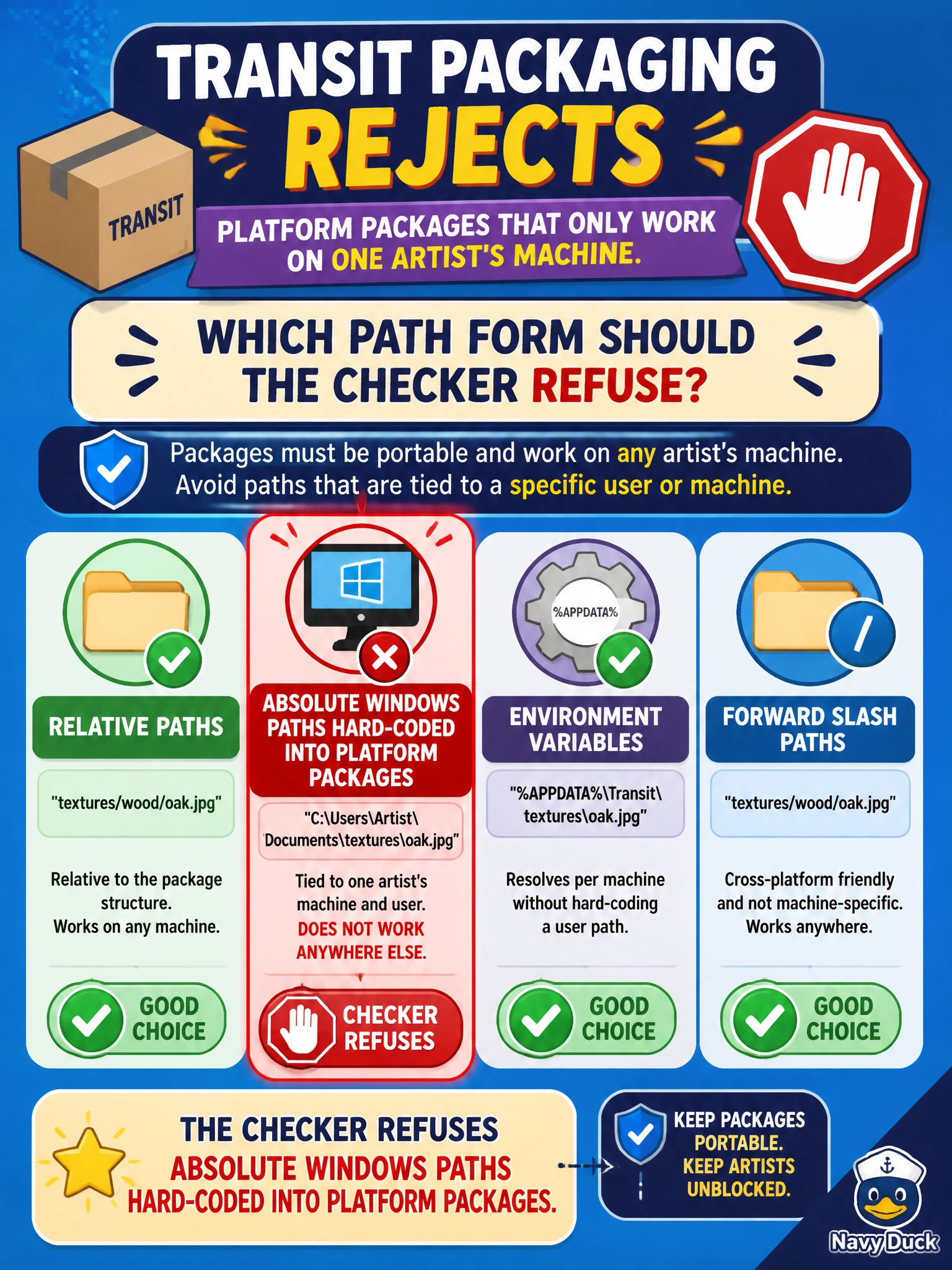
Transit packaging rejects platform packages that only work on one artist's machine. Which path form should the checker refuse?
Select an answer to reveal the explanation.
Short Explanation
C:\Users\artist\Desktop is a one-seat ticket. Transit checkers should bounce absolute Windows paths so platform packages resolve for everyone else.
Full Explanation
Transit packaging must produce platform packages that resolve on any authorized workstation, not only on the machine that authored them. Absolute Windows paths hard-coded into platform packages encode a single host filesystem layout (drive letter, user profile, desktop folders). Checkers should refuse those paths because they break as soon as the package moves to Linux CI, another artist laptop, or a headless publish farm.
Relative searchable paths under the package root remain portable: they travel with the package and resolve via search paths. URI-style paths managed by the city asset resolver intentionally abstract location behind municipal asset identity and are designed for multi-machine use. Anchored package-relative identifiers documented in guidelines likewise express location relative to the published layout rather than a personal disk.
Exam caveat: rejecting absolute Windows paths does not mean every absolute path string is always wrong in every offline lab; the exam focus for portable civic packages is that hard-coded host paths fail cross-environment resolution. Also distinguish resolver URIs from pasted Explorer paths that merely look like strings.
Operational check: scan the platform package for assetPath values containing drive letters or Users-style absolute Windows forms, fail the package in CI if found, replace with package-relative or resolver URIs, republish, and open the package on a clean second machine with no original artist folders present to confirm platforms still resolve.