
A civic museum converts exhibit OpenUSD to glTF for kiosk viewers. Which conversion practice best keeps visual fidelity?
Select an answer to reveal the explanation.
Short Explanation
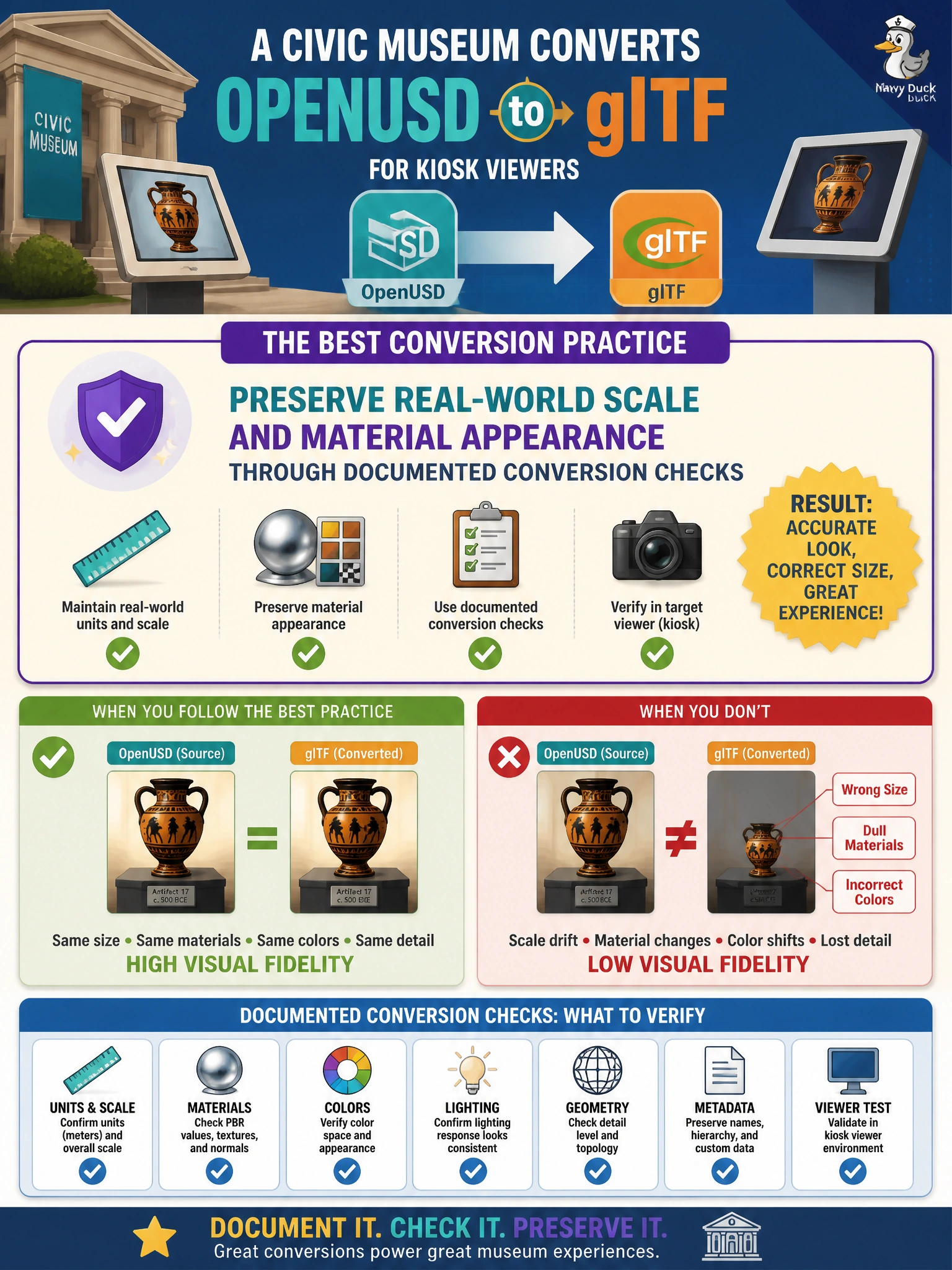
Museum kiosks need the real size and look of the exhibit. Documented scale and material checks on the USD-to-glTF hop keep visitors from seeing toy-sized statues.
Full Explanation
A civic museum converting exhibit OpenUSD to glTF for kiosk viewers keeps visual fidelity by preserving real-world scale and material appearance through documented conversion checks. Museum visitors judge size and surface truthfulness; documented gates on units/scale and materials keep artifacts from appearing toy-sized or unshaded after leaving the curated USD master.
Normalizing every exhibit to a one-meter cube regardless of artifact size fails by concept: arbitrary normalization destroys real-world scale that kiosks are meant to communicate. Discarding materials so kiosks display unshaded silhouettes only fails because silhouette-only delivery abandons curated material appearance central to exhibit interpretation. Baking random UV noise into every mesh to simulate wear fails because random UV corruption is not controlled conservation wear and breaks predictable texturing/fidelity.
Exam caveat: “creative” distractors (normalize everything, strip materials, random UV wear) are not fidelity-preserving conversion practice. Operational check: document expected units and material survival rules, convert a known exhibit, measure glTF scale against catalog dimensions, verify materials/textures present, and fail the job if normalization, material drop, or random UV mutation occurred.