
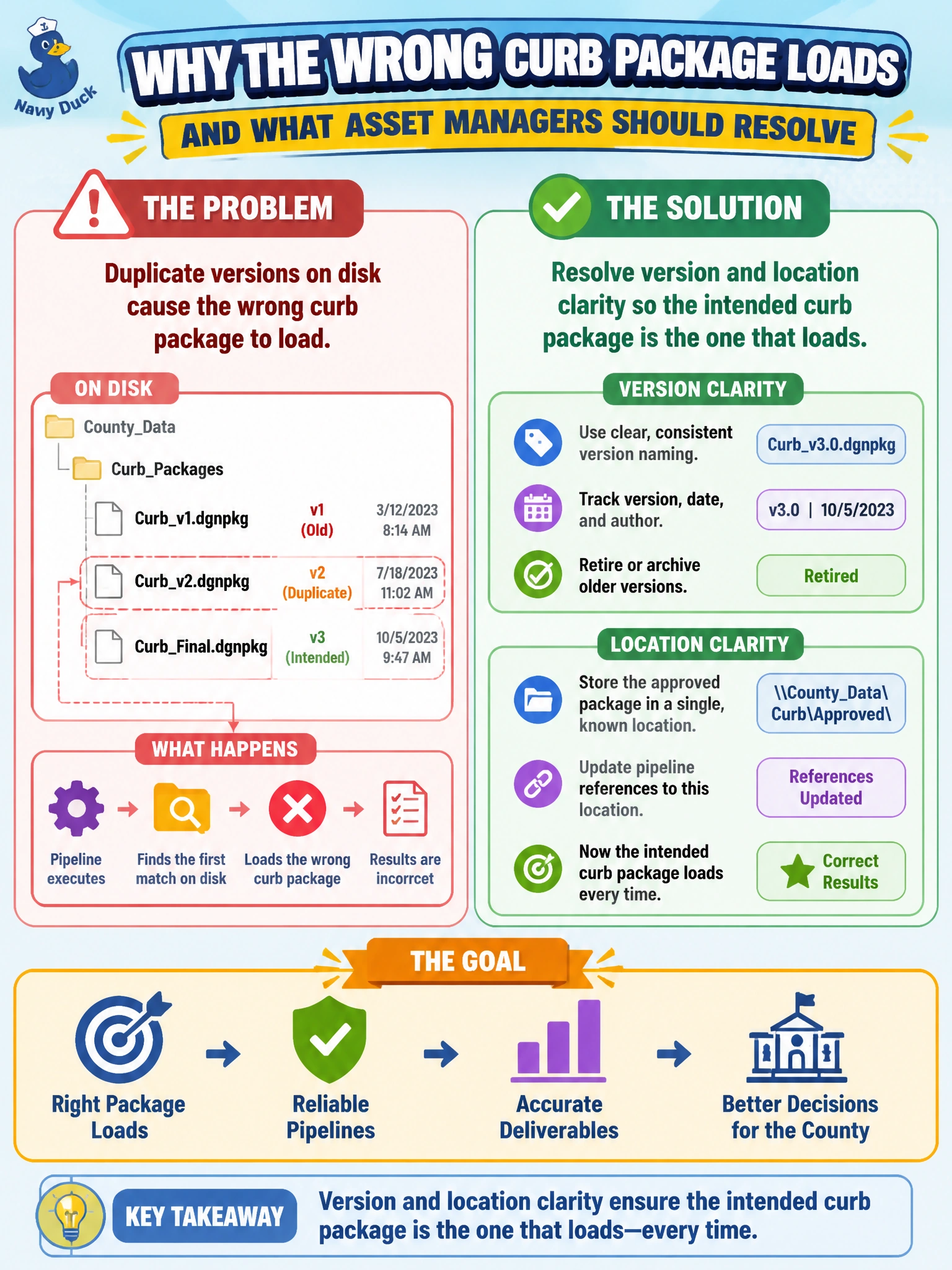
County pipelines load the wrong curb package because duplicate versions sit on disk. What should asset managers resolve?
Select an answer to reveal the explanation.
Short Explanation
Duplicate curb versions on disk invite the wrong package—clarify version and location so the intended curb loads. Deleting every curb or muting the whole city is not asset management. Point resolvers at the right package.
Full Explanation
County pipelines that load the wrong curb package because duplicate versions sit on disk need version and location clarity so the intended curb package is the one that resolves. Ambiguous search paths, duplicate filenames across library roots, or unpinned versions let resolvers pick an older or alternate curb, silently composing the wrong geometry into municipal twins. Establishing clear versioning and location precedence fixes selection without destroying content.
Deleting all curb meshes from every twin permanently removes civic geometry rather than selecting the correct package. Encoding curb geometry only as boolean timeSamples cannot represent curb shape and does not address package identity. Muting the entire city LayerStack during imports hides the twin and does not establish which curb version should load.
Exam caveat: "Latest on disk" is not a safe municipal policy—pin versions for published county releases and isolate work-in-progress duplicates outside production search paths. Resolver rules differ by facility; document the pin strategy.
Operational check: Inventory duplicate curb packages, remove or quarantine non-release copies from production search paths, pin the intended version in pipeline configs, reload a known twin, and verify curb hashes/metadata match the approved county release.