
Transit platform textures fail to resolve in the twin. What asset-resolution problem should engineers fix?
Select an answer to reveal the explanation.
Short Explanation
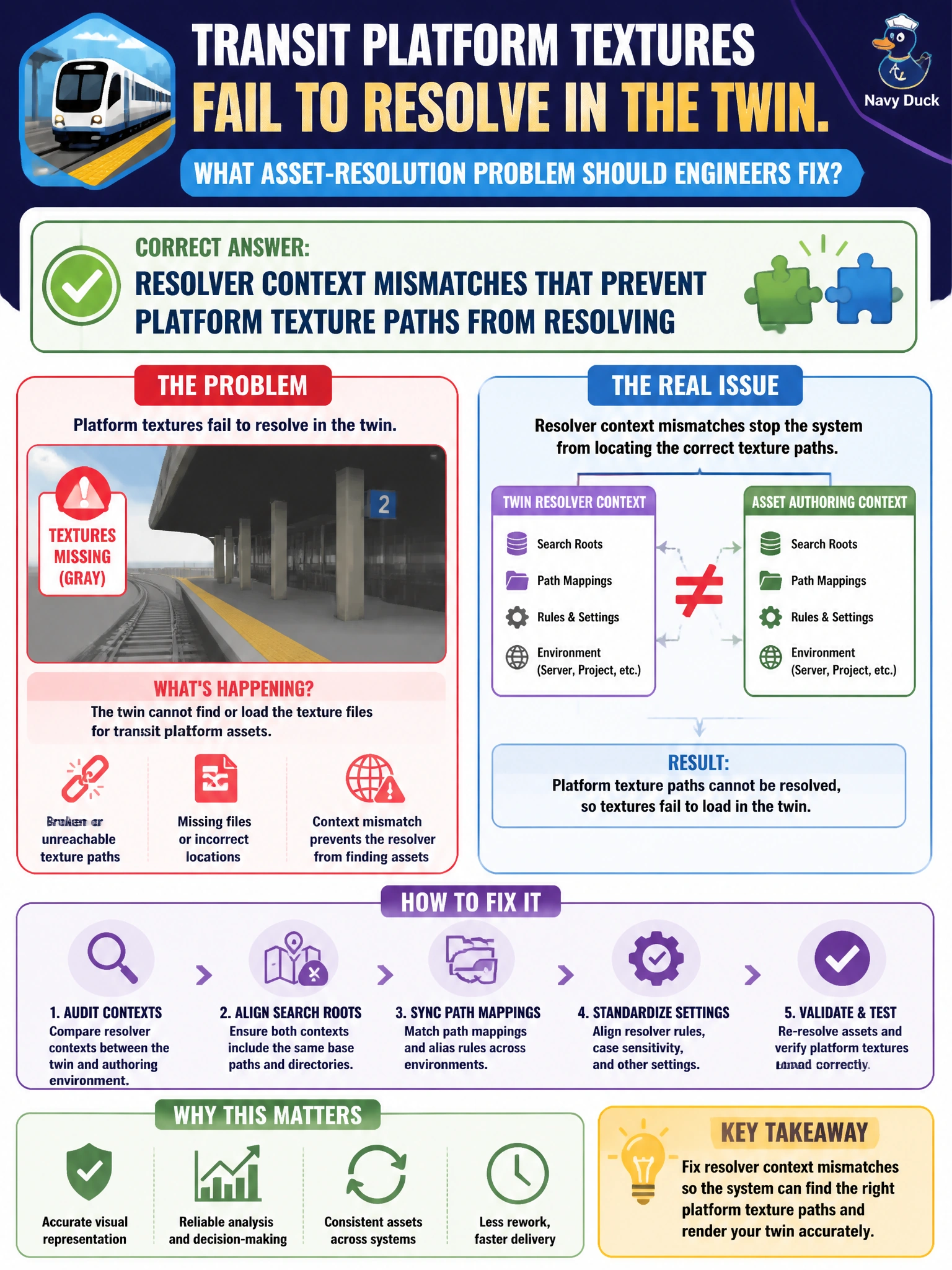
Textures that will not resolve often mean the resolver context is wrong for that stage—align context so platform paths land. Seat counts and USDA-vs-USDC on an annotation layer are usually beside the point. Fix the resolution context.
Full Explanation
Transit platform textures that fail to resolve in the twin typically point to resolver context mismatches that prevent platform texture paths from resolving. USD asset resolvers depend on context (search paths, version pins, store bindings); if the twin opens with a different context than the authoring environment, texture identifiers that worked for modelers fail at compose/draw time even when files exist on disk. Aligning resolver context with the transit asset library restores texture resolution.
Storing platform seat counts as integers is ordinary typed data and unrelated to texture resolve. Using USDA versus USDC for one annotation layer is an encoding choice that does not explain texture path resolution failures. Authoring displayColor primvars as constants affects fallback color, not whether texture asset paths resolve through the resolver.
Exam caveat: Individual bad paths and missing files also fail resolve—context mismatch is the systemic cause when many textures break after stage open in another environment. Do not confuse material-binding mistakes with resolver failures when the error logs show unresolved assets.
Operational check: Compare resolver context used by the twin versus the transit publishing farm, print unresolved texture paths, repair context or path identifiers, reload materials on the platform, and gate CI on zero unresolved shader inputs for published transit packages.