
Emergency overlay generators write many attributes and slow drills. Where should attribute writes be grouped for performance?
Select an answer to reveal the explanation.
Short Explanation
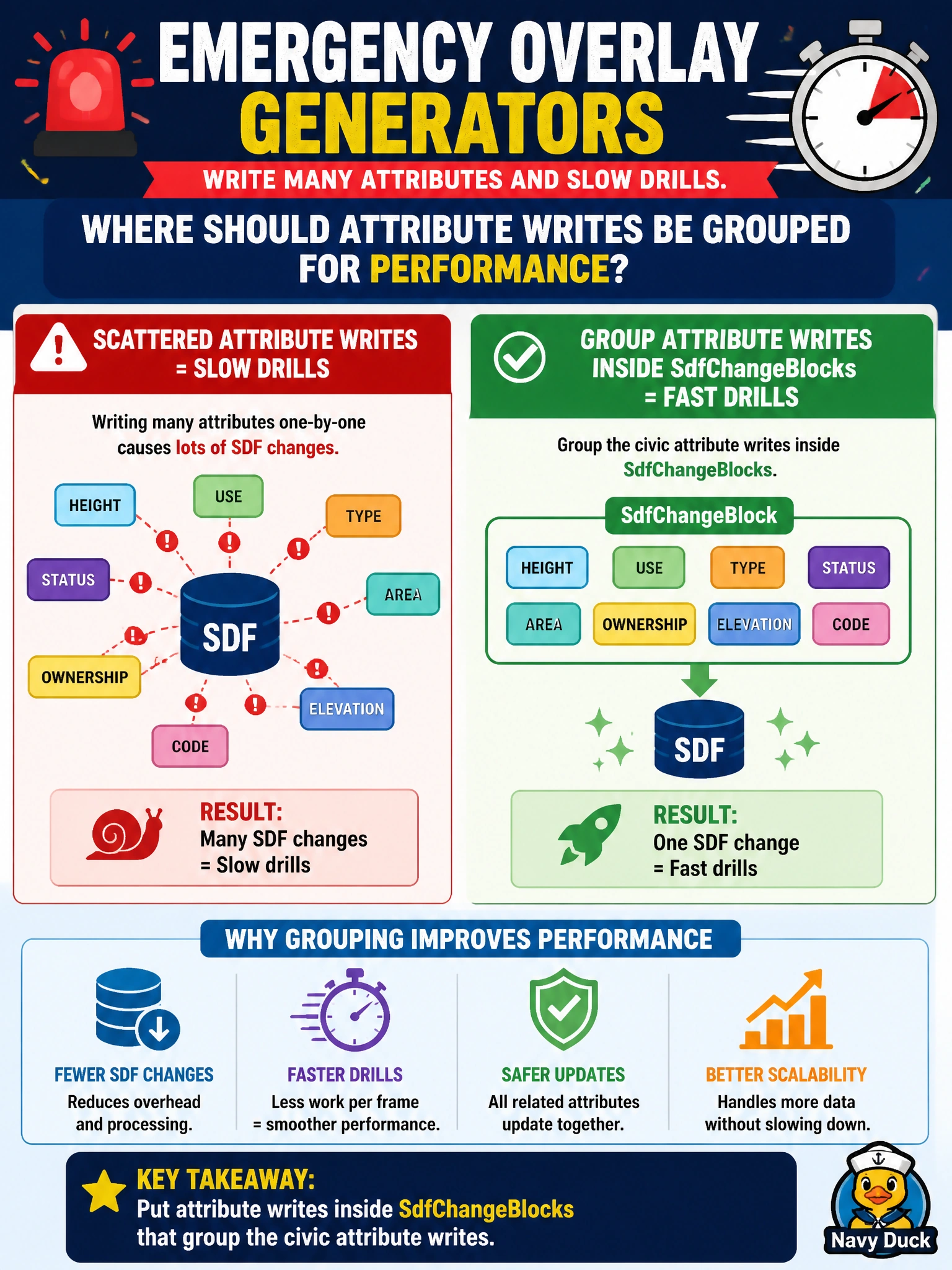
Overlay generators that hammer attributes should group writes inside SdfChangeBlocks so drills stay snappy. Spreadsheets and README comments are not stage edits. Batch the emergency attribute storm.
Full Explanation
Emergency overlay generators that write many attributes and slow drills should group those civic attribute writes inside SdfChangeBlocks. Drill overlays—road closures, shelter markers, flood extents—often stamp large attribute sets quickly; coalescing notifications keeps the emergency twin usable during generation instead of stuttering on every field write. Performance here is an operational readiness concern, not cosmetic tuning.
Keeping writes only in emailed spreadsheets outside USD bypasses the twin and cannot drive composed overlays during a drill. Writing one attribute per separate OpenUSD process restart multiplies overhead absurdly and does not coalesce notices. Authoring overlays only as README comments provides documentation, not stage data.
Exam caveat: Change blocks help the write storm; separately ensure generators target the correct emergency layer and edit target so overlays actually compose when unmuted for a drill. Avoid leaving temporary debug opinions on stronger layers after the exercise.
Operational check: Time overlay generation with writes grouped in SdfChangeBlock, confirm the emergency LayerStack receives the attributes, unmute for a tabletop drill, and verify markers appear without interactive freezes before certifying the generator for live use.