
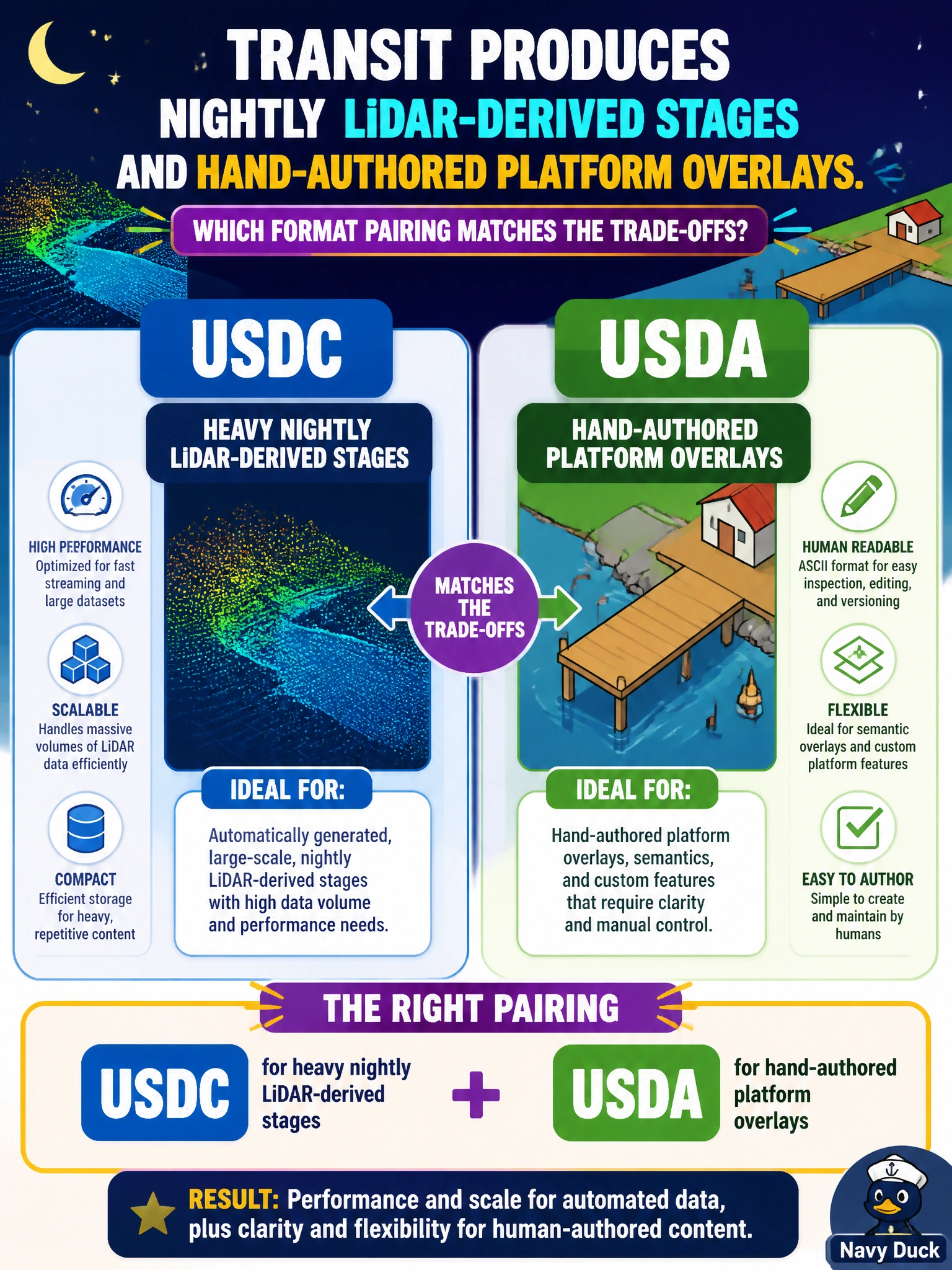
Transit produces nightly LiDAR-derived stages and hand-authored platform overlays. Which format pairing matches the trade-offs?
Select an answer to reveal the explanation.
Short Explanation
Big LiDAR dumps like a packed suitcase—use USDC. Hand-authored overlays like notes in the margin—use USDA. Match the format to how people and machines touch the data.
Full Explanation
Transit nightly LiDAR-derived stages are bulk, machine-produced geometry; hand-authored platform overlays are small, human-edited opinions. Using USDC for heavy nightly LiDAR-derived stages and USDA for hand-authored platform overlays matches those trade-offs: crate performance where volume dominates, ASCII readability where people author, review, and compose overrides.
USDA-only for LiDAR nights because “binary cannot hold points” is false—USDC routinely stores large point and mesh data—and hurts ingest and open performance. USDC-only for hand edits because humans must read crate hex dumps inverts the readability trade-off and makes platform review painful. Exporting nightly stages exclusively as untyped CSV abandons USD composition, schemas, and Hydra-ready structure the station twin needs for operations.
Exam caveat: Composition should reference the USDC LiDAR payload from thin USDA overlay layers so platform edits stay reviewable without rewriting the nightly crate after every markup.
Operational check: Time-open the nightly USDC stage, diff a platform USDA overlay in git, compose them in the station root, and confirm overlays win where intended without resaving the LiDAR crate or losing survey alignment.